






















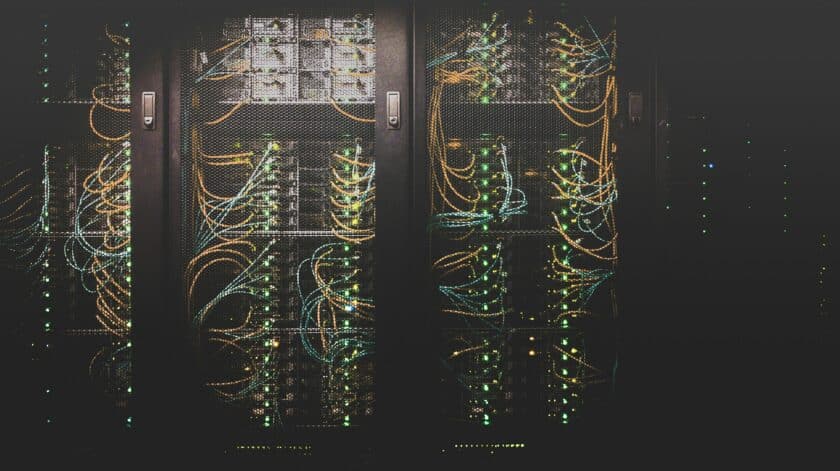
Data centres power everything from cloud computing to artificial intelligence. James Peel and Shayan Ratnasingam, Senior Research Analysts at Gravis Advisory Limited, explore the investment case for one of the digital economy’s fastest-growing sectors.

Every time you check a portfolio online, stream a film or ask a chatbot a question, you’re relying on a data centre somewhere.
Yet while around half of Brits now recognise the term, three in five still say they’re unclear what a data centre actually is or does*.
That gap between how much we rely on data centres and how little we understand them is part of what makes the sector interesting for investors.
Global capacity is forecast to double by 2030 and occupancy is running at around 97%**.
Meanwhile, growing political resistance to new developments may make existing assets, and projects that already have power and planning secured, scarcer and potentially more valuable.
In the third of our mini-series on digital infrastructure, we look at what data centres are, how investors can gain exposure, and the risks and opportunities ahead.
The investment case
While data centres have become a hot topic in recent years due to their association with artificial intelligence (AI), this important piece of digital plumbing has actually been around for decades.
Nevertheless, recent research suggests just 52% of the public are familiar with the term data centre and 59% are still unsure about what a data centre is or what it does*: a purpose-built facility housing the servers and network equipment required to power the digital economy.
For years this equipment was owned by end-users onsite, but due to the growth of internet traffic and then cloud computing, it became increasingly unsustainable to internally manage.
This lead to the development of dedicated data centres which could be accessed by many hundreds of customers. AI-related developments have only added to the demand.
There are three important types of data centre. The first is enterprise, or traditional data centres which are owned and operated by a single organisation to support internal IT requirements.
The second is colocation, where a data centre operator leases out space in a shared facility (for example, Equinix’s AM4 data centre in the Netherlands).
The third is hyperscale, or data centres which are developed by technology giants like Alphabet, Amazon and Microsoft, and which tend to be much larger than average.
Such is the demand today, JLL forecasts a doubling of global data centre capacity to about 200GW by 2030**.
This growth will further transform data centres from a niche sub sector to core, mission-critical digital infrastructure, presenting multiple opportunities for investors.
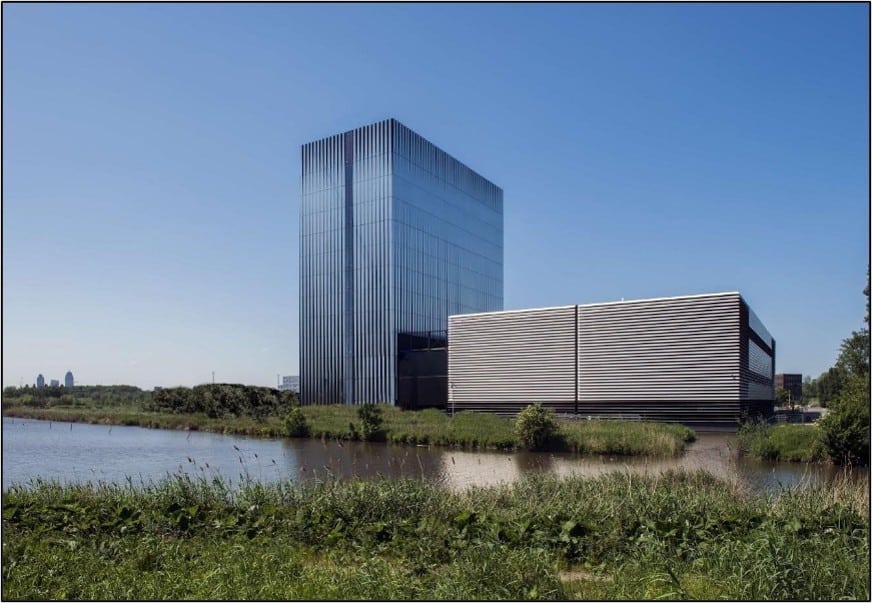
Figure 1 AM4
How to gain exposure to data centres
The established pure plays in the USA are Equinix and Digital Realty, which together have a market cap of more than $150bn. Equinix focuses mostly on colocation data centres, serving more than 10,500 customers in 36 countries.
Digital Realty has traditionally catered to larger users, although more recently the company has been expanding its colocation offering.
The TM Gravis Digital Infrastructure Income Fund also owns Keppel DC REIT and Digital Core REIT, both listed in Singapore, as well as Australian-listed NEXTDC, which builds and operates data centres across Asia.
In our previous digital infrastructure case studies we explored e-commerce logistics and communications towers. Many of the companies usually associated with those sectors also have significant data centre operations.
For example, industrial landlords like Prologis and Goodman have leveraged their extensive powered land banks to develop sizeable data centre pipelines of 5.8GW and 6.4GW respectively.
American Tower acquired a business called CoreSite in 2021, which operates a 340MW portfolio of colocation data centres in the USA.
Altogether, these investments can provide an attractive combination of defensive, inflation-protected rental growth from long-term leases to sticky tenants, operating leverage-driven earnings growth, and potentially significant development profits.
Looking ahead
The sector is currently in rude health. JLL estimates global data centre occupancy at 97%, and expects rental growth of about 5% per year out to 2030**.
Equinix, the largest data centre real estate investment trust (REIT) in the world, has guided to annual growth in adjusted funds from operations per share (similar to earnings per share) of 9-12% over a similar period***.
Perhaps the most pressing issue facing the sector today is a declining level of public support for new data centre developments, which has led politicians of all stripes to introduce obstacles to development ranging from more detailed audits to de facto moratoriums.
The public’s main concerns are about the potential impact of data centre developments on electricity and water use.
However, in a recent article The Economist**** characterised these concerns as mostly “overblown”, citing evidence showing that in some cases the proliferation of data centres can actually reduce electricity bills, and that water use tends to be less dramatic than feared.
The challenge, then, is to improve public perception by better explaining the innovative technologies being utilised to make data centre operations more sustainable, for example closed-loop water cooling and heat offtakes.
In the meantime, any risk to future supply primarily serves to increase the value of standing assets, or developments with power, planning and a pre-let already in place.
In Singapore, where robust demand growth is outpacing restricted supply growth, development yields are approaching 20%^.
According to Cushman & Wakefield (C&W)^^, the sector is transitioning from a period of “accelerated” growth to “managed” growth, due partly to new regulations but also a shift in institutional investor mindset from scale to profitability.
C&W thinks a bubble in data centre infrastructure is unlikely at this stage due to the strong level of demand for compute on one hand and supply bottlenecks on the other.
In public markets, although trailing valuation multiples for some data centre REITs might seem elevated at first glance, on a forward earnings basis they look far less demanding. Equinix, for example, trades on an EV/EBITDA multiple of 26x last year’s EBITDA but just 17x Jefferies’ forecast EBITDA for 2028***.
*Source: Telehouse research: Half of Brits admit they still don’t know what a data center is | TechRadar
**Source: https://www.jll.com/en-uk/insights/market-outlook/data-center-outlook
***Source: Gravis
****Source: How data centres became one of America’s hottest political issues: https://www.economist.com/united-states/2026/09/02/how-data-centres-became-one-of-americas-hottest-political-issues
^Source: Cushman & Wakefirled Asia Pacific Data Centre Investment Landscape, August 2026:
https://www.cushmanwakefield.com/en/insights/apac-data-centre-investment-landscape
^^Source: Cushman & Wakefield 2026 Global data center market comparison: https://www.cushmanwakefield.com/en/insights/global-data-center-market-comparison
No information contained in this article should be construed as providing financial, investment or other professional advice and should not be considered as a recommendation, invitation, or inducement to subscribe for, dispose of or purchase any such securities. Professional investors only. Capital at risk. Past performance is not a guide to future performance.
Main image: data centre, taylor-vick-M5tzZtFCOfs-unsplash