






















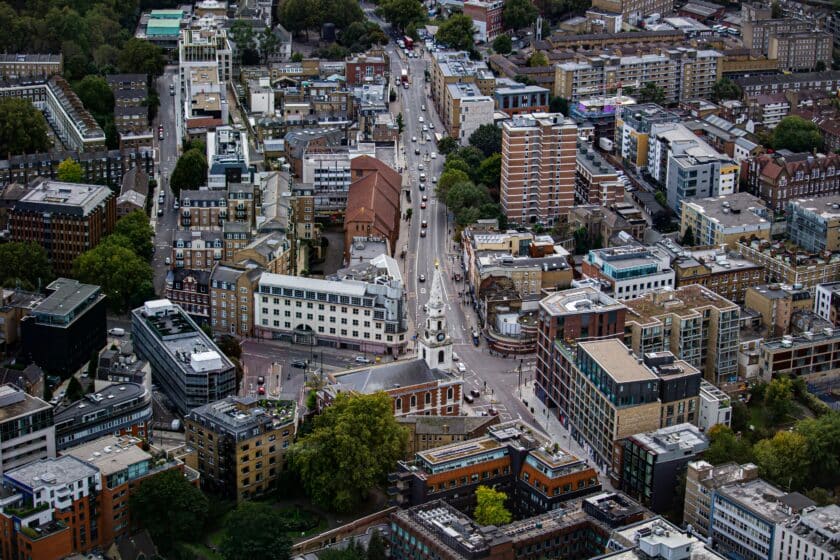
In the third of a series of articles on mega trends, James Peel, Senior Research Analyst at Gravis Advisory Limited looks at how urbanisation is creating opportunities for clients and the options available to gain exposure.

As the UK’s towns and cities continue to evolve, a profound transformation is taking place across the built environment.
Urbanisation is no longer simply about population growth in metropolitan areas; it is increasingly defined by the changing expectations of occupiers, the demand for higher-quality spaces, and the need for buildings that are fit for a more sustainable future.
In the third instalment of our series on the mega trends shaping the “next generation” of real estate, we examine how urbanisation is creating opportunities for investors.
From modern, amenity-rich offices to the regeneration of existing buildings in prime city-centre locations, the trend is driving a clear flight to quality.
As businesses seek workplaces that attract talent, support hybrid working and meet ambitious environmental targets, well-positioned urban assets are emerging as both essential infrastructure and attractive long-term investments.
The investment case
At the most recent count, more than 80% of the UK’s population live in urban areas.
However, this mega trend is less about the quantity of people living and working in cities, and more about the quality of space which they occupy.
Although cities consist of all types of properties, from retail to residential, it is the prevalence of offices that ultimately distinguishes urban areas from rural ones.
And in recent years the office sector has been impacted by two separate but related trends: the rise of hybrid work and a growing focus on sustainability.
The former is thanks to the pandemic and the latter due to both regulation and tenant demand. There has been a flight to quality, with demand for the best space remaining robust, whilst older, lower quality buildings risk becoming stranded assets.
How to gain exposure to urbanisation in the UK
There are many options for investors seeking exposure to this mega trend, ranging from pure plays with high-quality property portfolios concentrated in areas with the strongest fundamentals, to real estate investment trusts (REITs) that are more diversified from both a sector and location perspective. At Gravis we tend to focus on the specialists, for example London landlords Derwent and GPE.
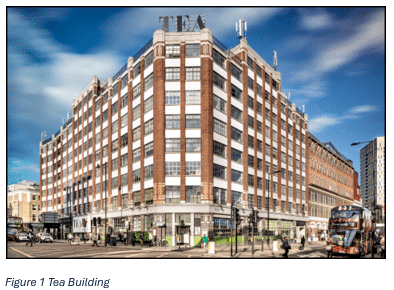
Derwent, the larger of the two, owns a £5 billion portfolio of mostly offices in central London, and distinguishes itself from peers with its focus on innovative, design-led developments (e.g. White Collar Factory on the Old St roundabout) and the regeneration of older buildings (e.g. Tea Building in Shoreditch, a former Lipton Tea factory).
GPE is also a developer, and perhaps best known for the creation of high-end offices, retail locations and apartments surrounding Hanover Square’s Elizabeth Line station.
In recent years GPE has evolved its business model, and today the company’s traditional focus on developments sits alongside a growing operational platform of managed workspaces.
This ‘Flex’ or ‘Fully Managed’ product is performing well; last year GPE signed 65 new leases of this type, achieving an average rent of £237 per square foot, about 8% better than expected.
In addition to Derwent and GPE, we also have exposure to Workspace, which caters to London’s small/medium enterprise (SME) sector, and Shaftesbury Capital, which owns an irreplaceable portfolio of prime properties within Soho, Covent Garden and Chinatown.
Looking ahead
For companies associated with the urbanisation mega trend, the outlook is positive. That said, there are two important topics that investors should be aware of: sustainability and artificial intelligence (AI).
Sustainability is both a risk and an opportunity for all property types, but especially so for REITs like Derwent and GPE. They have valuable office portfolios in central London, where the cost of upgrading buildings can be far higher than, say, a warehouse sat alongside a motorway.
The UK government has set out Minimum Energy Efficiency Standards (MEES) for commercial properties, measured by Energy Performance Certificates (EPCs), which range from A to G. As it stands now, buildings will need an EPC of B or better by 2030 in order to be let.
Both Derwent and GPE are well-positioned for this regulation, with more than 70% of their portfolios already achieving a B or better EPC, once developments are accounted for.
If regulation represents the risk for office landlords, changing tenant preferences represents the opportunity. All sorts of companies have set their own sustainability targets, and oftentimes a company’s workplace represents a material part of their total carbon footprint.
In order to lower that footprint, many are willing to pay more to lease space in modern buildings with the best sustainability credentials.
And this relates to the second topic, AI. At first glance, AI might seem like a risk for the office sector due to the potential for the displacement of workers by the automation of routine tasks.
However, the data tells a different story. AI-led companies of all sizes are growing quickly and are hiring top talent in order to beat the competition.
In order to attract that talent these companies require the right infrastructure, and that’s where Derwent and GPE’s well-located, amenity-rich workspaces come in.
Derwent recently announced a pre-let of all the office space (almost 140,000 square feet) at the Network building in Fitzrovia to Databricks, a leading data and AI platform for enterprises.
More than a quarter of GPE’s ‘Fully Managed’ product is let to AI-led firms including Legora and Vanta. More generally, new research from CBRE indicates that AI-led office take-up in London could reach 4 million square feet by 2033, equivalent to almost half of all un-let space currently under development in the city centre.
No information contained in this article should be construed as providing financial, investment or other professional advice and should not be considered as a recommendation, invitation, or inducement to subscribe for, dispose of or purchase any such securities. Professional investors only. Capital at risk. Past performance is not a guide to future performance.
Main image: urbanisation, london, street, ariel, isaac-struna-rInU5OEKHxw-unsplash