











With more individuals set to pay higher rates of income tax, Fiona Hanrahan, Senior Pensions Development and Technical Manager at Royal London provides a useful reminder of when a claim for tax relief is necessary and how clients can go about claiming it.

The freezing of some tax bands until 2031 will mean more individuals will pay higher rates of income tax. This is sometimes called fiscal drag and the Government’s own estimate states that this policy will raise more than £12 billion by the end of tax year 2031*.
Numerous studies indicate that a significant number of individuals do not claim the tax relief available on their pension contributions. It’s logical to assume therefore that this problem is only going to get worse.
So, if your clients are finding themselves paying higher rates of income tax and are paying individual pension contributions, a reminder that full tax relief is not automatically awarded in all situations will be useful.
Here’s a reminder of when a claim for tax relief is necessary and how to go about it.
- If your client is a UK taxpayer paying income tax at 40% or 45% or any rate in Scotland above 20% and
- If your client makes personal contributions to a pension scheme such as a personal pension or workplace pension operating relief at source, they will have to claim any tax relief due above the 20% awarded at source.
Any tax relief due on third party contributions into pensions is the responsibility of the recipient to claim, not the payer of the contribution.
It is only possible to claim tax relief on gross contributions up to 100% of relevant earnings as this is the amount the client will have paid income tax on.
It’s worth remembering that employer contributions are paid gross so there is no tax relief to claim on these. Also, any contributions paid under a salary sacrifice arrangement will have full tax relief already so a claim will not be necessary.
How to claim the tax relief due
1. Via self assessment tax return. This option should be used if the client already completes a tax return.
2. A standalone claim online. If the client doesn’t complete a tax return and they are happy to apply online, this is the better option.
3. The extra relief can be claimed by writing to HMRC.
For each option, the client will need to provide details of the pension contributions, including pension provider and amounts paid in the tax year, as well as their National Insurance Number.
HMRC may adjust the tax code so the client would receive the relief through their pay, or they could be paid the relief directly.
It used to be possible to phone HMRC to make a request for tax relief, but this is no longer an option.
It’s possible to claim any relief due for up to four years after the end of the tax year in which the contributions are paid.
For example, if you pay £8,000 into your pension, your provider claims £2,000 basic rate relief, making a total gross contribution of £10,000. If you’re a 40% taxpayer, you can claim back an extra £2,000 (20% of £10,000).
Key points to remember – relief at source
- Basic rate relief is claimed automatically by the pension provider.
- Higher/additional rate relief or any relief due to paying tax above 20% in Scotland must be claimed by the individual.
- It’s worth keeping records of any contributions paid and earnings particularly if claiming for earlier years.
There is useful information on the HMRC site. Claim tax relief on your private pension payments – GOV.UK
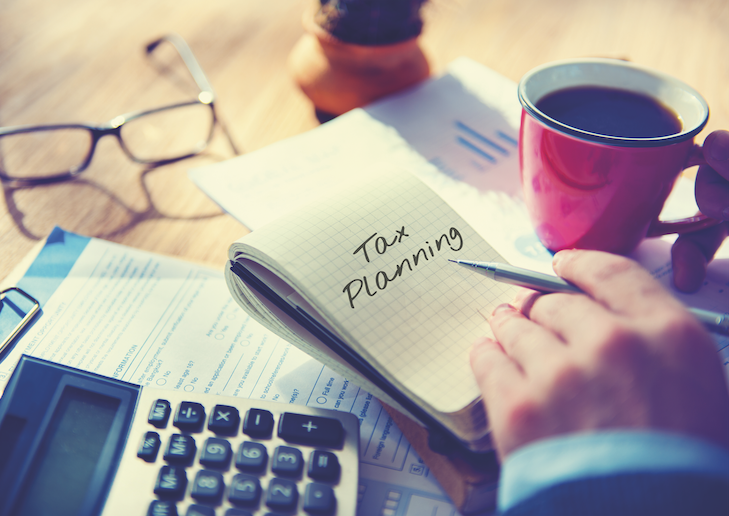
Main image: Tax planning (Shutterstock)