





















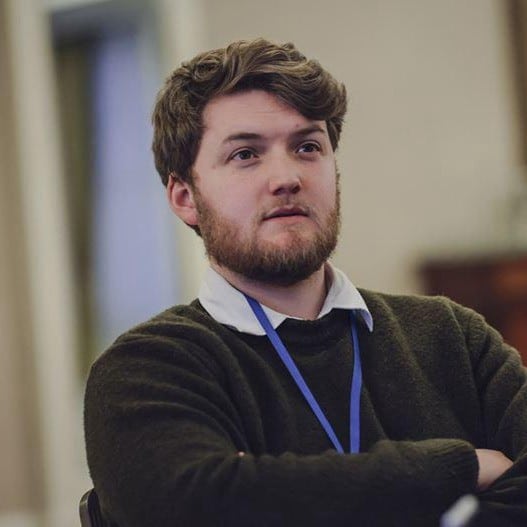
We recently spoke with Alex Freeman, a paraplanner who has developed a strong understanding of the environment that suits him best, bringing into focus how varied advice settings can be and why that matters for career decisions.
One of the quieter truths in financial planning is that the profession doesn’t really exist as a single experience.
Spend time with someone like Alex Freeman, Head of Paraplanning at Your Wealthcare, and it becomes clear just how different advice environments can feel, even when the work itself appears similar on the surface.
Alex’s career has taken him through large corporate firms, smaller professional practices, along with community-rooted advice businesses.
Each came with its own rhythm, expectations, and unspoken rules. In bigger organisations, structure brings clarity and scale, although it can also create distance.
Paraplanning can feel more transactional, with client relationships in many cases sitting several steps away.
In smaller professional firms, that distance tends to fade. Paraplanners are closer to advisers as well as clients, more involved early on, and trusted to think rather than simply produce.
Then there are advice businesses built around places and people rather than brand or growth targets.
Community-based firms operate on trust built up over many years. Clients don’t arrive polished or predictable; they arrive as they are.
The advice conversations are less formal and often more open. That environment calls for adaptability and a level of empathy that isn’t always taught in a textbook – if it’s covered at all.
Alex has seen how these settings shape paraplanners. In volume-driven firms, speed is often the focus.
In relationship-led practices, judgement carries more weight. In community firms, understanding people becomes just as critical as understanding products.
None of these environments are inherently better, but they call for different strengths and suit different personalities.
His experience also highlights how roles can blur depending on where you sit. In some firms, paraplanning is a stepping stone, while in others it becomes a long-term specialism.
Elsewhere, responsibility expands into operations or workflow design, sometimes covering oversight of systems.
Without any change in job title, accountability grows simply because someone is willing to take ownership and solve problems.
Technology adds another layer. Firms that move cautiously can feel steady but slower to adapt. Those that embrace AI and automation can free up time quickly, but only where there is a clear understanding of how those tools are being used.
Alex’s career path suggests that technology works best in the hands of someone who understands advice well enough to see where it adds value, while also recognising where it might weaken judgement.
For anyone entering the profession, his story is a useful reminder to look beyond job descriptions.
The same role title can lead to very different working days depending on the culture of the firm, the type of clients, and how open the business is to change. The environment you choose will shape how you think, as well as how you develop over time.
Alex didn’t start his career as a paraplanner with a plan as such. What he has gained though, is a clear sense of the environment that suits him and the role he wants to play within it.
By experiencing very different advice settings, he’s built a strong sense of what good looks like for him. That clarity didn’t come from textbooks or career ladders, it came from paying attention to how the work felt, not just how it looked on paper.
And that, perhaps, is one of the most valuable lesson Alex’s career offers.
Main image: office, desk, amy-hirschi-szrJ3wjzOMg-unsplash