























Emily Corck, Technical Manager with Mathews Comfort, is an example of the new opportunities opening up in financial planning firms. She spoke to Rob Kingsbury about her journey and how she and her fellow senior management members became shareholders in the company.
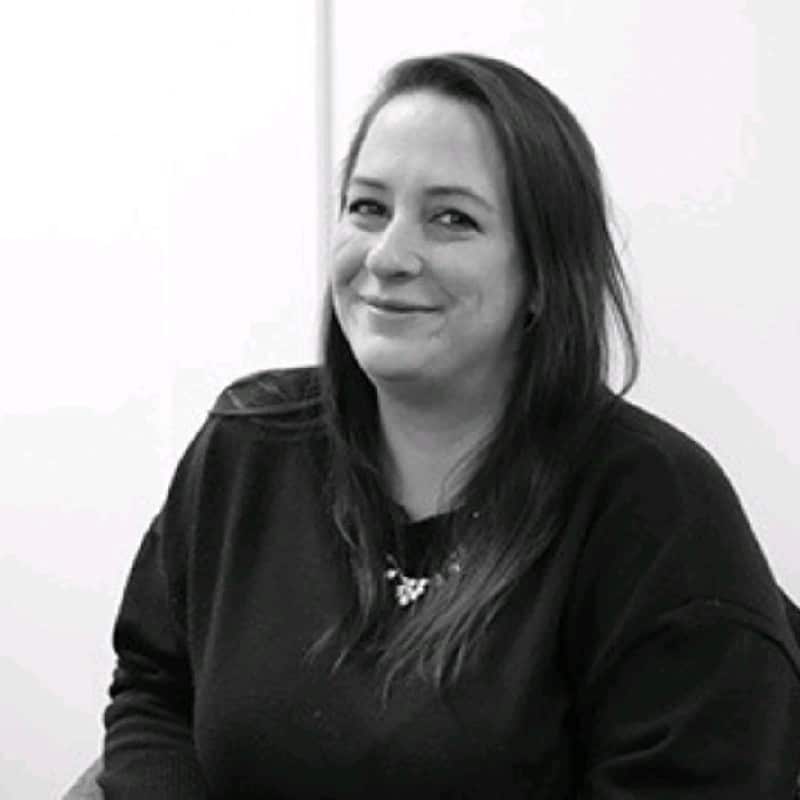
Emily Corck, Technical Manager with Oxfordshire-based Mathews Comfort, has been with the company for five years. In 2024, she and the three other senior management team members were offered a chance to buy into the company by the owner, Dan Weston.
In large part, the offer came from Dan wanting to retain the stability and independence of the company going forward, Emily explains. “Dan wanted to know that his business partners were engaged in the business and committed to driving the business forward as an independent financial planning firm. It was about securing the future of the business for our clients and the team.”
The four members of the senior management team – George Wagerfield, Faye Brightmore, Bev Tyrell and Emily – have taken 20% of the shares, while Dan retains 80%. “It was very exciting for us and all of us jumped at the chance,” Emily says.
The plan is that in another five years they each increase their share, and gradually keep buying, providing Dan with an exit strategy over time.
Being a part owner brings greater responsibilities and that means stepping up to the plate, she says. “I don’t think it’s drastically changed my mindset; I was always business minded, which I think comes with the operations manager role. But it has made me more aware of business issues and that I now have part responsibility for ensuring the business does well and our team is looked after.”
Functionally, with two financial planners, the director of operations and Emily, the new part-owners bring the right skills sets and focus when it comes to running the business, she says.
“It’s been positive for everyone involved. We are constantly having meetings about how we can improve what we do and take things forward.
“Also, other people in the business and people we hire in the future can see there are opportunities, they can see a long term future with the company.”
Importance of independence
Currently, Mathews Comfort has 12 staff: 3 financial planners, 1 paraplanner (they are currently bringing on two more), 4 technical assistants, and four staff in operations management and marketing.
The firm can trace its history back to 1851, when it was set up as an insurance broker in Oxford. The financial services arm was launched in 1988. In 2017 the insurance arm was sold to J Bennet & Son and in 2018 the financials services arm was 100% acquired by Dan.
Staying an independent financial planning firm is important to the business and the team, Emily says. “Our independence means that we can do things the way we want to do them. We are a very stable business, and we’ve a special history that makes us stand out.
“I think when firms are acquired by consolidators and brought under one roof, they can lose what made them special. We’re seeing a lot of paraplanners leaving consolidated companies because they’ve lost the culture that made their job special. I think it’s important for the future of the profession that there are smaller companies that have that stability and individuality, where people can shine.”
From administrator to operations manager
Emily’s career in financial services started as business administrator with SAGA, before she moved to London, where she worked for Alan Smith’s Capital Asset Management for close to 12 years, leaving as Client Services Manager. During this time she became more interested in the operations side of the business and moved to another wealth manager as Operations Manager before an ex-colleague approached her for the Technical Manager role with Mathews Comfort.
In her current role Emily is responsible for managing the paraplanners and the technical assistants (the administrators). “I’m also responsible for most of our back office systems, our compliance and our processes. Basically, I make sure that everything runs efficiently,” she says. “I don’t think anything needs to be overly complicated and I do love to simplify things.”
Of the transition into the operations role she says: “To be honest, I found it quite easy because I knew that I didn’t want to be a financial adviser and I like making things more efficient. I enjoy simplifying things. That’s one of my key skill sets.
“Also, I’m very active and I get involved. I think that’s probably why it felt easy because I was putting myself in the position so my managers could see what I was good at and what I liked doing. And I’ve always been open to doing the work that other people aren’t interested in doing. That helps.”
For any paraplanners or administrators out there who want to be an operations manager in a financial planning firm, she advises: “Get involved. Start learning other parts of the business and care about the processes. If you don’t have processes, then start writing them. I think a lot of businesses probably don’t have processes or up-to-date ones. That’s a good place to start.
“Then start building your opinion on how the business is running and put your hand up. If you know projects are coming up, volunteer and get involved. And bring your ideas to the table. Show people that’s what you want and that’s what you enjoy. Because we all know that people do a better job when they want to do it. Do the work and be recognised for it.”
She also recommends Michelle Hoskin’s BOMS service (Business Operations Managers Network) for operations managers. “Often as an ops manager you are on your own, having to deal with the business’ issues. There can be a lot of pressure and it can be quite stressful. So having a community there for support, where you can reach out to other people doing the role for advice and their views, to know someone else out there is having the same issues, can really help. For anyone wanting to know more, its’s a good place to start as well.
“Also, I like that Michelle’s really bringing the Ops Manager role to the forefront and showing how important it is for financial planning and other businesses. It can make businesses much more efficient and it helps free up advisers to see more clients, which is where their skills lie.”
Taking Mathews Comfort forward
Looking to the future of Mathews Comfort, “our focus is on growing the company,” Emily says. “We’re always talking about how we can develop and improve the business.
“I’m looking at how we can bring in technology to help us become more efficient – we recently swapped to Plannr as our back-office system and we’re exploring Saturn and ChatGPT for AI – so we can provide a better service for clients and keep bringing in younger people as clients.
“I think that is so important for the profession, to engage with younger demographic. It’s surprising how little younger people know about financial affairs and how to grow their wealth. I think women in particular struggle with it. There’s also a perception that financial planning is only for the very wealthy. I’m hoping we can show that advice is far more accessible than they think.”
Main image: luke-chesser-pJadQetzTkI-unsplash