





















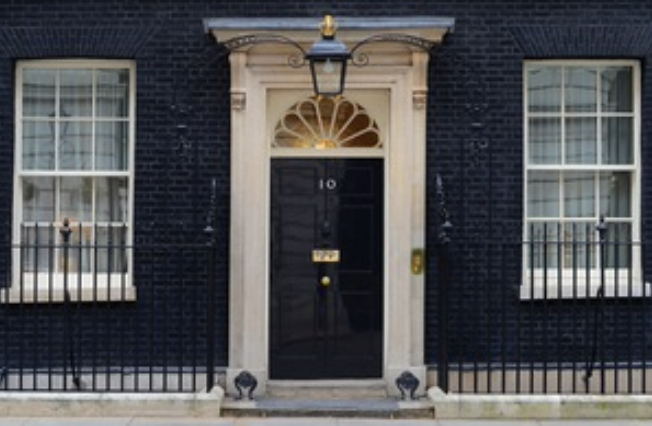
Sir Keir Starmer has pointed to a “painful” October Budget in a speech made in Downing Street.
The Prime Minister may well be laying the groundwork for tax rises, in what industry experts see as “an ominous tone”, ahead of the Budget on 30 October 2024.
“In perhaps the most compelling indication yet of which taxes could be on the table in the October Budget, Starmer said that those with the ‘widest shoulders should bear the heaviest burden’, said Laura Suter, director of personal finance at AJ Bell.
She added this was fuelling rumours around increases to capital gains tax and inheritance tax, while also doubling down on Labour’s manifesto commitment not to tinker with income tax, National Insurance or VAT.
“His comments will also reignite the rumours of a specific ‘wealth tax’ to be paid by the wealthiest in the UK. This could just take the form of increasing existing taxes for investors and the top earners, or it could be a new, standalone tax on those with the biggest pockets,” Suter added.
Capital gains tax could be an obvious place for the government to make changes and generate more tax revenue, she said. “The most radical option is equalising CGT rates with income tax – which would represent a huge tax increase for investors. The Office for Tax Simplification, now disbanded, haspreviously argued the CGT exemption was too high and that the disparity between rates of CGT and income tax distorts decision making. The CGT free allowance has been slashed in the past two years as Jeremy Hunt sought to balance the books, but that doesn’t rule out further tax increases.”
An alternative would be to get rid of some of the CGT tax breaks for businesses, where business owners selling their company benefit from a lower rate of CGT, Super suggested. “Raising this rate from 10% up to 20% to equalise it with standard CGT rates is estimated to generate £710 million for the government by 2027/28 – but it’s clearly not a move that will be popular with entrepreneurs.
“CGT being wiped out on death also creates an incentive in some cases to hold onto assets so they are taxed as part of the estate under IHT, potentially paying less or no tax. But if the government scrapped this tax break, there would likely need to be some allowance made to account for inflation. Otherwise people who have owned investments for a very long time would be severely punished.”
Dividend tax could also come under the spotlight. Looking at the pros and cons, Dan Coatsworth, investment analyst at AJ Bell, pointed out that the previous government had “already cut dividend tax allowance to the bone”, going from £5,000 to the current £500. “The big question is whether Labour is prepared to go any deeper,” he said.
“HMRC is expected to collect almost £18 billion from dividend tax in the current tax year so it is already a meaningful source of revenue. While slashing the allowance, perhaps to £250, cannot be ruled out, the new government would be incredibly unpopular with investors if it reduced the dividend allowance any further.
“Another option would be to raise the rate of dividend taxation, although there’s only so much room for manoeuvre with tax rates on dividends already very close to matching income tax rates for higher and additional rate taxpayers.
“The government will likely tread carefully here. Labour wants to encourage investment into the UK stock market and create a more vibrant place for British businesses to access growth capital. Therefore, taking even more of investors’ returns as tax would mean shooting itself in the foot.”
IHT could be another option but Suter pointed out that although IHT tax receipts are rising, only a small proportion of people pay the tax and at 40% it is already one of the highest tax rates, “so it’s unlikely we’d see a headline rate increase”.
Turning to pensions, Tom Selby, director of public policy at AJ Bell, reflected on three options the Government could take to raise revenue from savers pensions cash.
“Pretty much every major fiscal event over the last two decades has been preceded by feverish speculation that the axe could fall on pension tax perks. There are broadly three different avenues the chancellor could pursue if she wanted to raise cash from savers – but each comes with significant practical and political challenges.”
“Most controversially, the government could move to restrict people’s entitlement to tax-free cash when they access their retirement pot. Currently, most people can take up to 25% of their fund from age 55 tax-free, with this minimum access age due to rise to 57 in 2028. The amount of tax-free cash most savers can take over their lifetime is capped at £268,275. Starmer and Reeves could, in theory, lower the amount of tax-free cash Brits are entitled to – or even abolish the entitlement altogether.
“However, this would be deeply unpopular and fundamentally undermine wider government efforts to boost long-term investing, including in UK Plc. It would also inevitably be hugely complicated, as those who have already built-up entitlements to tax-free cash under the existing rules would almost certainly need to be protected against a retrospective retirement tax. Furthermore, the overall amount people can access tax-free has already been scaled back significantly over the last 14 years, and if the current figure remains frozen, it will continue to be eroded in real terms.
“The most common pre-Budget pension tax relief speculation centres around the future of higher-rate pension relief and the potential to introduce a flat rate of pension tax relief. At the more extreme end, this measure could see pension tax relief restricted to the basic rate of 20% for all, with advocates suggesting this could raise billions of pounds of extra revenue for the Treasury.
“However, as with most radical pension tax changes, introducing a flat rate of relief is much easier said than done. A huge chunk of any potential savings to the Treasury from a pension tax relief raid would come from defined benefit (DB) schemes, the majority of which now reside in the public sector.
“If a flat rate of pension tax relief below 40% were applied on these schemes, the only way to ensure the correct level of tax relief was applied to contributions from higher and additional-rate taxpayers would be to hit those members with a tax charge likely running into thousands of pounds. This would therefore risk opening up a blistering row with NHS staff and civil servants at a time when many public services are already stretched to breaking point.
“Lastly, the tax treatment of pensions on death will be viewed by many as low hanging tax fruit ready to be picked. Under existing rules, it is possible to pass on your retirement pot completely tax-free to your nominated beneficiaries if you die before age 75. If you die after age 75, any inherited pension is taxed in the same way as income. Crucially, pensions usually don’t form part of people’s estate for inheritance tax (IHT) purposes.
“This is undoubtedly a generous set of rules and something which could easily be reviewed by the new government. However, as is often the case with pensions, applying any new tax on death – or bringing pensions into the IHT net – would come with substantial challenges.
“The biggest of those would be around how to treat people who have made decisions about their retirement pot based on the pensions death tax rules as they are today. There will, for example, be lots of people who chose to transfer defined benefit pensions into a defined contribution scheme in part because they wanted to prioritise passing money on tax efficiently to loved ones. If all of a sudden that money became subject to a new pensions death tax, those people would, understandably, feel like the rug has been pulled from under them. It is therefore possible a complicated protection regime would be needed to ensure people are not subject to unfair and arguably retrospective tax measures. This would inevitably reduce the money the Treasury could potentially raise from such a move.”
Suter added that while some speculation could be entered into, from a financial planning perspective, “it is always wise to ignore the rumours and to only make decisions based on the current tax system.”