


















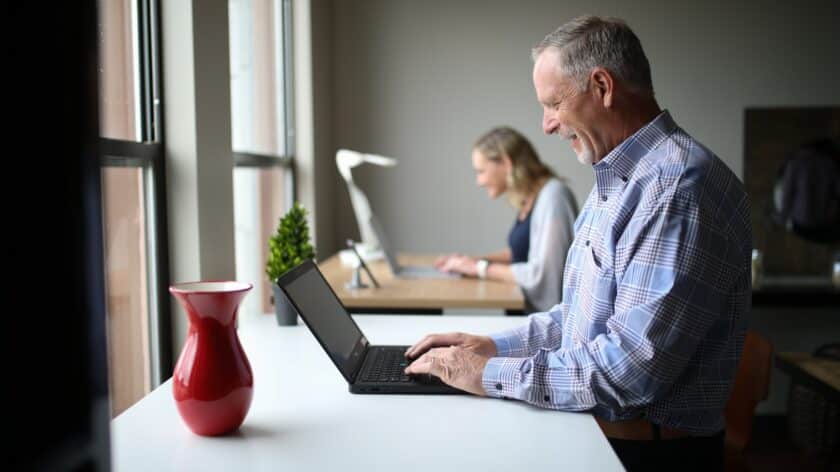
One in six retirees have already returned to work or are considering it amid ongoing financial pressures, says Standard Life.
While some have returned or are considering returning to employment by choice, with a quarter (24%) saying they feel lonely or socially disconnected from others when not working, the findings highlight that financial pressures are a key driver behind this trend to re-enter the workplace.
Almost a third (30%) of retirees say their standard of living is worse than before they retired, compared with just over a fifth (22%) who say it is better.
Standard Life said many retirees also feel underprepared for retirement. A fifth (20%) say they did not realise how much money they would need in retirement, with a similar proportion (21%) wishing they had planned their retirement more thoroughly and 21% admitting they had not appreciated how long retirement would last.
The retirement specialist’s analysis shows that inflation has had a significant impact on retirees’ day-to-day spending with £100 in 2020 now worth just £78.25 in real terms. For people who retire before state pension age, or who do not have a defined benefit pension with built-in inflation protection, maintaining income in later life can require more planning.
Separately, expectations around retirement are shifting, says Standard Life, with fewer people viewing it as a single, fixed moment when work simply stops. However, this doesn’t come without challenges. While more than three quarters (78%) believe they could still do their job at age 60, this confidence drops to around half (49%) by age 70. Factors such as poor health, the need to retrain or change roles and concerns about age discrimination were all cited as potential barriers.
Looking ahead, uncertainty remains, with more than a third (38%) expecting their retirement lifestyle to be worse than their current one, rising to nearly half of Gen X (49%) and over two in five women (43%).
Mike Ambery, retirement savings director at Standard Life, said: “Retirement is no longer a single moment where work simply stops. For many people it’s becoming a more flexible journey, shaped around the life they want to live.
“For some, returning to work is about staying active and connected. But for others, it reflects the reality that retirement isn’t always turning out as expected, particularly as rising costs put pressure on incomes. In a world that feels increasingly uncertain and unpredictable, it’s more important than ever that people feel supported to engage with their financial futures and understand what their retirement could look like.”
Ambery said simple steps such as regularly checking in on pension savings and thinking about how they will be used to generate an income, can make a difference.
“It’s also important to check when you’re due to retire, as your planned retirement date and your state pension age don’t always align, and to make sure you’ve planned for any gap between the two. Taking time to consider the kind of lifestyle you want, exploring phased or flexible retirement options, and seeking guidance early can help people make more informed decisions. Planning ahead means people are better placed to manage their money with confidence and achieve greater financial security over the long term,” he added.
Main image: IpMKLSi7l0w-unsplash