






















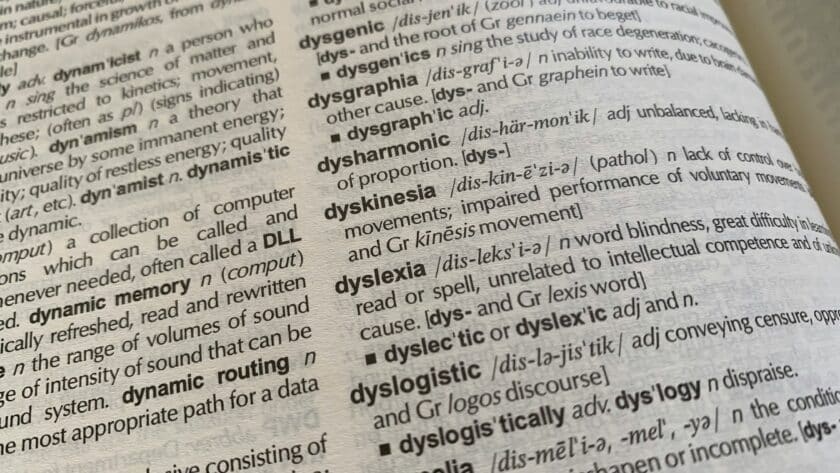
For paraplanners with dyslexia, communicating complex information can require extra time and effort. Damian Zhang, paraplanner at Quilter Cheviot, here examines how AI can help make paraplanning more accessible without replacing human expertise.

Dyslexia is a well-known and common learning difficulty but is often misunderstood. It is estimated to affect around 10% of the UK population and impacts not just reading but writing and the processing of information too.
For many people this means they face challenges in the workplace that are often invisible to others.
For paraplanners, these challenges can be especially pertinent given the large volumes of reading and technical terminology the job brings.
We are also relied upon for proofreading, report writing and processing complex client information, while on the professional development side of things there is the expected study, revision and exams to contend with.
For someone with dyslexia, like me, these tasks are entirely achievable, but they can require significantly more time, effort and concentration.
While being diagnosed during my school years, it has taken some time for me to fully understand how dyslexia affects the way I work. What has become clear to me is that dyslexia is not a reflection of intelligence or technical ability.
Many people with dyslexia have strong problem-solving skills, creativity and technical knowledge. The challenge often comes from translating those thoughts into written words, particularly when faced with deadlines, large volumes of information and highly technical subject matter.
The advances in artificial intelligence (AI), therefore, have the potential to be genuinely transformative for dyslexic paraplanners.
AI should never replace professional judgement, technical knowledge or experience, but it can help remove some of the administrative and communication barriers that individuals with dyslexia may encounter, allowing them to focus more on the quality of their thinking and the value they bring to clients.
One of the most practical uses of AI is dictation. Using the recording function within AI software paraplanners can speak naturally rather than type.
As with any AI prompts, context matters hugely when doing this, so talking through client scenarios, outlining research findings or explaining rationales behind recommendations are crucial, especially when the subsequent request is for reports to be drafted.
AI can help transform those spoken thoughts into a structured format such as meeting notes, report wording, emails or bullet points.
For colleagues with dyslexia, speaking can often feel more natural than starting with a blank page. Rather than focusing immediately on spelling, punctuation or sentence structure, users can concentrate on the content itself.
In many cases, this helps improve confidence whilst also reducing the time spent producing written work.
Another valuable application is proofreading and consistency checking. Once a suitability report has been drafted, AI can become a paraplanner’s second pair of eyes, helping to review spelling, grammar, clarity for formatting.
It can also be a useful stress testing tool for any client documents or instruction, helping to identify inconsistencies such as differing client objectives, incorrect investment amounts, variations in attitude to risk wording or incorrect product or provider names.
It is important to stress that a paraplanner remains responsible for the final output, but utilising AI in this way can help provide an additional layer of quality control that not only reduces errors but also reinforces the trust between the adviser and the client.
As with any technology, AI should be used responsibly.
AI is not a cure for dyslexia, nor should it be viewed as one. It is instead a support tool that can aid professional judgement. The responsibility for the advice, recommendations and client outcomes remains with the adviser, and from a data privacy perspective there are compliance requirements that need to be adhered to.
However, when used appropriately, AI has the potential to improve accessibility, build confidence and create a more level playing field within the profession.
For paraplanners with dyslexia, this can mean spending less time battling spelling, structure or information overload and more time focusing on what truly matters – delivering high-quality work and positive outcomes for clients.
As technology continues to evolve, that can only be a positive step for individuals, firms and the wider paraplanning community.
Main image: dyslexia, rob-hobson-0apZjDdRS5o-unsplash