






















When it comes to energy transition investing, Dr Alex O’Cinneide, Founder and CEO of Gore Street Capital says the key distinction between storage, solar and wind is not cost – it’s the level of revenue certainty that sits behind the returns.

One of the most persistent misconceptions in energy transition investing is that energy storage targets higher returns than solar or wind because it costs more to build.
In reality, the difference has far less to do with construction costs than with the nature of the revenue being earned.
Storage, solar and wind generate cash flows in fundamentally different ways and that difference in revenue is what ultimately drives the risk-return trade-off.
Where the difference begins
Solar and wind assets are, for the most part, built around a single, relatively predictable task. They convert available sunlight or wind into electricity and sell it.
In many markets, a significant share of that electricity is sold under long-term contracts or subsidy-style mechanisms that lock in a price for extended periods, sometimes decades.
The result is a revenue profile that is comparatively stable and forecastable, provided the underlying weather resource behaves broadly as expected.
That stability is precisely what allows solar and wind to be financed at a lower return, because investors are being asked to take on comparatively modest risk in exchange for that return.
Energy storage works quite differently. Rather than converting a natural resource into electricity, a storage asset provides a service to the grid by absorbing electricity at one moment and releasing it at another, or responding within seconds to help keep the grid’s frequency stable.
Some of that revenue can be contracted, but a significant portion is typically earned by actively trading in short-term markets, buying power when it is cheap and selling it when it is expensive, or being paid to stand ready to respond if the grid needs it.
That revenue depends on market conditions that shift from day to day and year to year, shaped by weather, fuel prices, the amount of competing storage capacity in the market and broader patterns of system volatility.
The real source of higher returns
This is really the heart of the trade-off.
A pound of contracted solar revenue and a pound of merchant storage revenue are not the same thing, even though they are both, in the end, a pound.
The solar pound is closer to guaranteed. The storage pound is earned by taking on exposure to market conditions that can move considerably over time, which is exactly the kind of exposure that requires compensation in the form of a higher targeted return.
Investors are not being rewarded more because storage is more expensive to build. They are being rewarded more because they are taking on a different, less predictable kind of risk.
It is worth being honest that this cuts both ways. When market conditions are volatile and there is a genuine need for the flexibility storage provides, that revenue can be considerably higher than a fixed contract would ever deliver.
When conditions are calmer, or when a lot of new storage capacity enters a market at once, that same revenue can come under pressure.
This variability is not a flaw in the asset class; it is a direct consequence of storage earning its return by responding to volatility rather than by locking in a fixed price for a fixed output.
Anyone assessing storage as an investment needs to understand that the return profile will, by design, move around more than a typical renewable generation asset, and that this movement reflects genuine market dynamics rather than simply operational performance.
Cost versus risk
There is also a useful distinction to draw between the underlying technology cost and the revenue opportunity it is built to capture.
It is entirely possible for two projects, one solar and one storage, to have similar construction costs per megawatt of capacity and still deliver very different returns, because the thing being sold is different in each case.
Equally, it is possible for storage costs to fall over time, as they generally have, without changing the fundamental logic of why its return sits where it does.
That logic is rooted in the nature of the revenue rather than the cost of the hardware.
The question investors should really ask
For investors trying to compare these technologies as part of a broader energy transition allocation, the key question is not which technology is cheaper, but what kind of risk sits behind the return being offered.
Solar and wind offer relatively predictable revenues and correspondingly modest returns. Storage offers the potential for higher returns, but only because investors accept greater exposure to changing market conditions.
Seen through that lens, these technologies are not competing with each other. They simply occupy different positions on the risk-return spectrum.
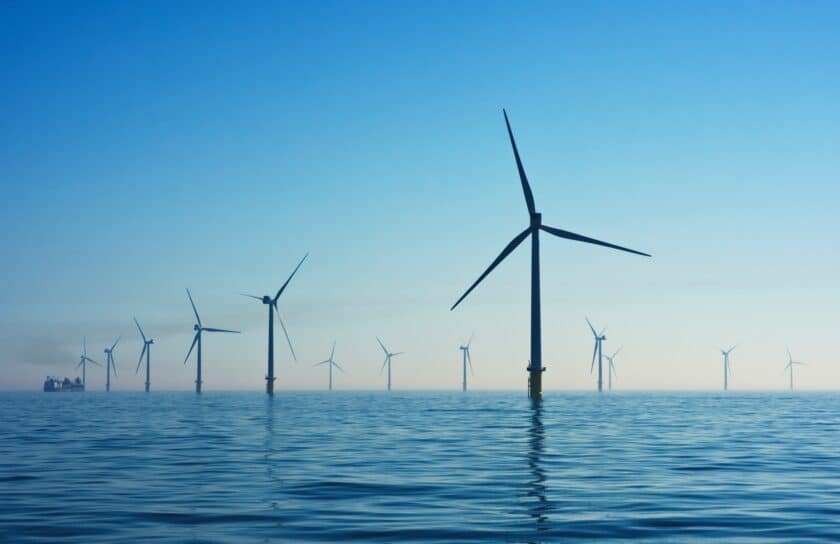
Main image: wind farm, ESG, sustainable, nicholas-doherty-pONBhDyOFoM-unsplash