























Inflation and interest rates look set to rise further if the government’s mini-budget frees money into the economy.
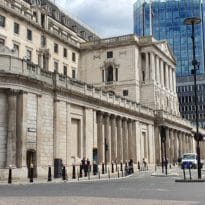
The Bank of England has raised interest rates by 0.5% to 2.25% on 22 September.
Markets were expecting a 0.75% hike, following the same increase on 21 September by the Federal Reserve, which pushed sterling to its weakest point against the dollar since 1985. A weak pound serves to import inflation.
Fiscal measures expected to be introduced by Government in the mini-Budget to help UK citizens struggling in the inflationary environment are likely to boost the inflationary pressures, which will see the Bank of England forced to increase the interest rate further.
Hinesh Patel, portfolio manager at Quilter Investors, said: “The Bank of England continues to be on the back-foot and playing catch up with the Fed, and at 2.25% UK rates lag the 3-3.25% range in the States.
“The BoE also missed an earlier window of opportunity to, at the very least, dampen the impact on sterling. Instead, the Bank is now in a quandary of how to set policy rates with fiscal uncertainty and a ratcheting up of government borrowing.
“The Reaganesque policies being pitched by the new cabinet may boost growth, but in our opinion will add to core inflationary pressures in the medium term.”
Fixed income investors could benefit however, Patel added: “The net supply of Gilts to the market is being exacerbated by accelerating quantitative tightening. In the near-term, money trends suggest the inflationary pulse is in the rear-view mirror. Coupled with the hit to business confidence and consumer spending power this year, we expect the Bank will be hiking into a rapidly deteriorating, but not disastrous, environment.
“For investors, this has now produced one of the most prospectively attractive set-ups for fixed income assets in at least a decade.”
Jonny Black, strategic director, abrdn, said inflation and bleak Bank of England forecasts will likely see more people to turn to their adviser for support.
“Rash financial decisions are even more dangerous in today’s economic climate. Advisers are stepping up to the plate once more, reassuring their clients and helping them to maintain the balance of investments they need to achieve their long-term objectives.
“And, from a commercial perspective, it is now essential for advisers to take the same long-term view as their clients. They must consider whether their business strategies for everything from pricing to recruitment are suitable for an extended period of high inflation.”
Investors were also likely to look to balance traditional assets with uncorrelated alternative assets, suggested Jatin Ondhia, CEO of Shojin. “Against the current backdrop, it should be expected that many investors will look to balance traditional and alternative investments. Real estate could prove particularly popular if indeed the Chancellor does announce a stamp duty cut in the mini-Budget. Bricks and mortar always attracts significant demand from domestic and international investors, but I would predict this demand will rise notably if tax incentives are introduced.”