





















Peter Michaelis, Head of the Liontrust Sustainable Investment team, shares why the Sustainable Future funds chose not to participate in the SpaceX IPO, assessing the business through a sustainable investment lens.

The SpaceX IPO captured headlines beyond the financial pages, both for the scale of the business and for the paper wealth it created for its founder, Elon Musk. We want to explain here why the Sustainable Future funds did not participate in the IPO.
We believe investing is founded on forecasting the future earnings and cashflows of businesses. If we can find share prices that are materially lower than the sum of these future earnings, discounted to account for the time value of money, then that makes a sensible investment.
Forecasting the future is difficult. There are a wide range of factors and outcomes that can affect even the best businesses, so we have to use our judgement to assess the likelihood of different forecasts.
To help us, we look to history and identify well-trodden trends within economic development.
These are encapsulated in our themes: 22 areas of consistent growth as our world develops to become cleaner, healthier and safer. These are areas where one tends to find growth ahead of market expectations.
We also look at the characteristics of businesses that tend to result in better outcomes for shareholders: their governance structures, their culture and their relationships with suppliers and customers.
Generally, companies with good governance structures, strong rights for all shareholders and a culture aligned with long-term value creation make for better investments.
How did SpaceX look from this perspective?
The forecasting of its future revenues is incredibly difficult, let alone its earnings. Yes, it has a dominant space launch system that is likely to have few rivals for years to come; and yes, Starlink is a fast-growing communications system.
But the bulk of the projected value is meant to hang on its AI capabilities and space-based data centres. Both of these are risky, highly capital-intensive ventures with more competitive threats.
They could be immensely successful, but this is a long way from certain. The Starlink communications business fits with our theme of Connecting people, but the rest, and vast majority, of the business does not fit any of our themes.
Then we look to see if the share price materially undervalues these prospects, and it is hard to say it does. The price-to-revenues ratio for next year is more than 100x, which is about 30 times the prevailing multiple of the S&P 500.
It will have to be the most extraordinary trajectory of growth for this already enormous company for the valuation to make sense. Maybe it will, but it would be without precedent.
And finally, we come to the company structure. As a sustainable investment strategy, an investment in SpaceX would be highly unlikely and, in fact, it is a company we would actively avoid. Our concerns are primarily driven by environmental and governance considerations.
From an environmental perspective, SpaceX’s operations involve significant carbon emissions and a continued reliance on fossil fuels. From a governance standpoint, we see a number of red flags, particularly relating to the conduct and leadership style of its founder and CEO.
For context, we do not currently invest in Tesla due to governance concerns, despite the company being considerably more attractive from an environmental perspective.
In addition, there is the history of IPOs themselves. They tend to occur when market actors are well primed and incentivised to get the deal away successfully.
Generally, they have not made great bets. Indeed, a recent analysis of the last 15 years of large IPOs shows a median 30% decline in value over one year. The odds are against you here too.
All these factors together, I hope, explain why we sat on the sidelines for this extraordinary financial market event.
There are likely to be two more big IPOs this year, OpenAI and Anthropic. We will take the same approach to assessing these.
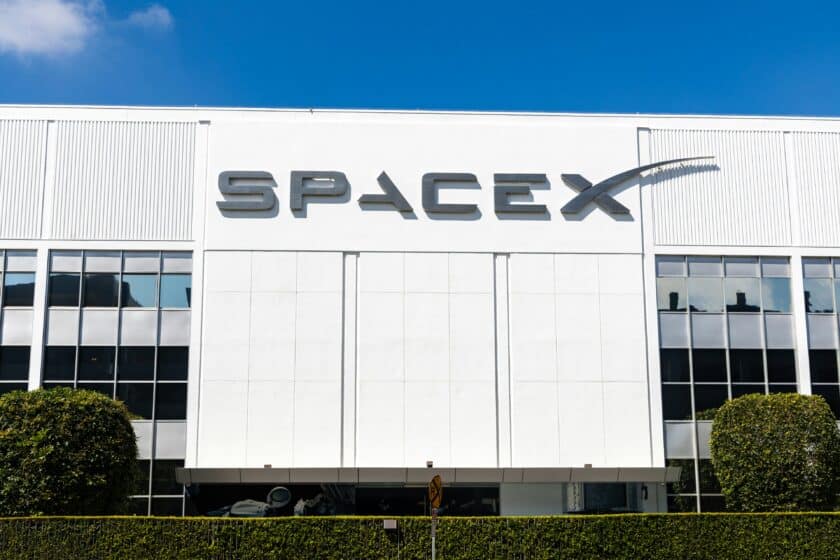
Main image: spacex-Ptd-iTdrCJM-unsplash