




















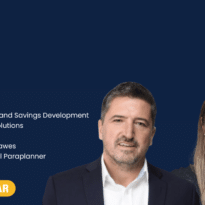


The ability for paraplanners to more efficiently personalise suitability reports and deliver them faster for clients are just some of the game changers that will see many more paraplanners start to utilise AI, believe Robert Harradine and Caroline Duff of ammonite. Rob Kingsbury spoke to them about AI assisted report writing and how AI can help advice firms develop going forward.
“The FCA is laser focussed on ensuring the reports given to clients are fully personalised for that individual. But to do that takes time and money for advice firms. This is where AI software can help make the whole process more efficient and faster for the firm to produce the report and the client to receive it,” says Harradine.
“Having the ability to configure and customise how AI is used within a firm, to use their own branded forms, reports, documents and templates and have AI versions of those forms, is the game changer. AI can fit with how the firm likes to work, how it talks to its clients and the tone of voice it takes, while doing so quickly and accurately.”
Duff adds: “When paraplanners have access to AI assisted suitability reports, changes to templates and reports can be made far faster. For example, with our software, where templates need to be amended as a result of changes to the advice, say to the contribution or drawdown level, the new information can be typed in and the AI will make all the related changes throughout the report – for wording, calculations, tables and any algorithms.
“And this is the same for changes to regulation or legislation. With the Budget coming up, the consensus expectation is that there will be changes to tax. There could be changes to firms’ rationale paragraphs, product recommendations could change, risk factors too. They can be made to the relevant sections quickly and then percolate to everywhere that text has been used so all reports going out are up to date and accurate.
“This is a critical and particularly important from a compliance perspective, that where changes are made the appropriate amendment to a template or a calculation isn’t missed.”
A key aspect of personalisation is not just getting it right for the client but from the perspective of the way the firm likes to address its clients, the tone of voice it likes to take, says Harradine. “One firm might like its suitability reports to sound very legal while another may want a tone of voice that is more relaxed and casual in nature.
“This is where AI can be used to help deliver that across reports and in a consistent manner. But it’s also about the wording and how firms want the language to be interpreted – some will say ‘we discussed in our meeting’ while others might say ‘we determined from the meeting’. AI brings that versatility into report writing and makes it more efficient.
Harradine and Duff bring paraplanner and adviser experience to the issues. They started working together at advice company Sterling and Law, where Duff was a paraplanner and Harradine an adviser. They went on to set up their own financial advice firm, which they then sold in order to establish Ammonite.
“As a paraplanner I have written thousands of suitability reports and tried all the tools. For years I’ve been involved also in helping to find and create efficiencies in the process,” says Duff. “Rob and I found common ground in that we both saw the need for technology to help with the pain points being experienced by paraplanners in both the writing of personalised suitability reports while also providing consistency of delivery.
“We’ve built tech with paraplanners in mind,” adds Harradine.
Where is AI going?
In a recent Professional Paraplanner Parameters report just 27% of paraplanners said they were using AI in suitability reports but Harradine believes that is about to change, and rapidly. “To date, we have been dealing with large to medium sized advice firms. They tend to lead the way when it comes to technology as they often have the resource to do so. But the market is now in a place where we’ve had the trailblazers and what we’re going to see is more of the mainstream advice market looking at what AI is giving those companies and wanting that for their firms and their clients.
“We see that financial advice firms are extremely busy and often they don’t have time for change management and innovation. But around 70% of advisers are now using AI to transcribe client meetings. They’ve liked that and seen how beneficial it can be for their firms. I think what we’re going to see now is that extend into the paraplanning role, with the more manual and repetitive tasks done by AI, which frees up paraplanners’ time to deal with more complex cases, work on more cases and develop their skills and knowledge and so on. Over the next year or two I think we’re going to see massive adoption of AI, with smaller firms looking at how they can incorporate it into their processes and procedures.
But Duff doesn’t see AI making the advice decisions. “The question for firms will be how much of the report writing decisions will AI make. I think firms will want to leave that in the hands of the advisers and the paraplanners, who know the client and can read between the lines when needed. There may well be tools that come on to the market that will attempt to take over that part of the process but I think there has to be human element to the service.”
Nor do Harradine and Duff see AI taking away the role of the paraplanner. “The suitability report and the annual review are the two most important documents that are put in front of a customer. The quality of those documents is paramount to the reputation and trust between the firm and its clients. It may be that simpler reports can be produced entirely by AI but we see AI giving paraplanners the time to be pro-active and the opportunity to look at ways to deliver a better service to clients. Technical, qualified paraplanners will be integral to the advice process for years to come.
“AI will give firms the opportunity to look at scaling their business by 2x or more, or staying the same size and seeing how they can build on what their business offers. Important will be engaging with the children of clients and intergenerational wealth, keeping those assets under management sticky for the firm.”
Main image: charlesdeluvio-AT5vuPoi8vc-unsplash