
























Paraplanning has emerged as a vital part of the advice process in recent years, yet the lack of a firm job definition and misconceptions around the role remain key challenges, say paraplanners.
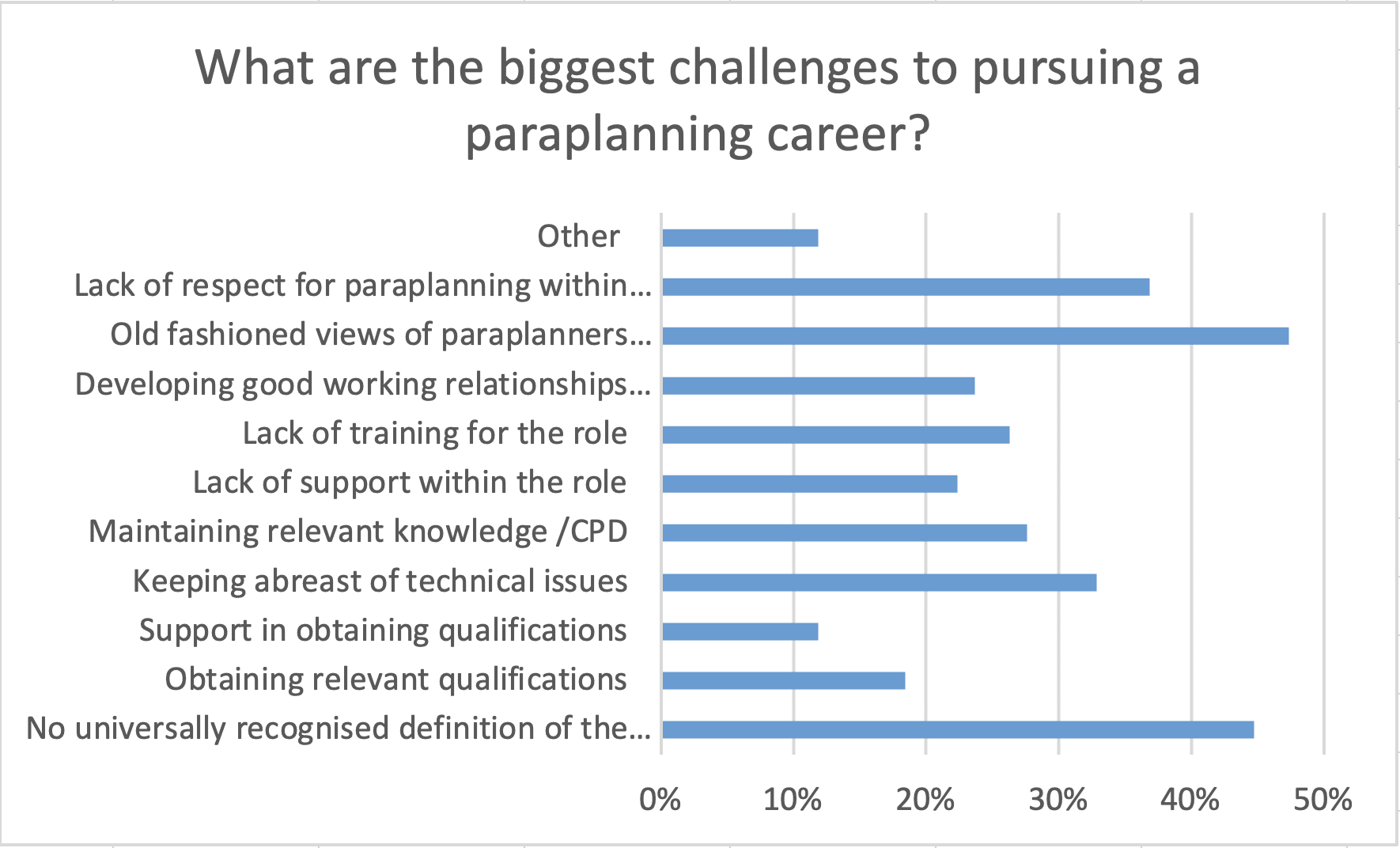
According to the recent Professional Paraplanner Parameters survey, 45% of paraplanners said the lack of a universally recognised job definition remains the biggest challenge to pursuing a paraplanning career, with many pointing out that misconceptions around what the role of paraplanner entails continue to persist. Nearly half (47%) said advisers hold old-fashioned views of paraplanners.
One paraplanner commented: “There are so many variations on the paraplanner role as it is generally down to individual interpretations and what businesses want rather than being based on structured descriptions.”
The results of the survey revealed widespread feeling among paraplanners that they continue to be viewed as “glorified administrators” rather than an integral part of the advice process. Tellingly, 37% of paraplanners said a lack of respect for paraplanning within advice firms posed a challenge.
One paraplanner explained: “There is no set standard for being a paraplanner, therefore anyone can be a paraplanner but have different qualification levels or experience. As paraplanning has also developed from an administration role to bridge the gap between admin and adviser, it is sometimes seen as a ‘lesser’ role within a business.”
Another commented: “Paraplanners are the unsung hero. They need to be recognised and all parties should use the paraplanner to get the best out of them, not use them as their personal assistant.”
Others pointed out that some firms demonstrate a “degree of arrogance” toward paraplanning and the need for paraplanners within a firm, with 24% admitting that developing good working relationships with advisers was the biggest challenge to pursuing a paraplanning career.
“Most advisers are fully appreciative of the positive impact a paraplanner can bring to their business, however some still view the role as an expensive administrative role rather than an asset,” one respondent added.
Technical issues
The survey also shone a spotlight on the difficulty in keeping abreast of technical issues, with a third (33%) of respondents citing this as a key challenge. A similar number (28%) also highlighted the challenges around maintaining relevant knowledge/ CPD.
Paraplanners pointed to constantly changing legislation as an issue for the industry as a whole and noted that putting technical skills to good use can also be problematic in some firms.
“When studying for exams you can hone your technical skills but unless you are actively using the knowledge, the rate of subsequent knowledge fade can be high,” a respondent explained. “In some firms, paraplanners can be stuck doing more administration and processing than actual paraplanning which has the effect of blunting technical knowledge.”
Just over a quarter (26%) of those surveyed said a lack of training for the role was the biggest challenge, while 18% said obtaining the relevant qualifications was an issue and 12% cited support in obtaining qualifications.
There is also an overwhelming consensus among paraplanners that there continues to be a lack of awareness around paraplanning, with 82% of respondents stating that the profession could be better promoted by the industry to prospective joiners. In stark contrast, just 3% disagreed with the statement.
Paraplanners said that despite its relevance, few outside of the finance industry recognise what paraplanning entails.
“Most people do not know that paraplanners exist. You cannot find or aspire to do a role you have never heard of,” one commented.
Another added: “The profession as a whole could be better promoted. So many people have never heard of the paraplanning role, however, a paralegal is a standard term for students. In each industry, both roles are akin to each other but one is much less recognised by the general public than the other.”
Main image: david-pisnoy-46juD4zY1XA-unsplash