




















The economic impacts of President Trump’s threatened tariffs on Europe should not be underestimated, say market commentators.
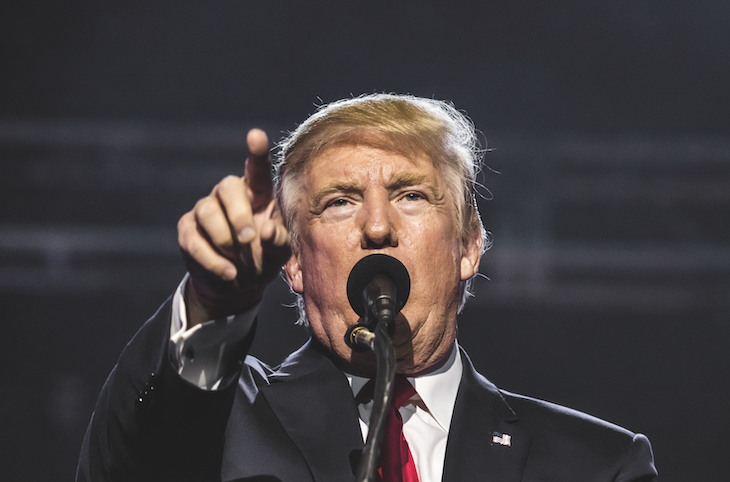
On Saturday, the US president said that he would impose tariffs on the UK, Denmark and other European countries in response to their opposition to his proposed takeover of Greenland.
From 1 February 2026, Denmark, Norway, Sweden, France, Germany, the UK, the Netherlands and Finland will be charged a 10% tariff on “any and all goods” sent to the US, with the tariff set to increase to 25% on 1 June.
Trump said the new import taxes would be payable until a deal is agreed for the “complete and total purchase” of Greenland by the US. It comes amid his warning that both Russia and China want Greenland and world peace is at stake if the US does not have control of the island.
In response, both Germany and France have threatened to place retaliatory tariffs on the US, however, UK prime minister Keir Starmer has adopted a more conciliatory tone with a focus on maintaining dialogue with Washington.
Following Trump’s announcement, the US dollar weakened, while demand has turned to classic safe havens such as JPY and CHF.
Meanwhile, gold and silver both reached fresh record highs on Monday, with spot gold hovering around the mid $4,600s and silver near the low-$90s.
John Wyn-Evans, head of market analysis at Rathbones, said: “Markets have reacted negatively, and while past episodes suggest he often retreats when economic costs build, further volatility is likely. The proposed 10% tariffs from February, rising to 25% in June, have an uncertain legal basis with the Supreme Court set to rule on the administration’s emergency tariff powers, which may render much of this bluster as just that.
“But the economic impacts are not to be underestimated. A 10% tariff could shave around 0.1% off GDP for the most exposed economies, notably the UK and Germany, while a 25% rate could hit output by 0.2-0.3%. For the US, the measures would add around 0.1-0.2 percentage points to inflation, though recent experience shows these effects can be partially offset.”
Wyn-Evans also warned of the political ramifications, with any attempt to coerce Denmark or force a transfer of Greenland severely damaging transatlantic relations and strain NATO.
“Ultimately, this episode reinforces the shift away from ever-increasing global integration and toward a world defined by sharper spheres of influence – a reality businesses and investors must increasingly plan for and deal with,” he added.
Amisha Chohan, head of equity research at Quilter Cheviot, said: “What this is likely to do is to shift the mindset of investors from a previously ‘risk on’ environment, to a ‘risk off’ one and going more defensive in their asset allocations.
“That said, we are unlikely to be seeing a repeat of the market falls from last April. This is more likely to be a slower burn while diplomacy plays out. However, as with any tariffs they have the potential to cause volatility in inflation and thus interest rates may not come down as swiftly as investors would like, and this would ultimately be negative for markets.”
Chohan said the latest events also highlight the need for investors to have diversified investments, in terms of assets as well as sectors and geographies.
Chohan commented: “While the likes of car manufacturers and pharmaceutical companies are hit hard by such tariffs, more domestically oriented stocks are not, and thus there remain opportunities out there for investors despite the noise and volatility.
“Furthermore, while valuations in the US have been high, there remains good headwinds for investors in the likes of Europe where there is a concerted effort to promote economic growth. Provided this latest trade war does not escalate or become protracted, those friendly conditions should remain in place for some time.
“Ultimately, volatility is part and parcel of investing and of financial markets. Riding any potential dips is the best strategy anyone can do during such periods, alongside topping up their pots if they have the financial means and ensuring they are not overexposed to one area of the market that is likely to be hit hard by Donald Trump’s actions.”