























Career satisfaction among paraplanners has increased over the past year, with more than nine in 10 now saying they would recommend the profession as a career, according to Dynamic Planner’s latest Advice 26 research.
The study found that 91% of paraplanners would recommend the profession, up from 72% in 2025. Dynamic Planner said the 19-percentage-point increase represented the largest demographic shift identified in this year’s research.
Figure 1 below: Paraplanners report the highest increase in career satisfaction and client servicing levels but are the least confident about accessing data, according to Dynamic Planner’s Advice 26 research. Source: Dynamic Planner.
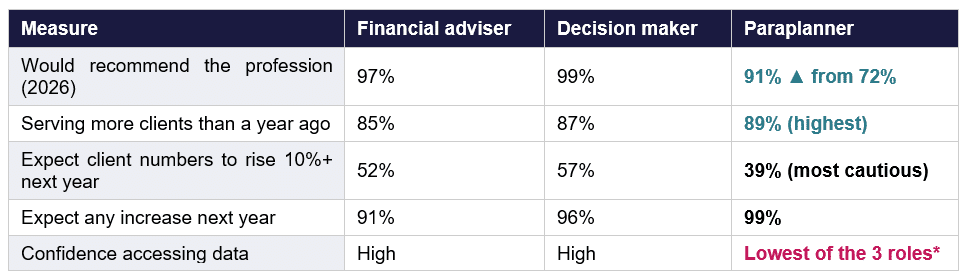
The findings come despite paraplanners reporting some of the heaviest workloads across advice firms. Almost nine in 10 (89%) said they were serving more clients than a year ago, compared with 85% of advisers and 87% of business decision-makers.
Advice 26, which surveyed almost 700 advice professionals across the UK, also highlighted paraplanners’ positive attitude towards artificial intelligence. Almost all paraplanners (99%) said they believe AI will have a positive impact on the advice industry, with reducing the cost to serve, streamlining processes and increasing personalisation cited as the main benefits.
Paraplanners were also the least likely group to identify AI adoption as a challenge, with only 16% expressing concerns.
Commenting on the findings, Will Dunwell, marketing director at Dynamic Planner, said: “Advice 26 revealed a sharp rise in paraplanner happiness, with career satisfaction surging year on year, the single biggest demographic shift anywhere in Advice 26.
“Paraplanners are technology enthusiasts, they embrace and understand the benefits of what it offers and are overwhelmingly positive about the changes that AI will bring both the industry and their day to day work.”
However, while confidence in technology was high, the research found paraplanners were less confident than advisers and business decision-makers when it came to accessing and managing data.
Although 99% of respondents across the industry said they were confident they could access the data they need, around 30% of paraplanners identified data flows and integrations as their biggest technology challenge.
The report suggested this may reflect the role paraplanners play in sourcing and managing data as part of the advice process.
Dunwell said: “When it comes to data, paraplanners are least confident about sourcing what they need. This is contrary to the overall levels of confidence that the data needed can be accessed.
“Given paraplanners carry the lion’s share of the daily load when it comes to sourcing data, this may indicate sentiment is slightly ahead of progress and there is work to be done.”
Despite reporting the highest workloads, paraplanners appeared more cautious than other groups when forecasting future growth. Just 39% expected client numbers to increase by more than 10% over the next year, compared with 52% of advisers and 57% of business decision-makers.
At the same time, almost all paraplanners (99%) still expected some increase in client numbers over the coming 12 months, indicating broad confidence in future demand for advice.
Figure 2: Paraplanners are more cautious than advisers and business decision-makers when forecasting client growth, although almost all expect client numbers to increase over the next 12 months. Source: Dynamic Planner.
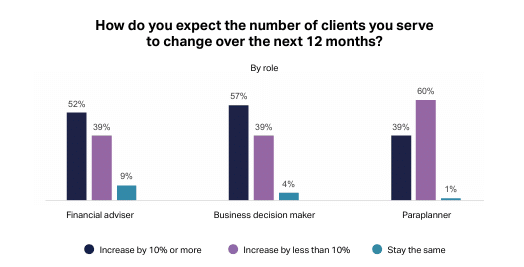
Dunwell added: “While paraplanners are busiest of all the 700 people questioned, with 89% serving more clients than a year ago, they are cautious optimists when it comes to the number of new clients they may take on in future, expecting steady growth.”
The research also pointed to the potential role paraplanners could play in addressing recruitment challenges across the advice sector. With nine in 10 firms reported to be recruiting and talent shortages remaining a key concern, Dynamic Planner suggested firms may increasingly look to develop paraplanners into adviser roles.
The findings are based on responses from 530 financial advisers, 67 business decision-makers and 80 paraplanners surveyed by Research Without Barriers on behalf of Dynamic Planner during the first quarter of 2026.
Main image: magnifying glass, analyse, research, markus-winkler-afW1hht0NSs-unsplash