























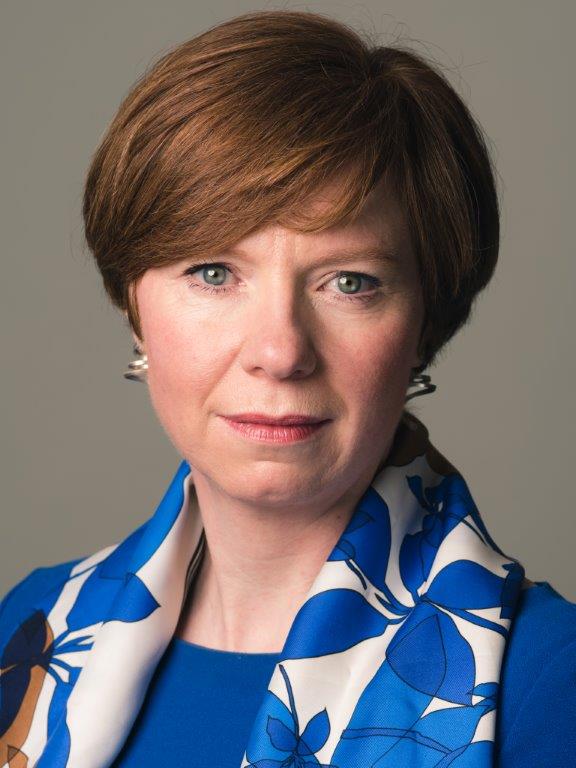
In this interview from FundCalibre, Sue Noffke, manager of the Schroder Income Growth Trust, shares how UK companies are adapting their capital distribution strategies with a shift towards share buybacks and stable dividend growth.
She talks about the evolving landscape of domestic versus international opportunities, sector-specific insights into financials, consumer discretionary, and industrials, and how geopolitical tensions are factored into portfolio decisions.
Finally, she examine the fund’s bottom-up stock selection approach, recent adjustments in holdings like AstraZeneca, GSK, and Burbersry, and the current valuation-driven opportunities in the market.
Why you should listen to the interview: If you want a clear, grounded view of how experienced investors navigate volatile markets, then this episode is a must-listen. Gain practical insights on dividend growth strategies, sector rotation, and how valuation opportunities in UK equities are being capitalised on — perfect for those seeking stable income with disciplined risk management.
This interview was recorded on 5 August 2025. Please note, answers are edited and condensed for clarity. To gain a fuller understanding and clearer context, please listen to the full interview.
Interview highlights:
The shift to share buybacks
“Post pandemic, there has been a change in companies and investors’ attitudes to capital distributions, whether that is purely dividends or a special dividend. And because the UK equity market is quite lowly rated by its own history and in an international context, there has been a move for companies to think about buying their lowly rated shares back and all other things being equal that improves the earnings per share and dividends per share on an ongoing basis. And should all other things being equal lead to a re-rating of those shares.
“So that should be beneficial for the investors in those shares. It’s just a different way of distributing shareholder returns. So we are quite comfortable that the attractions of investing in UK equity are as good as they have been. But the mechanism by which you are being rewarded is a different combination of ordinary dividends plus these share buybacks rather than special dividends, which were kind of one and done, but done for probably a good period of about eight years from the mid-teens through to about the pandemic period. Then there was COVID as a hiatus, a bit of a rethink and a different way going forward.”
Managing geopolitical risks but not timing the market
“Maybe I’ll start with reiterating that in essence I’m a bottom up stock picking investor rather than a crystal ball gazer for all those geopolitical lots of different changes. What we do have to do is reassess those stock picks in light of all the cross currents that are happening within the world, which are very difficult to predict.
“So we knew that there would be a lot of political change last year and we are seeing the impacts of those political changes play out in policy this year. And that was anticipated. We didn’t think that tariffs were going to be as big an issue as they have turned out to be. And what that has entailed is a reassessment of those what if scenarios together with exchange rate movements, change in interest rate expectations as well as the fundamentals.
“And typically we will run a number of scenarios that basically go from a base case of what is realistic, what would look like a blue sky – so everything going quite well – what does that stress on the upside case? And then what if there are more bumps in the road stressing the downside, does the valuation still look attractive? And particularly what does it do to cash flow in the balance sheet? Does it create real stresses in the investment thesis that would cause us to reassess the value of holding that position even if it’s been troubled.”
Missing the defense sector rally
“I would say that we have not had full exposure to the very successful areas of aerospace and defense. And defense has been on a tear post that Russia’s invasion of Ukraine in 2022, and we’ve seen a number of quite eye-popping numbers this year from governments committing to spend up to 5% ultimately on defense. So that can incorporate many different things in Europe. It might also include some infrastructure, but that’s if you haven’t had full exposure to all the companies within that area of the market, it is been quite a headwind to relative performance from that area and hands up we haven’t had as much exposure as we ought to have done.
“It might have been our view kind of in the middle of 2022, we thought we’d missed it. Actually the right thing to do would’ve been to do more work and get more involved. So we always have learnings and takeaways and we did have exposure and we do still have exposure. But that has been an area that has detracted from portfolio performance over that time. So the learning for me is that never write things off, do more work and again, do that stress test as to what what if.”
Why valuation is the quiet catalyst
“If you think about driving a car in terms of being invested in markets, by the time you know that a catalyst has been the right catalyst, it’s in the rear view mirror rather than thinking about the road ahead. And there are always going to be potholes and volatility with markets that markets, that’s what you have to accept as an investor, but the returns and rewards for taking that risk are plentiful.
“The UK equity market is still trading at the most attractive levels within a global equity space, still attractive, particularly at the smaller mid-cap and relative to their own history. And I think the total shareholder returns, so that ordinary dividend yield supplemented by the share buybacks that we started our conversation with are very, very compelling. And I think that’s it’s valuation, that’s the catalyst and that’s what people forget. They want something else. We can see the attractions of valuation because there’s a lot of M&A interest and there’s not as much interest from companies wanting to float because they typically want to float at a high valuation.”
Conclusion: This interview highlights the resilience and adaptability required to manage a diversified income portfolio in ever-changing markets. As valuation remains the quiet catalyst, patient investors are poised to benefit from a combination of steady dividends and strategic share buybacks. For those seeking long-term, inflation-beating income, this episode provides clarity and conviction.
Main image: peter-chiykowski-MdzJEbrBT70-unsplash