






















Ben Kumar, Head of Strategy – Wealth, Public Policy & Investment at 7IM has been travelling again, this time to his local recycling centre. This trip affirmed that with most of the population needing a financial plan more than ever, we all need a ‘Bob’.
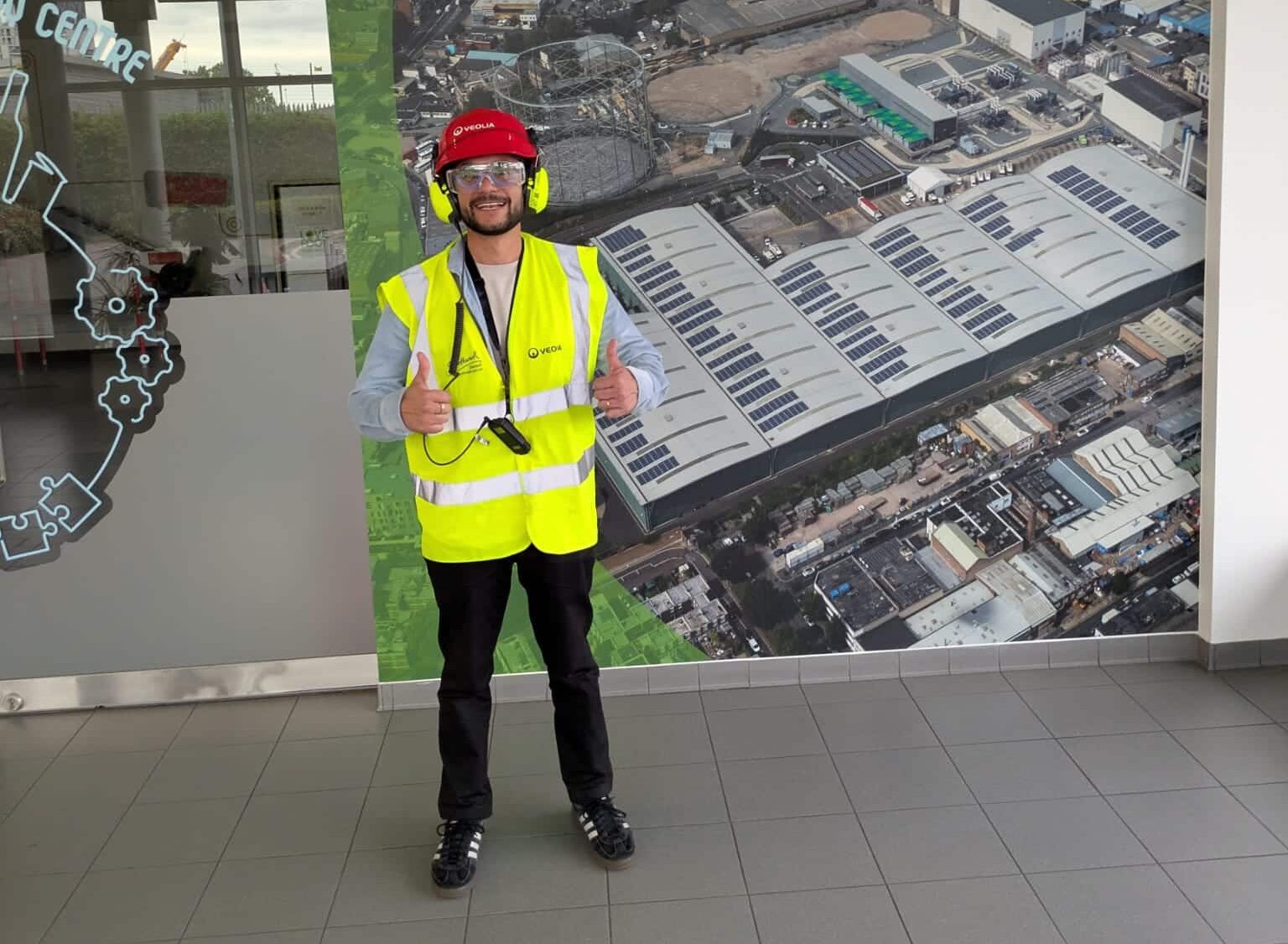
Last month I went to visit my local recycling centre. No, wait, come back.
Seriously, if you’re a curious person, it’s amazing to see. 400 tonnes of inputs every day from 300,000 people in the local area.
All dumped in one big pile at the start, and then sifted and split and sorted into glass, paper, aluminium, plastic and so on.
There are more than 200 people working alongside some of the coolest machinery I’ve ever seen.
And then there’s Bob.
Bob is the new kid on the block. A robotic arm which works in the aluminium section. Bob’s job is to be the first line of defence – picking out the kinds of packaging which have other materials alongside aluminium – leaving the pure stuff.
The belt now moves faster than it did before, and the people working at the other end can focus on the items Bob misses.
Bob’s faster than them at the obvious stuff but can’t do the judgement cases. Since he turned up, there are no fewer people employed, more aluminium is recycled, and it’s higher quality.
There’s lots in there worth thinking about.
Because there’s a lot of concern bubbling through various industries – including ours – about what AI might mean for them.
If a machine can do what you do, it’s natural to wonder if there’s less need for you.
I get it. But Bob suggests there’s a different interpretation available.
Clearing bottlenecks means more demand
Before Bob arrived, aluminium sorting was slower and less accurate, which limited how much aluminium could be processed.
The system couldn’t go any faster. It was a traffic jam.
Now it can. More metal flows in. If you clear a bottleneck, traffic speeds up.
So, any frustrating bottlenecks in your world?
8% of the UK population takes financial advice. In the US, it’s 35% (they’ve had defined contributions decades longer).
As we become more like the US, there’s a LOT of pent-up demand.
The slowest part of a system limits the max speed. Fix the weak link and activity grows to fill the space.
Tasks vs jobs
If you’d have been on the aluminium sorting belt when Bob arrived, you might have felt worried. “Sorting aluminium is my job” you might have thought.
But the job isn’t to sort pure aluminium – that’s a task. The job is to make sure that the recycling centre approaches 100% success.
So, the job shifted up the production line, to where people make a difference.
What’s your job? I reckon it’s to help people achieve their financial goals (in a regulatory compliant way).
It’s understanding suitability, spotting inconsistencies, turning the technical into the human.
A job is more than a list of tasks. Doormen at fancy hotels aren’t there to open the door; they’re there to convey a sense of prestige and security, and help with luggage, and smile.
The doors are automatic. But it’s not about the door.
Change happens all the time
50 years ago, there were no recycling centres. 30 years ago, they were called dumps, and the job was to fill a hole in the ground. The world changes.
And the skills required change too. It needs more training to sort aluminium than to shovel dirt. And if Bob can sort aluminium, then there’s some other skill that might now need to be learnt.
All of that is normal. Blacksmiths became car factory workers. Horseshoes became camshafts. And for paraplanners, that’ll be just as true.
Life expectancies, tax situations, investment opportunities – they all change all of the time – often based as much on politics as on economics.
There were sections on your exams which no longer appear on today’s. And there are some on today’s which you never had to do.
The main problem with AI is that for once, we’ve put a big, scary label on the change.
And hence we get people saying…
“But AI is different”
Maybe. Maybe this will be the time where technological advances creates mass unemployment. But I’m not so sure.
More options, more complexity, more regulation means more clients seeking reassurance and clarity in a noisy world. We NEED people who can make sense of things.
Sure, we might be able to find an AI doctor, or an AI planner, or an AI architect, etc. But none of that is a time or effort saver. DIY isn’t always the best (as my decorator reminds me regularly, shaking his head)!
When information is abundant, interpreting it becomes harder, not easier. TMI is real.
When portfolios, wrappers and strategies all look similar, specific knowledge of trade‑offs matters more.
And just because someone can generate an answer instantly doesn’t mean they trust it!
Better tools don’t reduce the need for planners. They increase the scope of people who can benefit from it.
And, with most of the population needing a plan more than ever, this is exactly what’s needed.
Main image: AI, nahrizul-kadri-OAsF0QMRWlA-unsplash