























Sasha Wakefield, founder and director of The Paraplan Project, appeared in the very last issue of the Professional Paraplanner magazine, (December 2022) when she had a fledgling business. For this article, Rob Kingsbury talked to her about where she is now, three years later, the challenges involved in becoming a business owner, how she has grown the business, the reasons she’s added mortgage advice to her bow, and how she sees AI affecting paraplanning and in particular, the outsourced market.
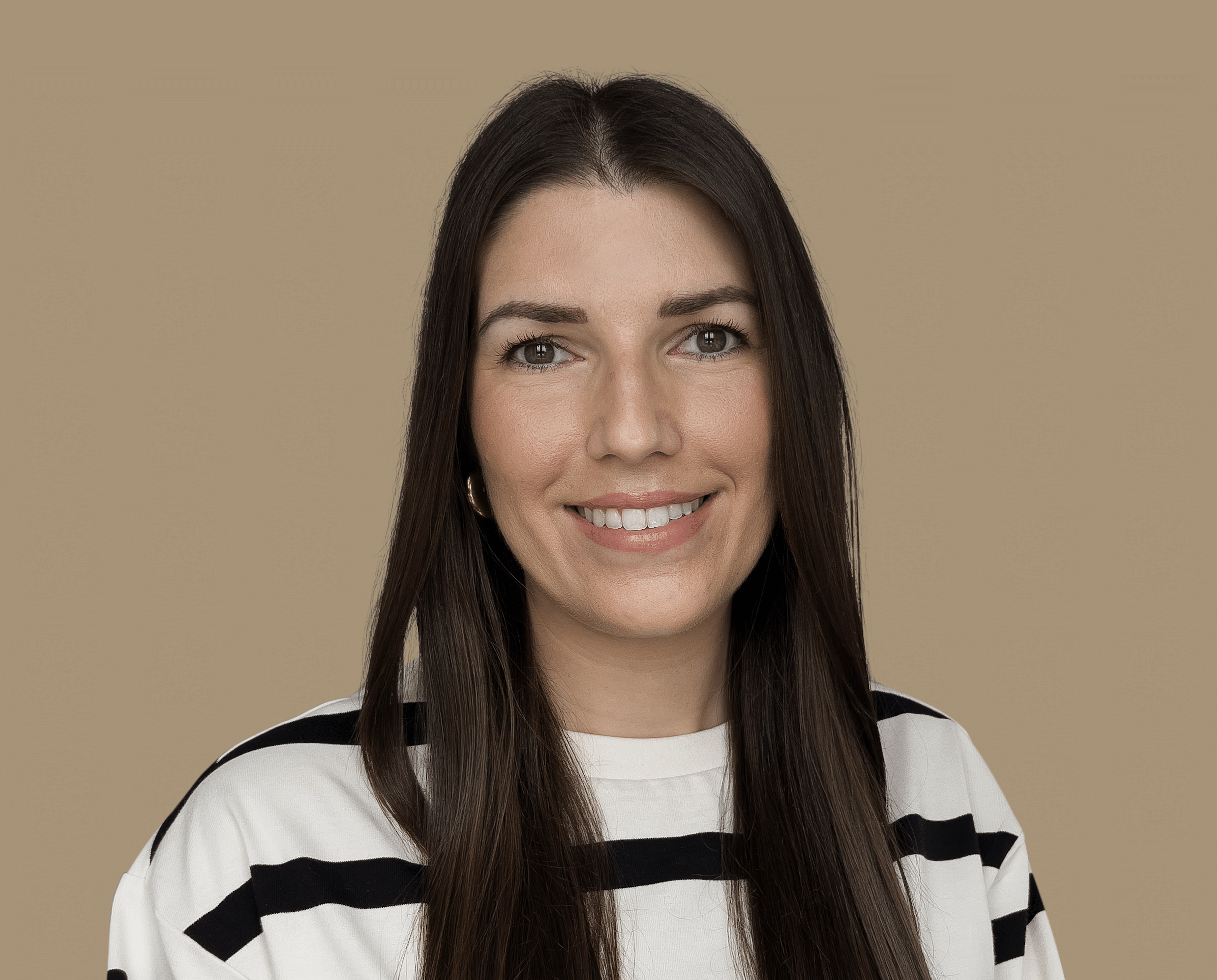
In December 2022, The Paraplan Project was just two months old. “After fourteen years in financial services, I’d decided it was the right time to take the plunge from the relative safety of employed work and to set up my own business,” Sasha says.
Then, she was flying solo and working for just a couple of firms. Fast forward three years and The Paraplan Project is now a team of five – four paraplanners, including Sasha, and an administrator – with plans to add another paraplanner and an administrator in the near future – serving a stable customer base of 12 financial planning firms around the UK.
Sasha prefers to work with small firms and solo advisers, believing they are the size of firm that can best benefit from the service offered. “We like to work in partnership with our clients and firms of this size appreciate that. It gives us a mix of firms and case types that really works for the team and the business,” she says.
Rather than use freelance paraplanners, Sasha decided to go the employed business route. “I wanted the control and for our clients, the consistency, so the advisers can build long-term relationships with the team. We want our clients to view us as an extension of their firm, a partnership they can trust.”
The team all work remotely and Sasha felt that being employed would add a cohesion that would work for their benefit and the business’s. “There’s a lot more involved and more cost in employing staff than in freelancing but I think the benefits in terms of the control and cohesion make it worthwhile,” she says.
Good communication is key and building a team spirit. “Alongside the day-to-day contact on cases, every week we get together for what we call the Tea Break. It’s an hour where we talk about things not to do with work. It’s our social touch point. And we meet up a couple of times a year in person too, which is really valuable time together.”
What The Paraplan Project offer advisers, she says, is “confidence for our clients that they’re able to delegate that technical element of their service to someone they trust to get on with the job, which means they can focus on the client journey.
“When they hand a case to us, they know it’s going to be handled professionally, carefully and accurately and it will be delivered on time.
“We understand that every planner works differently. So as part of our onboarding process, we get to know how they like to work, their preferences and nuances, how they like to address clients and the tone they like to adopt – so when they pass the work to us, we can be that extension of their team.
“We are looking to build long term partnerships of this kind with our adviser clients.”
Clearly, the approach is working as to date nearly all the business’s new clients have come via referrals. And Sasha and her team feature on many of her clients’ websites, to all intents and purposes, part of the team.
Sasha draws on the experiences she has gained since 2008, when she started as an administrator with Transact. She then worked for several wealth management firms and outsourced paraplanning firms before setting up The Paraplan Project. “I nearly always moved for promotion and for more experience, building my skill sets,” she says. “I learned a lot along the way but it didn’t set me up for the steep learning curve that comes from being a business owner.
“When you go from being focussed just on paraplanning work to wearing several hats and working seven days a week and still feeling like you’ve not got enough time, you start to second guess yourself and asking: ‘Why did I get myself into this?’. It can be tough,” she says.
“One of the toughest aspects has been balancing capacity with growth of the business. When you’re employing someone you have a responsibility to bring in the work to pay them. That means it can be hard to switch off – I found it was just never possible, I was working on or thinking about the business 24/7.
“But nothing worth having comes easy – you have to give it 110% to know that in the end it will work. And you know that the rewards will come. I’ve always been driven and I’d always known what I wanted to do, in terms of owning my own business, starting a family and so on. So I was willing to put in the hours.”
Having her baby son, Arthur – now one years old – changed the dynamic by making her take time out. It gave her the opportunity to step back and look at the business – to take the rewards in terms of more flexibility that, amongst other things, being a new mum demanded.
It also came at the right time for the business, which was able to continue without her full-time input. “The team were fantastic”. Even though some of them had only been with us a year or less, they really stepped up and took a lot of responsibility to help keep the business running. That meant I only had to oversee things – and do the odd cases here and there when Arthur was sleeping. I definitely couldn’t have done it without them.”
One of the things that came to her in that time was a new opportunity for the business.
“Most of the firms we work for refer mortgage advice but the more I looked into it, the more I could see synergies between paraplanning and the work mortgage advisers undertake behind the scenes. I already had the qualifications for mortgage advice, including for equity release, so setting up a mortgage broker business to complement our paraplanning service, means our clients don’t have to refer out and we add an income stream to the business.”
And so The Nesting Ground was established. Fledgling at the moment, having launched in September 2025, but already with interest from clients.
She emphasises, however, that she has no plans ever to be a financial planner. “Paraplanning is my sweet spot and this is where I’m going to stay,” she says.
Outsourcing and AI
The outsourced paraplanning market has seen huge growth over the past 10 years, a phenomenon Sasha puts down to experienced paraplanners wanting a challenge and greater comfort amongst firms to work remotely with their paraplanning service.
“It’s been a boom time for outsourced paraplanning and there’s plenty of business to go around,” she says, “but there is growing competition around cost.”
AI is driving this she believes. “I hear about advice firms suggesting that with AI making the paraplanning role more efficient, they are expecting outsourced costs to come down. But what we’re seeing is the cost of qualified, experienced paraplanners is going up.”
There’s a reason for that she thinks. “I can see AI definitely relieving paraplanners of some of the more simplistic tasks – such as annual review reports with no change – and making the paraplanning process more efficient. But where AI’s value is, I believe, is in freeing up paraplanners to focus on other parts of our role and to take on more of the meatier cases for planners.
“It’s also where the value is perceived by the financial planning firms. I think our business has moved beyond being report writers. Our partnership approach means we work more in collaboration with our clients. We will discuss cases with them to get the best result for the client.
“There’s no doubt AI will become more prominent within paraplanning and we’ll use AI to become more efficient. But our value lies in the relationships we have, the trust and confidence that our clients have in us to work in collaboration and to deliver for them. AI will be a tool we use within that.”
Main image: nejc-soklic-wO42Rmamef8-unsplash