























Corporate earnings growth is running at exceptional levels, but can these levels be sustained going forward, asks Iain Sneddon, investment specialist at Aegon Asset Management.
There is little doubt about it: corporate earnings growth is currently running at exceptional levels. This helps explain why equity markets have been able to overcome several prominent risk factors this year to hit new all-time highs in several regions.
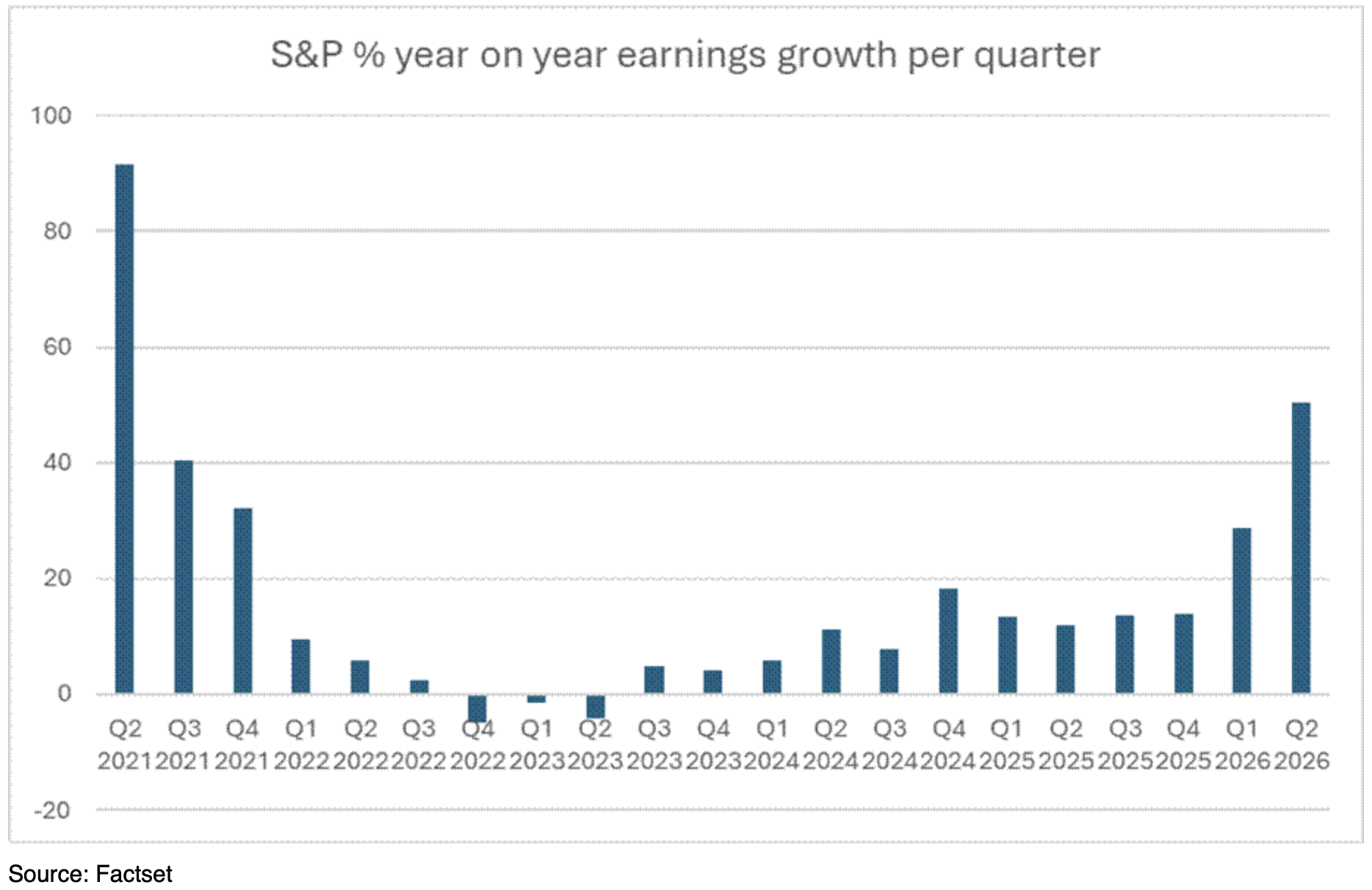
As of last Friday, 86% of S&P 500 companies had reported Q2 earnings and were on course to deliver 50.4% year-on-year earnings growth. That is an incredible number – a level which is typically only seen during a recovery from a recession or major market dislocation.
Whilst the US is leading in terms of earning growth, it is by no means the only region delivering such robust numbers. Europe experienced flat to negative earnings growth from mid-2023 to early 2025 but the picture has improved in recent quarters and the Stoxx 600 is on course to accelerate to 22% growth in Q2.
The obvious questions to ask are: what is driving this? And is it sustainable?
It will come as no surprise that AI is a major factor. Indeed, just a handful of mega cap tech-related companies account for a significant proportion of the growth. Amazon and Alphabet have delivered huge earnings growth and skew the numbers but exclude them from the calculations and the S&P would still be on for 32% earnings growth for the quarter.
It is not all AI driven though. Energy companies have been obvious beneficiaries of the Middle East conflict. Likewise, financials are in good health. Interest rates staying elevated has ensured a positive backdrop for bank earnings, which have been further boosted by surging investment banking profits. Times are good and most banks are extremely well capitalised, which has made for strong distributions to shareholders.
With a heavy weighting to energy, commodities and banks, these last two factors have been supportive for the UK market.
Is it sustainable? In short, no. At least, not at this level. The market will not continue to deliver earnings growth at the current pace indefinitely. However, it doesn’t need to.
Back to the numbers: projected earnings growth for the S&P is 29% for 2026 and 14.1% for 2027. Although not as high as the current quarter, these are well above historical averages. If delivered, these earnings forecasts should provide support for current market valuations.
A repeat of the dynamics of 2025 are not hard to imagine in this scenario. Going into that year many said valuations were expensive. However, markets still managed to generate good gains, not because valuations rose further, but because they simply bagged the earnings growth.
What are the risks? The volatile situation in the Middle East is an obvious one. Up to now, inflation has not reignited in the way many feared when the conflict first started. Energy prices have shot up but there has not been a broader knock-on effect into other areas. Were this to change and a sustained period of input cost inflation set in, then we would inevitably see some pressure on margins and, by extension, earnings.
For a second prominent risk, we circle back to the inescapable topic of AI. Monetisation is close to the top of the list of concerns. Will companies be able to generate the revenues necessary to derive an acceptable return on investment from the huge capital outlays they are making on AI?
There is also the question of depreciation. All of this expenditure on data centre components will need to be depreciated over time, which poses an obvious risk to earnings in the coming years.
Lastly, there is the existential question of where the value in AI will actually accrue. Shares in software companies had taken a beating on the notion that AI will disrupt the traditional software-as-a-service business models. This is a genuine risk but with evidence of it yet to show up in earnings in a meaningful way, software stocks have seen a comeback in the past month or so.
There is also the risk that AI models become commoditised, meaning there will be little competitive advantage to be gained for one model developer over another.
In summary, global corporate earnings are enjoying a golden period. While AI-related investment remains a key driver and is increasingly benefiting other sectors, it is not the only game in town. Financials, energy and several other areas of the market are also contributing.
Current growth cannot be sustained over the long term, but projections for the coming quarters remain strong by historical standards. If delivered, they would provide important support for current market valuations and help investors look past the mix of risk factors that continue to rattle around.
Main image: martin-v6uiP2MD6vs-unsplash