

















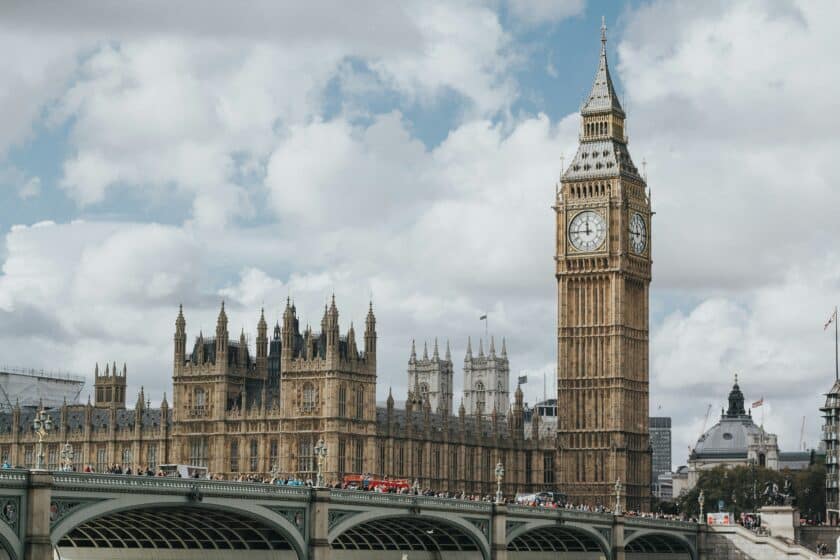
What did the Chancellor announce? From tax and savings to housing, welfare and business support, we round up the main measures from the Autumn Budget 2026.
The Chancellor said the Government would maintain its fiscal rules, avoid increases in taxes on employment income and dividends, and fund new measures through a combination of borrowing headroom, tax changes and targeted revenue-raising measures.
Let’s have a look at the key announcements.
Economy and public finances
The Office for Budget Responsibility (OBR) upgraded its growth forecast for 2026 to 1.2%, followed by:
- 0% in 2027
- 6% in 2028
- 8% in 2029
- 7% in 2030
- 6% in 2031
Government borrowing is forecast to fall from 4.2% of GDP this year to 1.8% by 2030/31 and 2031/32.
The Chancellor said he remains compliant with both the Government’s fiscal rules, using part of the fiscal headroom established last year to respond to higher energy costs and economic pressures resulting from conflict in the Middle East.
Energy and household support
A series of measures were announced to address rising energy costs:
- The temporary VAT cut on electricity bills will be extended until July 2027.
- A new British Industrial Competitiveness Scheme will reduce electricity bills by 25% for around 10,000 industrial firms from April.
- Gas standing charges will be removed from household gas bills from next year.
- Households in council tax bands A-D will receive a £100 energy payment this winter.
- The Government will introduce a new energy cost control framework.
- The planned gas shippers’ obligation levy will be scrapped, with hydrogen projects funded directly by government instead.
The Chancellor also confirmed approval of the Jackdaw gas field and announced further reforms intended to reduce long-term energy costs.
Fuel and transport
The Government will:
- Extend the existing 5p fuel duty cut until July 2027.
- Continue the reduced rate on red diesel.
- Increase the higher mileage allowance rate from 25p to 35p per mile.
- Make permanent the earlier increase to the standard mileage rate.
Tax and savings
The Chancellor confirmed there would be no increases to taxes on employment income or dividend income, reiterating the Government’s commitment not to increase taxes on working people.
Full expensing will also remain in place for eligible business investment. However, the Budget did contain a number of tax measures affecting business owners, investors and savers.
Measures announced include:
- A reduction in the Business Asset Disposal Relief threshold from £1 million to £500,000.
- A two-percentage point increase in tax rates on income from property and savings from April 2027.
- Additional HMRC funding and powers to improve tax compliance and collection.
For savers, the Chancellor confirmed that the annual ISA allowance will remain at £20,000 and announced plans for a new Starter ISA aimed at supporting first-time investors.
- The £20,000 annual ISA allowance will remain unchanged.
- A new Starter ISA will be developed to support first-time investors.
Pensions and welfare
While pensions did not feature heavily in the Budget, the Chancellor announced a number of measures affecting pensioners, carers and the wider welfare system. He also reiterated the Government’s intention to bring forward longer-term welfare reforms, with further details expected later this year.
Measures announced include:
- A new pension tax allowance ensuring pensioners with income up to the value of the full new State Pension do not pay income tax.
- Confirmation that all future Mineworkers’ Pension Scheme surplus payments will go to former mineworkers.
- Reforms to carers’ allowance to remove the earnings cliff-edge.
- Continued welfare reform, with a white paper due later this year and legislation expected next year.
The Chancellor also referenced the Government’s previously announced plans to reform the triple lock from 2030, with future State Pension increases continuing to reflect earnings and inflation.
Employment and families
The National Living Wage and National Minimum Wage will increase by 3.9%.
Other measures include:
- Self-employed fathers and partners becoming eligible for paid parental leave for the first time.
- £15 million of funding for children’s literacy organisations, including Dolly Parton’s Imagination Library and The Book Trust.
- Further action on pay transparency and the gender pay gap.
Support for small businesses
For retail, hospitality and leisure businesses:
- The small business rates relief threshold will rise from £12,000 to £18,000.
- Around 70,000 additional businesses will be removed from business rates entirely.
- Business rates for remaining firms in those sectors will be frozen in real terms for two years.
The Government will also:
- Strengthen VAT compliance requirements for online marketplaces.
- Provide £10 million of alcohol duty relief for around 2,000 small brewers and cider makers.
To help fund these measures, Machine Games Duty will increase from 20% to 25% on higher-stakes machines and adult gaming centres and vape shops will be excluded from business rates relief.
Investment, enterprise and growth
Much of the Budget’s growth agenda focused on encouraging investment, supporting entrepreneurs and increasing the flow of capital into UK businesses.
Alongside additional funding for public investment institutions, the Chancellor announced a package of measures aimed at improving conditions for start-ups and scaling businesses.
The Chancellor announced:
- An additional £20.4 billion for the National Wealth Fund and British Business Bank.
- A reduction in regulation and tariffs worth a claimed £800 million to businesses.
- New regulatory carve-outs to support innovation.
- Expansion of challenge-led public procurement to support UK firms.
Support for entrepreneurs includes:
- Increasing the trading allowance from £1,000 to £3,000.
- A new Young Entrepreneurs’ Allowance.
- A new programme supporting female founders.
- Reform of skilled worker visas and non-compete clauses.
- Launch of EMI2, described as a more generous company share option scheme.
The Chancellor also announced a new Founders Relief, introducing a 10% capital gains tax rate on lifetime gains up to £10 million for qualifying business founders.
Artificial intelligence
Measures announced include:
- An additional £500 million for AI safety and security.
- Funding for a sovereign AI unit.
- A new British data centre covenant.
- An AI Challenge Prize to support innovative uses of AI in public services.
- Further investment in civil service and NHS AI programmes.
Devolution
The Government outlined significant devolution plans, including:
- New Good Growth Funds.
- Additional devolved borrowing powers.
- A roadmap for fiscal devolution.
Key measures include:
- 100% local retention of business rates by the end of the decade.
- From next year, 20% of business rates revenues going to mayors.
- From 2028, a share of income tax receipts allocated locally.
- New powers for mayoral authorities to introduce an overnight visitor levy from 2028.
Defence
The Chancellor confirmed:
- £10 billion of additional economic and military support for Ukraine.
- Full funding for the Defence Investment Plan.
- A commitment to spend 3.5% of GDP on defence by 2035, with a target of 3% by 2030.
- A new Defence Finance Taskforce.
- Plans for a multilateral defence financing mechanism with Finland, Poland and the Netherlands.
- Up to £5 billion of National Wealth Fund and British Business Bank investment into defence-related technologies over four years.
Housing
Housing was another significant feature of the Budget, with measures aimed at increasing the supply of affordable housing, supporting local authorities and helping first-time buyers onto the property ladder.
Housing measures include:
- An additional £1.5 billion for the Social and Affordable Homes Programme.
- VAT-free land sales to social housing providers.
- Extended access to cheaper borrowing for councils.
- Relaxation of biodiversity requirements on some brownfield sites.
- No major changes to building regulations during this Parliament, except where required for safety.
The Government also confirmed a further £430 million to support efforts to end rough sleeping throughout the remainder of the Parliament.
For first-time buyers, the Chancellor announced the replacement of the Lifetime ISA with a new First-Time Buyer ISA. He also confirmed changes to the current Lifetime ISA rules so that savers purchasing a property above the existing price cap will receive back at least the amount they contributed, addressing concerns around the withdrawal penalty.
- The Lifetime ISA will be replaced by a First-Time Buyer ISA.
- The Lifetime ISA withdrawal penalty will be reformed so buyers purchasing properties above current limits receive back at least the amount they contributed.
- A new Your First Home equity loan scheme will launch from next spring, backed by £4.7 billion of government lending.
The Chancellor’s closing message
The Chancellor concluded by describing the Budget as one that would provide “breathing space now, fresh hope for the future”, combining immediate support for households and businesses with a longer-term programme of reform focused on growth, investment, defence, housing and public services.
Main image: UK, parliament, marcin-nowak-iXqTqC-f6jI-unsplash