






















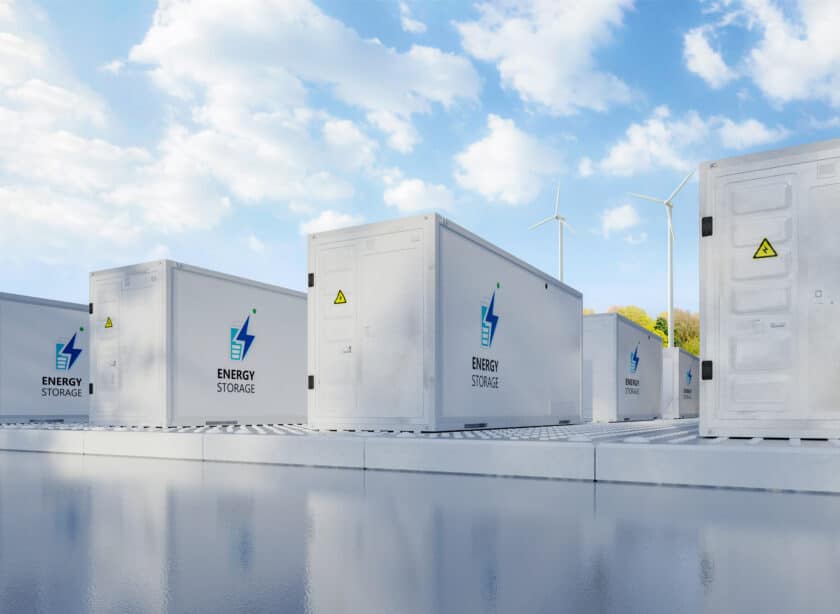
In the eleventh of a series of real asset investment case studies, Albane Poulin, Head of Private Credit at Gravis Capital Management, looks at battery storage as a transformative technology for the energy sector, examining how both short-duration and long-duration solutions are reshaping infrastructure investment.

Battery storage is increasingly recognised as a critical part of the energy transition. By storing electricity when it’s plentiful and releasing it when demand peaks, storage supports the integration of renewable energy, enhances grid stability, and reduces reliance on fossil fuels.
Why battery storage matters
The UK and other countries are rapidly expanding renewable electricity generation, particularly wind and solar. However, renewables are intermittent and they don’t always generate electricity when it’s needed. Battery storage is key for ensuring energy security and supporting a zero-carbon grid even when the sun doesn’t shine and the wind doesn’t blow. It also has the potential to reduce curtailment of renewable generation.
There are two main types of battery storage:
Short-duration batteries: Typically lithium-ion, with storage durations of 1 to 4 hours, these batteries can release energy quickly to balance the grid over minutes to hours. They are well-suited to managing daily peaks in electricity demand, supporting grid stability, and capturing value from short-term electricity price fluctuations. Batteries co-located with wind or solar can also help avoid curtailment, smooth production ramps, and shift energy to more valuable times of day.
Long-duration storage: Storage systems with durations of 8 hours or more, most commonly pumped hydro, store energy over days or weeks, providing backup power during prolonged periods of low renewable generation. Pumped hydro moves water between two reservoirs at different elevations: electricity is used to pump water to the upper reservoir when supply is abundant or cheap, and released through turbines to generate electricity when demand is high. Unlike short-duration batteries, pumped hydro has a long asset life and minimal performance degradation.
Long-duration projects have high upfront capital costs and long construction periods, so the UK regulator Ofgem introduced a cap-and-floor regime for new pumped hydro projects, providing downside protection for consumers while preserving incentives for private investment once the projects become operational.
The Investment Case
In 2018, Gravis entered the battery storage sector as an early mover, providing £20 million funding to a developer to support the construction and operation of a portfolio of grid-connected battery assets.
At the time of investment, the assessment focused on the projected revenue stack, particularly the balance between contracted Capacity Market revenues and uncontracted merchant revenues, to run sensitivity analyses and confirm the portfolio’s ability to generate sufficient cash flows to service debt.
Alongside this, Gravis reviewed the long-term technical performance of the battery energy storage systems, including the applicability of manufacturer warranties covering battery capacity and degradation, and operation and maintenance (O&M) availability warranties setting minimum performance and availability requirements over the operating life.
Additional revenues from ancillary services were excluded from the base case, but recognised as a potential source of diversification and upside.
How revenue is generated
Battery storage assets earn revenue through multiple channels:
- Balancing mechanism: Batteries provide rapid response (seconds to minutes) to help match supply and demand and maintain grid stability in real time.
- Energy arbitrage: Storage operators capture value from market price fluctuations by charging when electricity prices are low (often during periods of high renewable generation) and discharging when prices are high. Short-duration batteries operate on very short timescales (minutes to a few hours) and may enter into offtake agreements to reduce revenue volatility. Long-duration storage targets daily or multi-day price spreads, which tend to be less volatile.
- Capacity payments: Some projects receive payments for being available to deliver electricity during peak demand periods or emergencies. These contracts can last up to 15 years and provide secure, index-linked revenues.
- Ancillary services: Batteries can provide additional grid services, such as frequency regulation, voltage support, or short-term reserves.
All these revenue streams can be stacked, unless there is insufficient capacity or reserve as the same megawatt of capacity cannot be sold more than once simultaneously.
Battery storage revenues are less predictable than traditional infrastructure, so financing typically uses more conservative debt service coverage rations (DSCRs) and lower gearing to ensure resilience under variable market conditions.
The future of battery storage
Battery storage is poised for rapid growth as countries transition to net-zero energy systems. In the UK, the Energy Storage Action Plan outlines strategies to remove regulatory barriers, support new project development, and enhance grid infrastructure.
However, challenges remain: ensuring a stable supply of critical minerals, developing efficient recycling solutions, and securing a robust supply chain for battery manufacturing and long-duration storage components. Addressing these challenges is essential to scale up investment and fully leverage the benefits of energy storage.
By combining short-duration lithium-ion batteries with long-duration pumped hydro, investors can build a diversified portfolio that stabilises the grid, supports renewable energy growth, and generates predictable returns. Battery storage is no longer just a complement to renewable energy, it is becoming a critical part of the infrastructure of the future.
The sector often performs relatively well when renewable generation is lower than expected, making battery storage complementary to renewables and potentially serving as a hedge against exposure to renewable investments.
No information contained in this article should be construed as providing financial, investment or other professional advice and should not be considered as a recommendation, invitation, or inducement to subscribe for, dispose of or purchase any such securities. Professional investors only. Capital at risk. Past performance is not a guide to future performance.
Main image: Supplied by author