






















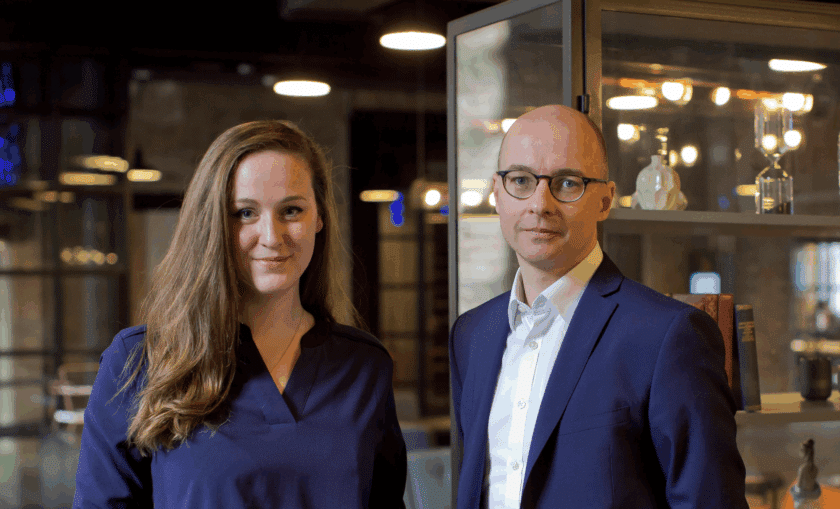
ammonite has launched a new AI-driven software system – planbot – that the founders, Robert Harradine and Caroline Duff, think paraplanners will particularly like.
Harradine and Duff (pictured right and left) both have a long history in the industry having worked for Sterling & Law, Saunderson House and Barclays Wealth among others, before setting up their own financial planning firm, where Caroline undertook the paraplanning and Robert the adviser role. When finally moving into a dedicated technology firm, they aimed at creating greater efficiencies for advice firms, as all technology firms do, but in a way that is different from the rest, they say.
“There are plenty of firms out there delivering transcription and onboarding technologies for advisers. In deciding to focus on technology for the financial planning/advice market, we come from a position of knowing that each firm will have their own way of working, the processes and templates that they have built over the years to best serve their clients in the way that works for them. We also know first-hand the pain points that exist, particularly for paraplanners,” says Harradine.
The standout feature of the software is that it is fully configurable, which means firms can take unstructured data (content such as meeting notes) and populate their own templates with their own tone of voice. “Firms have often honed their templates over a number of years to present information to clients in the way that they want and to give them the tone of voice that they want,” says Duff. “It becomes part of their identity. What they don’t want is to have to give that up. Our system builds an AI version of the firm’s own forms and templates, so firms can continue to work in the way that they always have done and advisers, paraplanners and administrators don’t have to learn new ways of working.”
Outsourced paraplanning firms are particularly finding this useful, Harradine says, as they can create a suite of templates for each firm they work with so it can match with the identity and wording preferred by that firm.
The pain points Ammonite has tackled include the key ones of the length of time it takes to create suitability reports and annual reviews, but they’ve also thought about the ones they’ve experienced, such as the interaction between adviser and paraplanner. “The passing of information between teams and the paraplanners getting all the information they need from their advisers has been a longstanding bugbear. So, what we wanted to do was to help the financial adviser and the paraplanner work better together, reducing the friction and speeding up the process through the specific but unique pain points in businesses.”
The system can transcribe adviser meetings but it can also import transcriptions from elsewhere, “we’re agnostic on where the transcript comes from,” says Harradine, or take written or voice notes and use them in the software’s form builder to populate the firm’s templates, such as for fact finds and suitability reports.
“It will take the unstructured data, i.e. the transcript as is, and filter out all the irrelevant information and then it’ll get to work populating the forms required. It means firms are structuring the data in whatever way they want,” Duff adds.
“For example, paraplanners can tell the system to build a suitability report for new clients or for annual reviews, and choose which elements they want included, and the software will pull the relevant data in to the report.”
There are also options around which other software the firm wants to use, such as their preferred risk profiler.
And templates can be used across multiple products. Which means following new regulation or legislation, changes can be easily can be made across all documents.
Similarly, templated calculations can be used where the software will draw in the relevant data and produce the results in formatted text for the suitability report.
One of the frustrations Duff says she had in the past when using other systems to write suitability reports was the formatting, for example creating the page breaks where she wanted them. “With our system you can drag and drop them in at the point you want; you tell the system where you want each page to start and end,” she says. “It’s easy also to drag and drop in images and tables into the report.”
Harradine concludes: “While there can be a wariness around AI technology from some, what we’re saying is that we’re not asking you to change, we can help mold AI to your existing forms and report templates. We’ve been trialling it with a large advice company and because of the way that it enables information to be passed accurately and quickly between teams and speed up report writing, the advisers and paraplanners are saying it’s a game changer.”