




















Gold has broken out to new highs, but have investors truly taken notice? In this Q&A from FundCalibre, Jupiter Gold & Silver manager Ned Naylor-Leyland explores the evolving role of precious metals in modern portfolios, examining why central banks are buying gold while many investors remain on the sidelines. This episode covers the performance gap between physical assets and mining equities, the bullish case for silver, and why traditional safe havens like U.S. Treasuries may be losing their shine.

Why you should listen to the interview: If you’re wondering how to navigate market volatility, inflation, or central bank shifts, this episode delivers a sharp take on why gold and silver deserve a place in your portfolio. Proof that, sometimes, the oldest assets offer the most compelling future.
This interview was recorded on 13 May 2025. Please note, answers are edited and condensed for clarity. To gain a fuller understanding and clearer context, please listen to the full interview.
Interview highlights:
Why every portfolio should include gold
“Whether they own it physically outside the portfolio or whether they own physical gold and silver or gold miners/silver miners within the portfolio. I do think in both cases, yes, these should be things you own as hedges, as natural diversifiers. What we’ve learned in the last few years is that there are periods where bonds and equities do badly at the same time. And generally, not always, but generally there’ll be an environment where gold, gold miners, silver and silver miners do well. So I think there is an argument. I think the question is more what percentage your allocation is.”
Gold and US debt
“Only two things have ever been considered to be risk-free in our lifetimes or our parents lifetimes or our grandparents lifetimes: One is a gold bar and central banks hold gold as risk-free rather than US government bonds. And the other is US government bonds.
“What’s changed is the market has started to become worried on two levels. For US government bonds, firstly, they’re worried as we are in the UK about the scale of the debt. So there comes a point where it all feels a bit let’s say late stage. And then of course the other one is the language coming from the White House, which has changed quite meaningfully of late talking about de-globalisation and pulling back from the role as global policemen. The dollar and the US government bond market has been supported by really a very powerful form of synthetic buying of treasuries driven by oil and gas producers.
“So whether that’s the Middle East or everywhere recycling their sales into US government debt. And this has really underpinned all financial markets for 50 years. And this stuff is all very much up in the air at the moment and that makes gold look very good because gold of course, not being issued by an individual government and being limited in supply. It’s the neutral form of reserve asset the same way the US government bond is not neutral. So whenever you think about gold performance, you must think about it with relation to the other thing that people are thinking of in that way, which is US government bonds. All of this supports people reaching across for gold as risk-free.”
Can silver still perform?
“Gold and silver are tied at the hip in terms of price direction. Effectively the same observation that I’ve made about gold and why it does well, it’s true of silver, but silver is about 1/10 of the size. So it’s extremely sensitive or even more sensitive to flows and participation and whether people are coming in or around. It’s just very, very quiet at the moment.
“But you made an excellent point about the lag. It’s very, very normal that when gold goes, silver goes and it goes much harder in due course, but it does do it a little bit later in the cycle. So the fact that gold’s already had a big move and silver’s done fine, but it hasn’t sort of set fire yet is interesting.
“So when silver really goes — and I have every reason to expect at some point — it should challenge, its nominal all time high $50 an ounce. It’s been there twice before in history. I think that’s a very interesting level to keep an eye on and if we can get through $50 then we would anticipate it might behave a bit like gold has in the past 12 months. So really it could gather momentum quite meaningfully. But you know, I do like silver at the moment, our portfolio is 50% in silver, 50% in gold and I’m more bullish of silver over let’s say the next 12 to 24 months than I’m of gold, although I’m bullish of both.”
Conclusion: With financial markets at a crossroads, precious metals are re-emerging as powerful hedges against uncertainty. This episode unpacks not just the logic but also the urgency behind rethinking gold and silver allocations—particularly as institutional interest lags behind mounting geopolitical and fiscal risks.
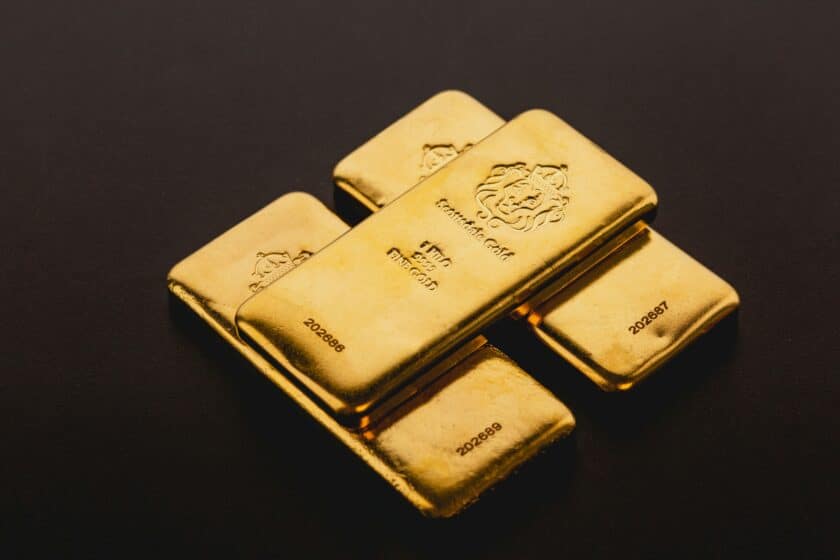
Main image: scottsdale-mint-XHikIfxVZdY-unsplash