






















UK inflation jumped to 5.1% in the 12 months to November, marking its highest level since September 2011. The change in inflation leaves UK households collectively needing to find an extra £39.6 billion a year to maintain their standard of living compared to 12 months ago, according to Canada Life.
The Office for National Statistics said higher transport and energy costs had fueled the rise, which came in above City expectations of 4.7%.
Transport has shown more variation than any other group over the last two years, ranging from a downward contribution of 0.2% in May 2020 to an upward contribution of 1.34% in November 2021 – the largest upward contribution from any sector and the largest from transport since March 2010.
It comes as petrol prices rose to 145.8 pence per litre in November 2021, compared with 112.6 pence per litre a year earlier.
Andrew Tully, technical director at Canada Life, said: “The latest inflation numbers give us little hope for any financial festive cheer. We are all feeling the pinch and the reality is the average UK household will need to find over a thousand pounds extra next year to maintain current living standards.
“The rising costs of living can disproportionately affect people with fixed incomes, including retirees who typically live off pension income. Building some form of protection against the ravages of inflation is important if people want to maintain their standard of living.
“Very few people currently buy an inflation proofed income at retirement. Blending the benefits of drawdown with some guarantees through an annuity can create the flexibility for people to bank a guaranteed income to pay the bills while also leaving money invested to pay for life’s little luxuries and help protect against inflation.”
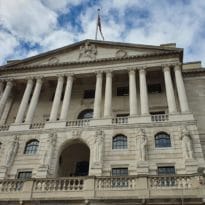
The higher-than-expected figures, which rose from 4.2% in October, also place the Bank of England under increasing pressure to raise interest rates, a day before the central bank meets to make a decision.
On Tuesday, the International Monetary Fund predicted inflation will rise to 5.5% early next year, reaching its highest level in 30 years, and urged the BoE to act.
But while it has long been anticipated that the BoE would raise rates in December, a reluctance to jeopardise economic recovery due to the rise in the Omicron variant may deter them.
Susannah Streeter, senior investment and markets analyst at Hargreaves Lansdown, commented: “Faced with such a high inflation reading, and with forecasts that the only way is up, the Bank of England would ordinarily be expected to call time on the cheap money party and raise interest rates. But with the recovery far from being in full swing and the omicron variant an unruly guest, set to knock back confidence further for many sectors, policymakers may be hot and bothered but are likely to stay in wait-and-see mode tomorrow.
“What is pretty certain is that even if ultra-low rates stay put right now, with prices running so hot, there won’t be an extended lock-in with expectations that February is likely to see rates lift.”
James Lynch, fixed income investment manager at Aegon Asset Management, echoed the sentiment: “Given this is the type of data MPC members were focusing on to make the call to raise interest rates at the 16th Dec meeting, a policy move should have been all but a foregone conclusion. The only reason a move is now not going to happen would be due to the value in waiting to see how the Omicron wave of infections affects government policy and economic activity in January.
“The reality is, it should not be a medium- or long-term consideration for inflation, if anything it may add to the inflation problem we already have. However, I am sure the optics of raising interest rates a week before Christmas, along with a potentially very high covid infection wave which may involve more restrictions on economic activity, is something they are very aware of.”
Martin Lawrence, director of investments at Wesleyan, added: “The Omicron variant has not caused international markets to plunge into troubled waters yet, but the uncertainty surrounding new variants may cause central banks to pause plans to raise interest rates and, coupled with prolonged inflation, this is a perfect storm for savers who should be considering their options when it comes to growing their hard-earned money.”
Meanwhile, Derrick Dunne, CEO of YOU Asset Management, said the government will have to strike a balancing act, following better-than-expected recovery in the UK job market. The unemployment rate fell to 4.2% in the three months to the end of October, driven by growth in part-time work following the lifting of restrictions in July.
Dunne said: “The largest upwards contribution in November came from transport, but the downward pull from restaurants and hotels is the one to watch. As uncertainty returns in the form of Omicron and fears of widespread restrictions build momentum, consumer demand in the coming weeks could take a major blow across the hospitality industry.
“This week, however, inflation itself is not the story. Instead, yesterday’s employment data will be front and centre as the Bank of England meets to discuss tomorrow’s interest rate decision. Doubts about restrictions and their impact on the jobs market have already dashed predictions of a pre-Christmas raise rise. But with inflationary pressure remaining high and with the IMF discouraging the Bank from delaying any further, a change to the base rate is by no means off the table.
“With that in mind, investors would do well to prepare for all eventualities, and selecting investments which track the inflation rate will help to maintain a resilient portfolio.”
Meanwhile, high inflation is also likely to spell a difficult year for small businesses, who may struggle to fund working capital needs due to the reduced value of their dry powder.
Andrew Alridge, partner at Deepbridge Capital, commented: “It remains critically important that scale-up businesses, particularly in high-growth sectors such as digital technologies and life sciences are supported, as they will play a vital role in driving economic growth in the post-pandemic world
“Government initiatives such as the Enterprise Investment Scheme have never been more important for helping entrepreneurs and innovators source the funding they require, whilst also offering private investors with tax incentives to develop UK-supporting private equity portfolios.”