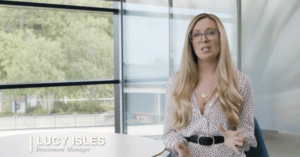




















Lucy Isles, investment manager at Baillie Gifford, said the transition to a sustainable economy has begun and is a material shift that will affect all companies, creating long term investment opportunities and risks.
Isles said: “Unsustainable practices, businesses that abuse the environment or treat staff poorly, run the risk of increased regulatory costs and desertion by their customers. Our investment approach is anchored in the belief that company fundamentals are reflected in valuations over the long term.”
Investment manager Torcail Stewart says unsustainable practices pose “clear threats” to company fundamentals, which remain poorly understood by the market.
Stewart explained: “In terms of opportunities, capital will be reallocated to businesses that appropriately manage their impact and find solutions to sustainability solutions.”
The investment group uses its own proprietary research and rigorous security selection to assess companies. It looks at five separate sustainability elements to assess companies; social capital, environment, human capital, business model and innovation, and leadership and governance.
The outcome is a sustainable ranking, with companies categorised as an enabler; leader; neutral, adapting or unsustainable. Any significant negative impact against any of its five sustainable dimensions which management are failing to adequately address warrants making a company unsustainable. If a company is considered unsustainable, it is not deemed resilient enough to warrant a position in client portfolios, the firm said.
Stewart said: “Sustainability challenges are significant but solvable. It has become increasingly likely that these challenges will be overcome with increased political will, maturing alternative technologies and the behaviour change of consumers.”
Isles added: “Investing long term means anticipating changes and being ahead of the curve. We are committed to proactively ensuring that our investment process helps to accelerate timely global decarbonisation, that means we want a large portion of our portfolio to be net-zero aligned by 2030.
“As investors, we see the transformation to a sustainable economy as a significant opportunity.”
Watch the full video HERE>