






















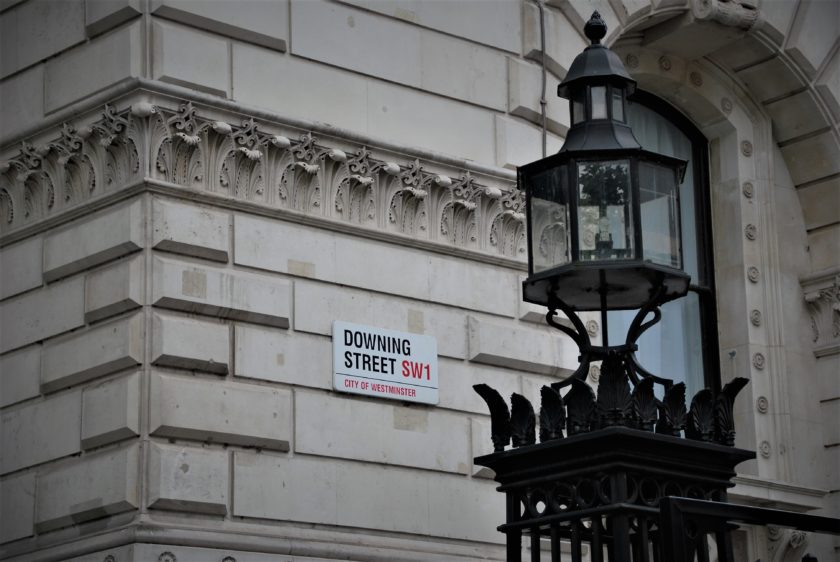
Sir Keir Starmer announced his resignation as Prime Minister on Monday morning, prompting speculation over what the change in leadership could mean for financial markets and investors.
Nominations for the party’s next leader will open on July 9, closing on 16 July when Parliament begins its summer recess.
However, former Greater Manchester mayor Andy Burnham, who won the Makerfield by-election last week, is expected to succeed Starmer, although there is a question mark over whether there will be a leadership contest or whether Burnham will win without competition.
While Starmer’s resignation was widely expected following Burnham’s success in the by-election, political churn and uncertainty over whether he will adhere to the current fiscal rules or be open to change is likely to weigh on investor confidence, say commentators.
Gilt markets
While gilt markets have remained relatively calm so far, with the prospect of leadership change already priced in, ongoing political instability could quickly filter through to pensions, mortgages and household finances.
Maike Currie, VP personal finance at PensionBee, said: “The 2022 mini-Budget showed just how quickly turmoil in the gilt market can spill over into retirement savings and borrowing costs.”
Currie said bond investors often care as much about the Chancellor as the Prime Minister. A Chancellor with a reputation for fiscal discipline could reassure markets, while a more interventionist Chancellor, or a candidate perceived to be less disciplined with spending could have the opposite effect.
If fiscal credibility comes into question or the prospect of an early general election grows, investors may demand a higher return for lending to the UK – meaning a rise in interest rates across the board. That would push up mortgage rates while affecting pension values and annuity rates.
Currie added: “For pension savers, politics and markets are more closely linked than many realise. Most UK workers now save through defined contribution pensions, and many default investment strategies gradually move into bonds and gilts as retirement approaches. Pension values therefore remain sensitive to changes in inflation expectations, interest rates and market confidence.
“Bond markets might seem distant from everyday life, but their impact can be immediate and far-reaching. Higher gilt yields feed directly into mortgage pricing and broader borrowing costs, influencing everything from monthly repayments to housing market activity and consumer confidence.”
What next for economic policy?
Burnham has signalled a desire to stick to the fiscal rules set by chancellor Rachel Reeves, but he has also focused on lowering everyday costs, including housing, transport, utilities and taxes for lower earners.
Andrew Prosser, head of investments at InvestEngine, said: “If Burnham became Prime Minister, he would appoint the Chancellor and set the broad economic direction of the Government. So, the key question for investors would not just be who replaces Reeves, but whether that person would continue her cautious approach or move closer to Burnham’s more interventionist agenda.
“For households, the question is whether a Chancellor serving under a Burnham premiership could deliver relief on bills and living costs without making investors nervous about higher borrowing.”
According to Prosser, the biggest immediate risk for households would be higher borrowing costs.
“If investors believe a new Chancellor is more likely to loosen the fiscal rules, increase borrowing or delay difficult tax and spending decisions, gilt yields could rise. That can matter for anyone taking out a mortgage, remortgaging, using a personal loan, financing a car or running a small business. People already locked into fixed-rate mortgage deals may not feel the impact straight away, but those coming to the end of a deal could face higher rates if market borrowing costs rise,” he said.
Could tax rises be on the cards?
Prosser said: “Burnham has reportedly backed Labour’s pledge not to raise income tax, VAT or employee National Insurance, while also supporting Rachel Reeves’ fiscal rules. But he has floated some changes to income tax.
“He has proposed raising the personal allowance, currently £12,570, which would mean people can earn more before income tax kicks in. That could give lower and middle earners a boost to take-home pay. At the same time, he has previously backed restoring the 50% top rate of income tax, up from 45%. That would not affect most workers, but it would mean higher tax bills for the highest earners.”
Charlotte Kennedy, chartered financial planner at Rathbones, said: “The UK faces a challenging set of public finance constraints, with limited room for additional spending and persistent questions about how future commitments will be funded. Fears remain that spending cuts, tax rises, or a bitter cocktail of both could be required to pay for any flagship policies. At this stage, however, there is still so much we do not know.
“For markets, the identity of the next prime minister may matter less than the credibility of the policies they pursue. Investors, businesses and households will be looking for signs of how the Government intends to balance growth ambitions with the realities of the public finances.
“Until there is clarity from a new prime minister and chancellor, households, businesses and investors are left guessing about the direction of travel. The longer the wait for firm policy signals, the longer uncertainty is likely to hang over financial prospects.”
A few weeks ago, Burnham’s main rival for leadership, Wes Streeting, said that he would look to eqaulise capital gains tax with income tax and remove unfair loopholes if he won a leadership contest. Burnham has not backed these policies outright but has said he’s open to revisiting capital gains tax.
Richard Carter, head of fixed interest research at Quilter Cheviot, said: “Markets are wary of Burnham’s previous policy positions so they would prefer to see ideas for governing fleshed out via a leadership contest, keeping surprises to a minimum.
“For now, given the economic team Burham has been putting in place, alongside the fact he does not appear to be seeking a new mandate, we are probably going to see more of a continuation of the current direction from the Government.
“Last week’s borrowing figures highlight just how messy this inheritance will be, and as such, there is unlikely to be any immediate silver bullet to the UK’s economic woes. Without that new mandate, there is likely to be more tinkering with personal taxation around the edges and as such that will weigh on growth.
“With UK still at a yield premium to developed market peers, investors and markets will want to see a credible economic plan that can help ignite growth and put the public finances back onto surer footing.”
Wealth tax
Nigel Green, CEO of deVere Group, said: “The market’s first question isn’t who replaces Keir Starmer. It’s whether the next Prime Minister pushes Britain further towards taxing wealth and capital.
“If investors conclude the answer is yes, sterling falls, gilt yields rise and money leaves. It’s that simple.”
Green warned that affluent individuals and internationally mobile investors are likely to respond long before any formal policy proposals emerge.
“There is a dangerous assumption in politics that wealthy people will simply sit still and pay whatever governments demand. They won’t. Some will restructure, some will relocate, and some will move capital elsewhere. The Treasury can tax wealth but can’t force wealth to stay.”
Kennedy added: “A particular concern among many people we speak to is that a new Labour government could look to lean more heavily on taxes on wealth, property and capital. Our analysis suggests that as much as £100 billion of wealth could either leave the UK or be redirected into less productive assets from a tax perspective if a levy on the wealthy were introduced.
“We have come across highly paid professionals who are considering relocating to more tax-efficient jurisdictions, or are actively reviewing their options. For some, the introduction of a wealth tax could prove to be the tipping point.”
Main image: jordhan-madec-AD5ylD2T0UY-unsplash