























We often see examples of bonds and cumulative allowances where it’s only the original investment amount to consider, but what happens if a client wants to top up their bond? Julia Peake – Technical Manager at Nucleus explains what to watch out for when making additional investments to investment bonds

Clients with existing investment bonds should already be well versed in the advantages and disadvantages of this investment wrapper along with the taxation regime in which it sits.
For many clients, both onshore and offshore bonds offer tax efficiency, including tax deferred withdrawals, gifting and switching as well as the ability to take gains and use their personal tax allowances and reliefs to offset the tax payable. This is aided by the fact that investment bonds are made up of hundreds or even sometimes thousands, of individual and identical policies.
If clients are looking to make additional lump sum investments, the question is do you top up an existing bond or do you start a new policy?
If you were to add money to an existing investment bond, you will add to the existing polices rather than creating new ones in most cases. For example if the policy were created on 1 June 2020 with £100,000 and 100 identical policies and on 10 January 2026 the client made an additional investment of £100,000, this would invested into the existing 100 policies created on day one.
A number of competing factors will need to be considered here. There is no “one size fits all” solution. Understanding the client’s individual wants, needs as well as their current and future tax position will be key. How the bond is held, either by the individual or as a trustee investment will also impact your recommendation.
If it’s held in a trust, consideration must be given to the type of trust and which tax regime applicable. Some trusts will not permit additional investments to be made, and where the trust is one of relevant property, tax advice should be sought prior to making the additional investment to understand how adding money might affect the trust now and in the future.
Let’s have a look at an example.
Sandy and her brother Michael inherit £75,000 each from their late Aunt. After speaking to their financial advisers, they each decide that an offshore investment bond would be suitable and on 10 April 2025 invest the money with similar attitudes to risk.
Seven years later their father passes away and each of them receive cash of £75,000. They speak to their advisers about how they should invest this money, with each of their bonds is now worth £100,000 and neither have taken any withdrawals.
Sandy’s adviser recommends she adds this money to her existing bond, whereas Michael’s adviser recommends he opens a new bond. What are the considerations and differences between Sandy’s and Michael strategies?
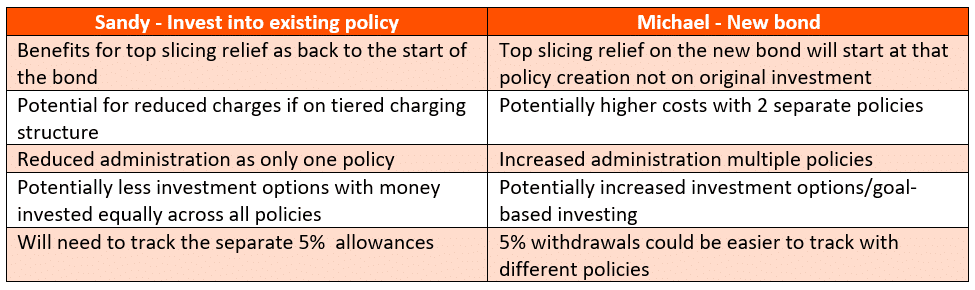
One of the issues to consider if adding new monies to an existing bond is to ensure the withdrawals from the bond are effectively managed to avoid potential tax charges.
The below tables show how 5% withdrawals and top ups to the same bond work in practice for Sandy.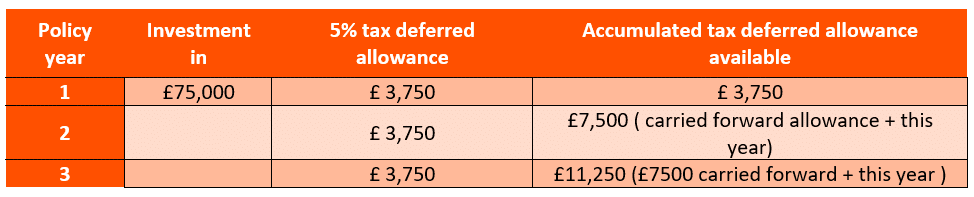
Fast forward to year seven and additional monies added.

Fast forward to year 21 when the original investment stops accruing 5% allowance.

This can add complexity to the bond administration but needs to be weighed up against the benefits of topping up an existing bond and of course what is right for that client.
Main image: imagine-buddy-c-ctkaw8WLs-unsplash