























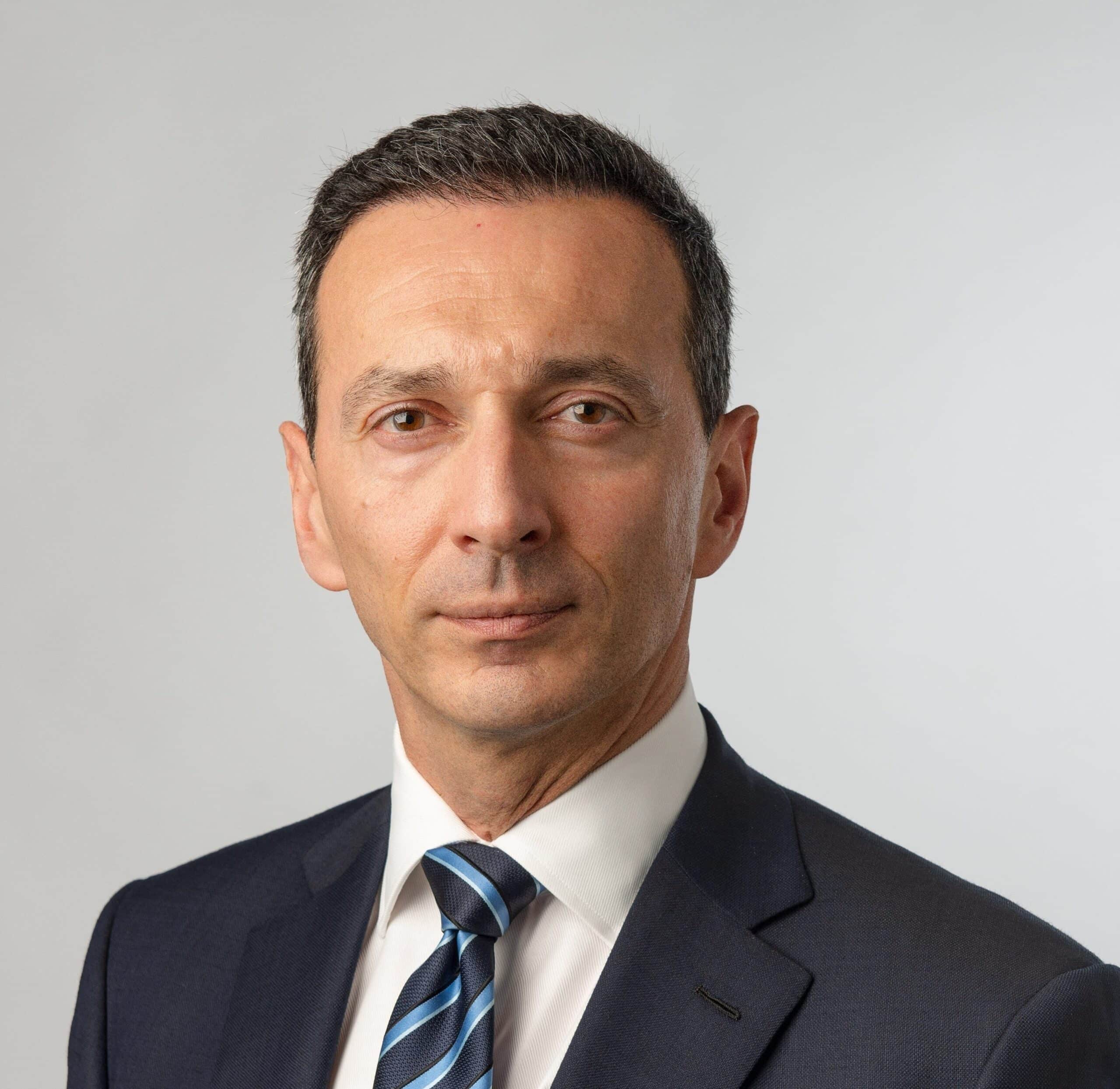
In this week’s FundCalibre interview, Zehrid Osmani, manager of the Martin Currie Global Portfolio Trust, elaborates on his three-step investment process that ensures only the most promising companies make it into the portfolio, before diving into the significant themes driving this strategy, including demographic changes, future technology, and resource scarcity.
Why you should listen to the interview
Zehrid provides an in-depth look into what he believes are seismic thematic shifts and the “techno-industrial revolution”. He also shares why, despite headlines, he believes the market is still underestimating the true potential and opportunity within artificial intelligence (AI).
This interview was recorded on 20 June 2024. Please note, answers are edited and condensed for clarity. To gain a fuller understanding and clearer context, please listen to the full interview.
Interview highlights:
Long term valuations are key
“The valuation framework is based on three tools. One is discounted cash flow, which accounts for 50% of our price target assessment. The other one is economic value-add, for 25%. And the last one is target multiples, and for that it’s 25%.
“But instead of using 12 months forward multiples, we use year five multiples, so arguably longer-term valuation tools. Ultimately the aim is to put a fair value on the businesses that we look at, rather than where the market might be willing to pay over the next 12 months.
“We forecast for companies over 15 years; it’s a long forecast period in order to make sure we capture the full growth potential of any company we research, but also forecast the stage of maturity of those businesses by year 16 onwards. And yes, forecasting is difficult, but we always say that if you’re not aiming to forecast, you’re having even less potential to understand the shape of growth and returns profile of any business that you’re looking at.
“We also don’t just rely on one set of forecasts, which would be the base case scenario. We run different scenarios: we run a bull case, a bear case, a blue sky, and a dark sky scenario so that we capture different potential outcomes because of that forecast risk that I mentioned.”
The 21st century diseases
“The population is aging — over 16% of the world population will be 65 years or over by 2050. And sadly, as a result, incidences of diseases will increase with age. We have a theme called the 21st century diseases which are cancers, obesity and diabetes. These are prominent lifestyle-related diseases and sadly they’re co-morbidities, so they’re linked to each other.
“There’s estimates that show that incidents of diabetes will increase by 49% by 2040; cancers will increase by 31% over that period. And then on the obesity side, so we can mention things like heart failures increasing by 92%, or breathing disorders that are somewhat related to obesity increasing by 37%. So, a lot of reasons why there will be a significant need to invest more in healthcare infrastructure.
“We like to be in companies that are capturing the spending that will go into that healthcare infrastructure, so companies in the medical technology space are a significant part of the portfolio. And we’ve got a combination of companies that do benefit from the drug developments and production and the outsourcing that goes around that. We’ve got companies that are exposed to the genomic space, which touches on the theme of bespoke healthcare, so more targeted therapies as a result of the advances in genome sequencing.”
Living through the techno-industrial revolution
“So our view is that the market is underestimating the AI opportunity, both in terms of size and in terms of speed at which AI is going to be taken up. Four of our eight mid-term thematic opportunities capture AI.
“Arguably, AI touches on all areas of the economy ultimately. So even our theme of energy transition will benefit from AI. At this stage, the market debate will be about what is the size of the opportunity and how quickly will that opportunity be realised. So, our view is it touches all agents of the economy; governments, corporates, and households.
“There’s an interesting report by Goldman Sachs that highlights AI has a potential to increase global GDP growth by seven percentage points and boost productivity by 1.5 percentage points per annum. So, an increase in productivity over a decade of over 15 percentage points: that’s staggering!
“But it also has a potential to displace 300 million jobs worldwide, which is why it’s going to impact households, it’s going to impact governments from the point of view of needing to put policies in place to retrain workforces. And there’s going to be potential shifts and migration in displaced labour, which itself creates political challenges.
“Jensen Huang, the CEO of Nvidia, called it an industrial revolution. We amend that quote by saying it’s a techno-industrial revolution that we’re on the cusp of living through. And it’s going to speed up breakthroughs.
“One anecdote: there’s about 300 million known proteins to mankind. It typically takes a student, a whole PhD, so five years, to unfold and map in 3D terms, one protein. Google, through its AlphaFold programme using AI, has unfolded all known 300 million proteins in record times and made that data available to humanity. So, technically it saved over 1.5 billion PhD study years through that process. And we’re already getting proteins being developed that have the potential to make plants disease resistant using that knowledge. We’ve got some proteins that have been developed that eat into plastic waste, which tackles some of that. And there’s so many other examples like that of breakthroughs that have been accelerated, which makes it a very exciting era to be in.”
Conclusion
Zehrid has shown himself to be an excellent manager of high-conviction strategies and this interview demonstrates his ability to tap into a number of long-term themes from artificial intelligence to an aging population.