












Andy Burnham’s appointment as Prime Minister has prompted a measured response from markets, with investors focused on whether his government can deliver stability and maintain fiscal discipline.
In succeeding Sir Keir Starmer as Prime Minister, Andy Burnham has inherited a challenging political and economic backdrop at a time when markets remain sensitive to both domestic policy and global events.
While any change in leadership inevitably creates uncertainty, initial market reaction has been relatively measured, with several investment professionals highlighting continuity and stability as key factors behind the response.
Chris Beauchamp, Chief Market Analyst at IG, believes the new Prime Minister faces a significant challenge from the outset.
“The task facing the new PM is immense and is well-known to everyone. He has to show he has new ideas, while at the same time keeping his fractious party together.
“Sir Keir Starmer found this beyond him in the end, and while Burnham has a solid track record from his time as mayor, it is a much larger and trickier canvas that he now has to paint.”
Beauchamp added that investors are willing to give Burnham time to establish himself but warned that patience will not be infinite.
“Markets are likely to give him the benefit of the doubt for now, in part due to gratitude for not picking Ed Miliband as chancellor, but like the public, their patience is not limitless.”
One of the most immediate areas to watch will be government spending plans and their impact on fixed income markets.
David Roberts, Head of Fixed Income at Nedgroup Investments, argues that the market had already been pricing in a degree of political instability, including concerns over an early election and further fragmentation of UK politics.
“If you’d asked me a few months ago I would never had said this, but the new UK Prime Minister Andy Burnham is almost like Mr Stability at the moment.
“It’s almost like the old saying, the lesser of several evils… he’s Mr Coalescence, the glue that could bind the current government together.”
According to Roberts, avoiding a snap election has been viewed positively by investors, while continued commitment to existing fiscal plans could provide further support for the gilt market.
“There are worse outcomes for the gilt market and arguably for UK politics in the short term than Burnham winning and coalescing the Labour Party around him – stability, 2 years to convince the electorate especially if he sticks to the fiscal plan can see gilts rally further than they already have.”
Beyond bonds, the implications for UK equities may be less significant than some investors initially assume.
Stuart Widdowson, Co-Portfolio Manager of Odyssean Investment Trust, notes that while investors often view UK smaller companies as particularly exposed to domestic political developments, the reality is often more nuanced.
“In practice, though, the medium-to long-term value creation prospects of high-quality smaller UK firms are largely independent of who occupies Downing Street.
“Many smaller companies are UK-listed in name only, generating the bulk of their operations, revenues and profits overseas.”
He highlights that many well-run smaller businesses are driven more by management execution and strategic transformation than by changes in government policy, making them relatively insulated from domestic political developments.
Widdowson describes such firms as attractive “anyway bets”, capable of outperforming even if wider market sentiment weakens amid political uncertainty.
He also points to continued merger and acquisition activity as evidence that international buyers continue to see value in UK-listed smaller companies despite concerns about the UK’s economic outlook.
Burnham’s arrival appears, for now, to be viewed more as a source of stability than disruption. However, investors are likely to remain focused on the same issues that dominated before the leadership change – fiscal discipline, economic growth, inflation and the trajectory of interest rates.
The coming weeks may provide further clues. As Beauchamp notes, Burnham begins his premiership facing a packed agenda and a demanding economic environment.
“Depending on how long the US and Iran continue their renewed conflict, Burnham may find that his room for manoeuvre remains limited.”
For now, markets seem willing to give the new Prime Minister the benefit of the doubt. Whether that confidence endures will depend less on the political drama surrounding his appointment and more on the government’s ability to deliver.
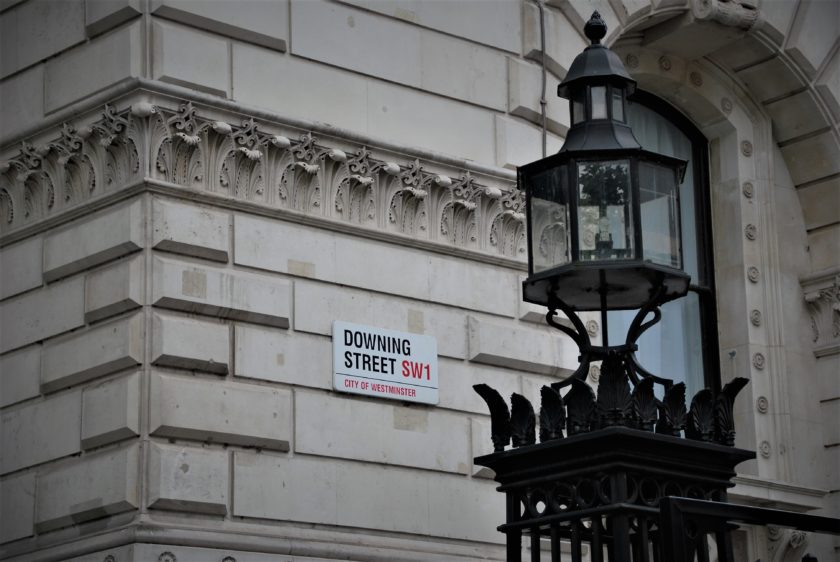
Main image: London, Downing St, Government, prime Minister, jordhan-madec-AD5ylD2T0UY-unsplash