




















When you first speak to Phil, one thing is immediately clear, nothing about his career has been linear, and yet every step makes perfect sense. Editor of Professional Paraplanner – Natalie Dawes, delves deeper into his career to date, and explores some exciting plans that are about to come to fruition.
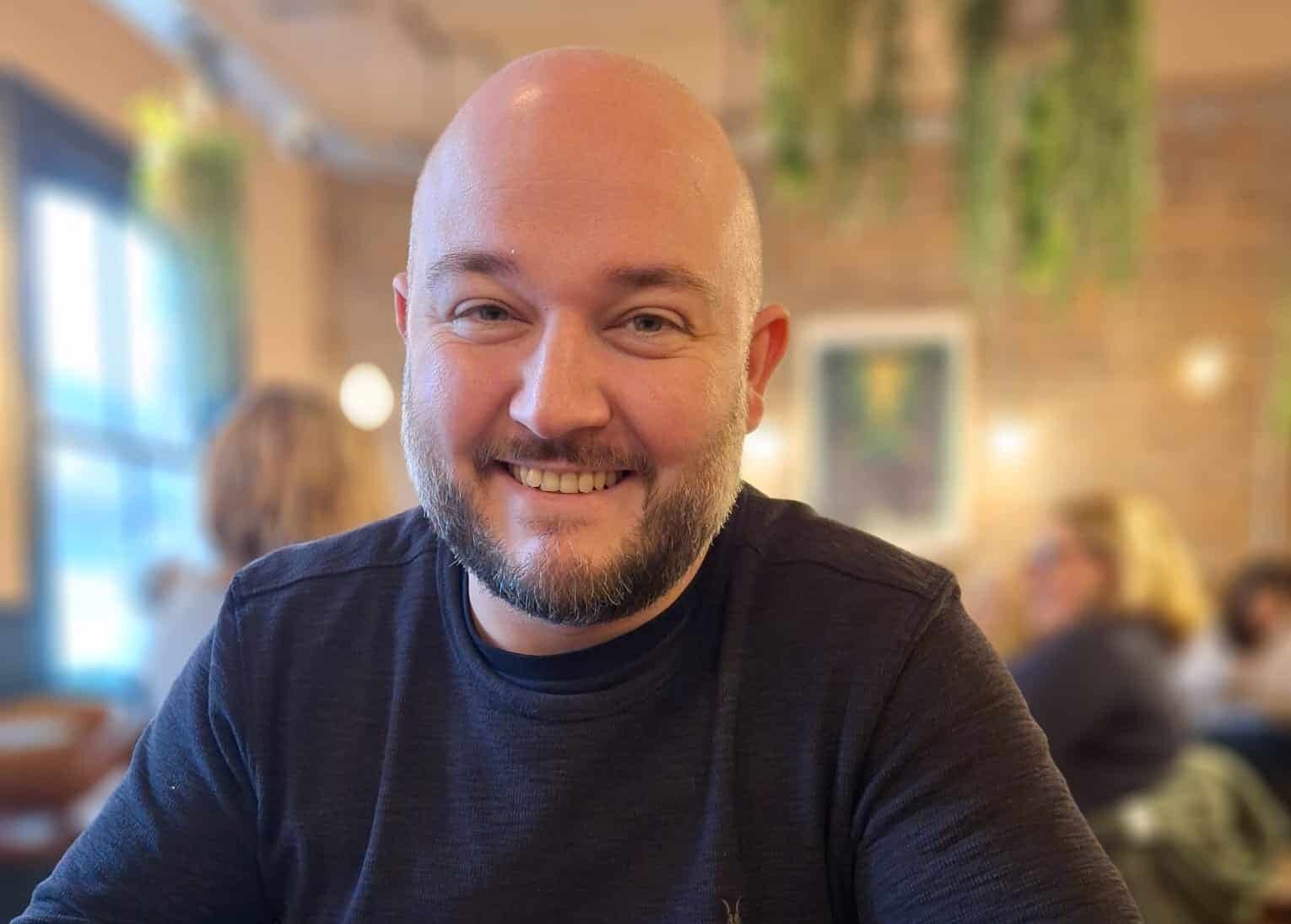
Today, Phil is an outsourced paraplanning business owner and newly minted author, but his journey began in a place far removed from suitability reports and cashflow models.
Phil’s early ambitions were set on forensic science. After completing a BTEC, he found job opportunities in the Midlands quite limited. A twist of fate led him to relocate to the South Coast to be with his now‑wife. The move nudged him into pharmaceuticals, and later into travel insurance.
At first glance, these roles seem disconnected however Phil discovered that each built on the last. His pharmaceutical work strengthened his medical knowledge, which helped with his role within travel insurance, which in the end, fed directly into his next move into medical‑underwritten annuities.
“It looks sporadic on paper,” he says, “but there was a thread. All of it flowed.”
That flow brought him into Just Retirement, just before RDR reshaped the industry. Over six years he moved through a variety of roles, from annuity quotations to application processing, through to non‑advised customer support.
Those years gave him breadth, but they didn’t yet give him the sense of direction he craved.
A turning point at 30
“30 hit me like a brick,” Phil admits. Newly married and thinking about starting a family, he realised he didn’t have a clear career path. “It was a wake‑up point, we all have them.”
Feeling the need to build a future with purpose, he pursued the well‑trodden route many take.
Administrator, technical administrator, paraplanner and as was his desire at the time, the next step was going to be as an adviser.
At that stage he didn’t see paraplanning as a career in its own right, something he now feels passionately about.
“It was always seen as just a stepping stone. You never heard people say they wanted to be a paraplanner. And yet the technical side, the problem‑solving, that’s what really hooked me.”
Working for a small firm, he became a technical specialist supporting two to three advisers, later experiencing life within a larger network after the firm was acquired.
This dual exposure gave him a rounded understanding of how advice firms operate and, where the bottlenecks lie.
The (unexpected) leap to self‑employment
In 2024, after joining a newly self‑employed adviser as a paraplanner and head of operations, Phil found himself with something he’d not experienced before – capacity.
He built processes, structured the CIP and CRP, and improved internal documentation. He realised he could do this for multiple firms, but only if he broke out of employment.
That moment of “What if…?” soon shaped what came next.
Phil turned to ChatGPT for accountability and some much-needed challenge in his ideas. In fact, he instructed the AI to “not pander” to him and to push back. With its help, he developed a brand, a website, a proposition and a complete business model.
And before long, he made the leap.
He left employment in early 2025, took his existing adviser on as his first client, and launched Beyond Paraplanning – an outsourced paraplanning and consultancy business designed to deliver more than reports.
Building a business, not just writing reports
What makes Phil’s approach different is his focus on value over volume.
“I never wanted to run a report‑churning service,” he says. “It’s about giving genuine insight, improving processes, and giving advisers time back.”
That ethos has led him beyond traditional paraplanning into redesigning suitability report templates, helping refine processes and client journeys and conducting technical research.
In the future, Phil hopes to extend his services in offering to help shape CRPs and CIPs in line with regulatory change, act as an outsourced operations sounding board and support firms expand their technical toolkit (BR, VCT, SLI, decumulation strategies, as some examples discussed.)
Paraplanning in a changing landscape
Talking to Phil about his own career and now his thriving business, Phil’s views became apparent about the profession, in that it has transformed dramatically.
“Five years ago, people still said ‘I’m just a paraplanner.’ You hardly hear that now. It’s becoming a proper profession with its own identity.”
He also believes the blurry line between admin and paraplanning is finally sharpening, with a growing need for “technical administrators” as a stepping stone. And while he welcomes AI as a tool, (he uses it extensively himself) he’s adamant it can’t replace human judgement.
“AI is brilliant at structuring and summarising, but it still needs curation. It can’t replace critical thinking.”
He’s equally honest about the challenges within our profession, one noted in a single word:
“Compliance.”
He went on to say, “Not the principles, those make sense, but the inconsistencies in interpretation across firms.”
For Phil, it’s less about the regulatory framework itself and more about the friction it creates when every provider, network or compliance function reads the same rulebook differently.
It adds layers of complexity that paraplanners must work hard to navigate, adapt to and reconcile, often on a case‑by‑case basis. Yet it’s also part of what keeps the role intellectually stimulating.
As he puts it, “You’re always learning. Always adjusting.”
And that adaptability is something Phil now carries confidently into his new chapter.
Phil’s new chapter and some advice for aspiring paraplanners
Phil’s new self‑employed life brings freedom he never had before. School runs, quiet mornings, the ability to design his day and the challenge of balancing capacity with opportunity.
He had some advice to those considering paraplanning as a career of choice and we’ve pulled five of the stand-out points:
1. Start in a firm, boutique or corporate, whichever suits your temperament.
2. Treat it as a genuine profession, not a stepping stone.
3. Be curious, exposure to different case types is vital.
4. Don’t rush, it takes years to see the full breadth of situations.
5. Know yourself, paraplanning suits the technically minded, advice suits those driven by people.
As for whether he still wonders about becoming an adviser?
“I think I was always meant to be a paraplanner. I like solving problems. I like seeing the gaps and filling them.”
And talking of chapters – Phil is also an author
Phil’s leap into authorship happened just as organically as the leap into self‑employment.
His new book was born out of the very questions he asked himself when deciding whether to go solo and is very much designed to help paraplanners assess their readiness for self‑employment, with honesty, structure and realism.
It’s not a book for brand‑new paraplanners, he stresses. It’s for those with experience, who are wondering “What if?” – a question that also became the book’s fitting title.
With publication just around the corner, here’s to wishing Phil every success as he prepares for its launch.
Main image: javier-allegue-barros-C7B-ExXpOIE-unsplash