





















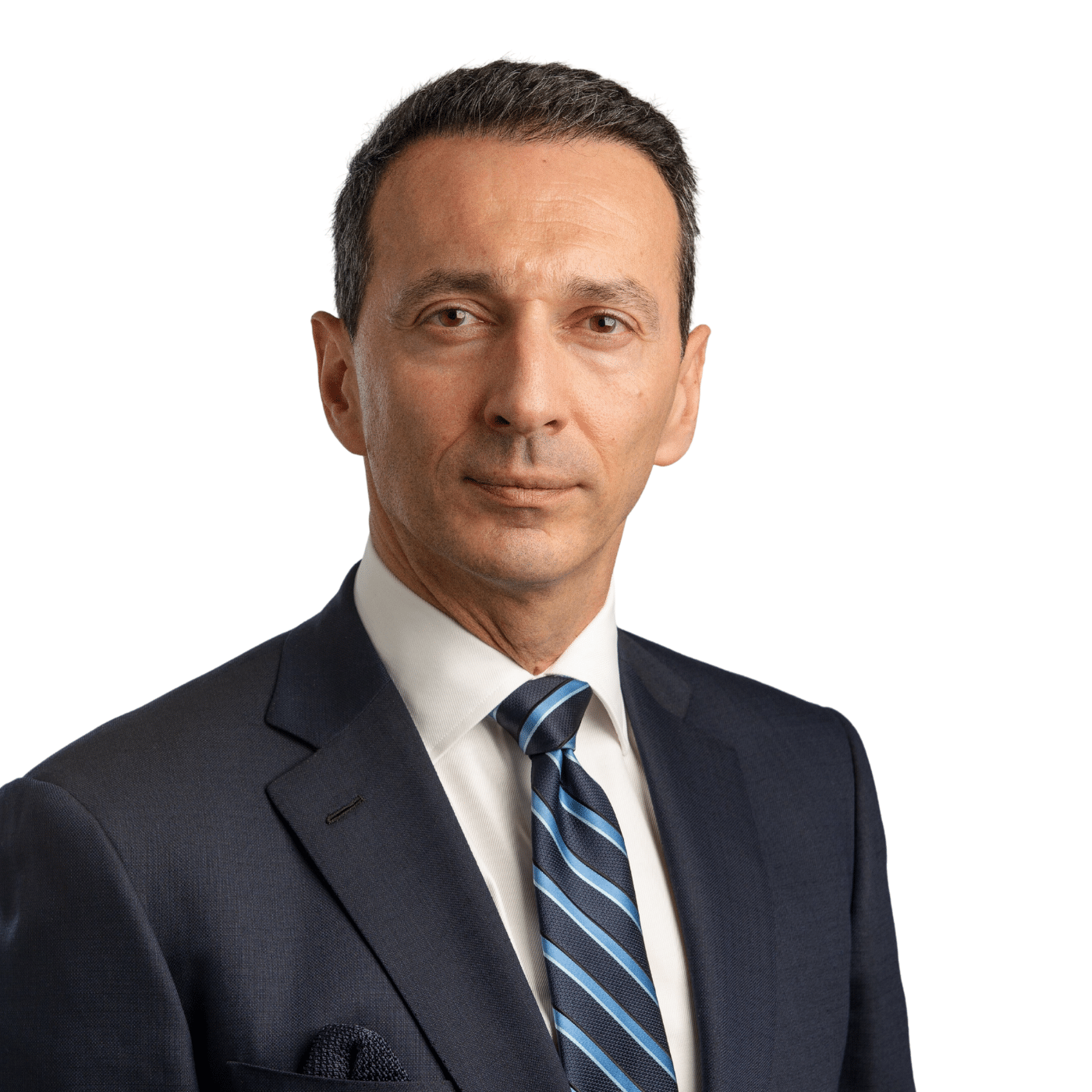
This week’s Investment Soundbite Q&A from FundCalibre is with Zehrid Osmani, manager of the Elite Rated FTF Martin Currie European Unconstrained fund. He focuses on the macro environment in Europe today and the risks it poses for investors. He ends on a high note with three well-known stock examples that should continue to perform well despite higher inflation.
(Recorded 2 May 2023)
What are your thoughts on Europe today?
There are many issues to talk about in terms of the broader picture in Europe, starting with the macroeconomic environment. There’s clearly a major point of uncertainty around inflation and the elevated inflation that the whole world has been grappling with for the past 12 months. Our view on inflation is that it’s going to stay elevated for longer, so somewhat stickier than the market might be expecting. This therefore has implications in terms of monetary policy expectations. We think both the ECB and the Fed will continue to keep a close eye on those abnormally high inflation pressures and could be continuing to hike for the time being.
And yes, there is a debate about whether we’re getting closer to the end of the hiking cycle. We believe that that’s not going to happen until 2024, but we’re conscious that some market participants are of the view that there’s going to be a pivot at some point this year. And that will, in itself, create an important bull/bear debate in the market, which was actually one of our points on the outlook for both Europe and the world for 2023, which is it’s a year with very high forecast risk and very elevated prediction error. It’s therefore going to create that volatility – we’ve already seen that year to date with very sharp moves – but there’s going to be more coming.
Then when we look at the economic cycle, our view has been that we’re heading into a sharp slowdown at the global level and at the US level, rather than a recession. And for Europe, we were of the view that Europe was already in an element of stagflation, partly related to the Russia / Ukraine conflict and higher prices of commodities, notably energy prices, and the potential risk to activity.
What has changed since our outlook is China has suddenly reopened unexpectedly – and China being the second largest economy globally, it is important to keep an eye on the Chinese economic momentum as it’s relevant to Europe. Europe is more cyclically exposed to the global cycle, and notably to the China cycle, than any other developed markets, and therefore, for Europe, it matters how rapidly China reopens.
What we’re seeing in terms of the PMIs for China is a very sharp recovery, both on the manufacturing and the services side. Our view on the Chinese reopening is that more of the momentum is going to come from services, and this could continue to have good momentum into the rest of the year which means travel, leisure, luxury goods and cosmetics companies will be positively exposed to that, and Europe is full of those type of companies.
As a result, we’re somewhat more constructive about Europe generally and that is supported also by valuations.
You’ve previously mentioned 10 key risks you see for investing in the region. What are some of those risks and how might that impact the equity market?
The risks that we’ve listed are, to some extent, driven by policy expectations, starting with fiscal policies and the risk of fiscal policy slippages. Importantly, there’s a sizable element of spending that is being planned, notably in terms of new energy sources – alternative energy sources for Europe – as they’re driving to diversify away from Russian gas and Russian oil. That is an important element of potential risk if that plan doesn’t follow through.
Next is monetary policy risk. We have to acknowledge that there is always the risk that central banks tighten too much and will create that recession. Then there’s the risk around inflation, and our view is inflation will remain stickier, longer lasting, and higher, and that creates in itself an important risk.
These risks then feed into the risk of increased volatility, because when you have monetary policy uncertainty, you will have higher volatility in equity and bond markets, and within equity markets, you’ll have higher volatility in terms of styles between quality growth versus value styles.
We also highlighted a few risks around the impact on margins. Higher inflation means potential risk to corporate margins, and therefore our focus on finding companies that have pricing power and are therefore able to protect themselves from that elevated inflation and protect their margins is critical. That’s an important risk to take into account at the corporate level.
The other risk at the corporate level is higher corporate tax rates, which the market isn’t necessarily factoring in. Our forecast when we’re looking at companies and predicting companies’ profits, is to assume 300 basis points increase in corporate tax rates globally, because we believe at some point there will be a need to raise taxes, given the elevated government debt levels that have come through since the Covid crisis.
Then there are a few additional risks to bring into the frame. One of them is geopolitical risk, and that geopolitical risk takes many forms. Clearly, in Europe, it’s a conflict, with the Ukraine invasion by Russia, with a measure of uncertainty whether there’s going to be conflict escalation or conflict broadening. That’s one important focal point.
Then, at the global level, there’s China versus the rest of the world, China versus Taiwan, and China versus the US. This is a particularly important risk for the market to focus on because it leads to another geopolitical risk, which is the technological fragmentation risk. We are seeing this in the semiconductor space in particular, that there’s a race to bring in more independence in terms of semiconductor supplies or access to semiconductors by the various territories, notably the US, notably Europe.
The final aspect is our view that in the long-term, growth will remain low and will therefore be impacted. In a low growth environment, we want to focus on companies that have structural growth exposure, so that can really generate their own weather in terms of growth potential.
You have a very concentrated approach to your portfolio, with almost a quarter of your fund invested in just three stocks, ASML, Ferrari N.V., and Moncler S.p.A. What is it about these three companies that gives you such high conviction?
At the moment we have 22 stocks in the portfolio and, as high conviction investors and as a result of being so concentrated, some of our top positions do constitute a large part of the portfolio.
When we look at ASML, Ferrari and Moncler, without going into too much detail at this stage, they have similar characteristics whereby when we look at companies, we want companies that operate in industries with high barriers to entry, that have dominant market positions or the potential to become dominant. It gives them strong pricing power, which to us is always an important factor, but even more so in a high inflation environment.
They are companies that have exposure to structural growth, so the element of generating their own weather in terms of growth potential. They are also companies that have high returns on invested capital. And for us, that’s an important aspect.
As investors, we seek quality growth; the quality element can be defined as high return on invested capital companies. They also have on the balance sheet side, strong balance sheets and compounding cash flows. And then on the ESG side, we look at companies with quality management, good corporate cultures and sustainable business models. And then the final criteria at the heart of all of this, is companies with attractive valuations based on our valuation methodology.
So, these three companies effectively emanate characteristics across all of these criteria that we’ve just listed.
But when you focus specifically on each of them: ASML is in a quasi-monopolistic position in that leading-edge, semiconductor technology. We believe that semiconductors are an important structural growth opportunity, even if the industry is cyclical. And ASML will benefit from that geopolitical fragmentation whereby you have semiconductor companies now building plants in the US, in Japan, and most recently, also an announcement of fabs being built in Europe, and therefore ASML will benefit from having to service more fabs, and send its tools to more factories.
Ferrari has very strong pricing power – it’s pricing its models at a 25% to 70% premium to its closest competitors which are Aston Martin, Lamborghini, and Porsche. And that’s because it can. It’s got a long waiting list, which means that if we head into a recession, it can tap into that waiting list to continue to keep production lines at full capacity and therefore margins high. And it has understood that strong pricing power, by periodically producing some limited-edition models, which actually end up being sold out before they even start production. This means if you have a period of slowdown in economic activity, it can move the production lines towards producing and then delivering these limited editions.
Moncler is in this segment of luxury goods, again, higher end consumption, where we’re more positive than mass market consumption. It’s a brand that’s not overly exposed yet, so it’s got a lot of greenfield opportunities to open more doors. But importantly, it has a CEO who is also the creative director, who is very focused on ensuring that the brand doesn’t get overexposed, it doesn’t have too much inventory, which means doesn’t run into a need to discount, which means pricing power is strong again. And then, from the point of view of newness, it’s a phenomenally vibrant brand with very strong appeal in an age group that is very dynamic that also has a very good following across geographies, notably China.
Moncler ran a campaign on TikTok a couple of years ago, which generated 6 billion views which shows you that relevance. And then they’ve recently relaunched the Moncler Genius Initiative to drive more content and more appeal and more high profile. And they’ve got people like Farrell Williams, Alicia Keys, Jay-Z being part of these campaigns, which again shows you how creative the brand is and how appealing it is to that age group that we mentioned earlier.
Listen to the full interview here
[Main image: christian-lue-7dEyTJ7-8os-unsplash]