






















Structural tailwinds are opening p opportunities for investment in India, says Chetan Sehgal, Portfolio Manager of Templeton Emerging Markets Investment Trust.

India offers investors a significant growth opportunity given its structural tailwinds, which include attractive demographics, a market-oriented economy, and a rising middle class. This opportunity was previously constrained by bottlenecks in infrastructure, bureaucracy, and a weak fiscal position.
Over the past decade, infrastructure investment has surged, the ease of doing business has improved, and the government’s fiscal position has been transformed by better tax collection and the introduction of a national value added tax. The improvement in digital infrastructure has propelled internal trade and offered new opportunities for growth amongst entrepreneurs.
Longer term, the demand fundamentals for India remain robust given increasing penetration of consumer goods, the growing formalisation of the economy, and a stable government. India is home to companies with exposure to long-term secular growth themes including digitisation and premiumisation. It also offers access to growing companies leveraging its consumption and infrastructure.
The large domestic market and limited dependence on exports is also a key attraction for investors, particularly given the uncertainties created by the global trade war.
Such robust growth prospects are reflected in valuations of many securities, which trade at premiums compared to other EMs. We remain selective in the companies we invest in; often focusing on periods of near-term pessimism in markets to add exposure. Focusing on those companies which have sustainable earnings power and whose share prices are at a discount to our estimate of their intrinsic worth.
India PE ratio
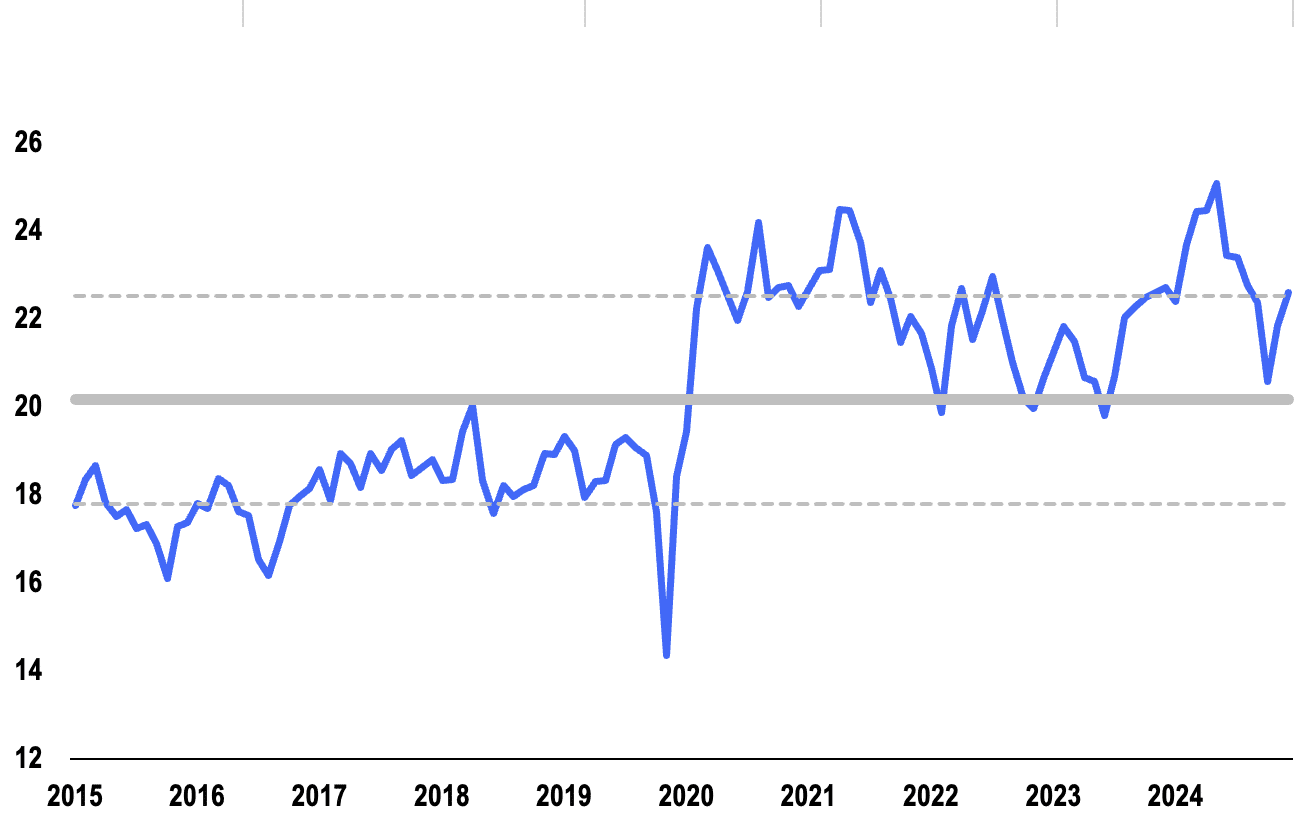
Source: Factset, Franklin Templeton, as of April 30, 2025.
However, the India growth story is not without uncertainties and challenges.
The Information Technology sector has been a key driver for employment as well as services exports from India. Artificial Intellgence (AI) will likely permeate all aspects of our lives and it appears as both an opportunity and a risk for the sector. The Indian IT sector is expected to play a leading role in supporting the clients as they adopt AI applications. However, at the same time AI agents are likely to replace coders and customer service staff, which could have an impact on growth potential of the Indian IT sector. We continue to monitor developments in this fast-evolving industry.
Investment in India’s workforce is another important area of focus. Effort is needed to further increase female participation in the workforce, upskill workers to facilitate a smoother transition to new employment opportunities, and encourage greater youth engagement. Enhancing skills and productivity is essential for India to harness the benefits of its sizable and youthful population
Figure: India Labour force breakdown
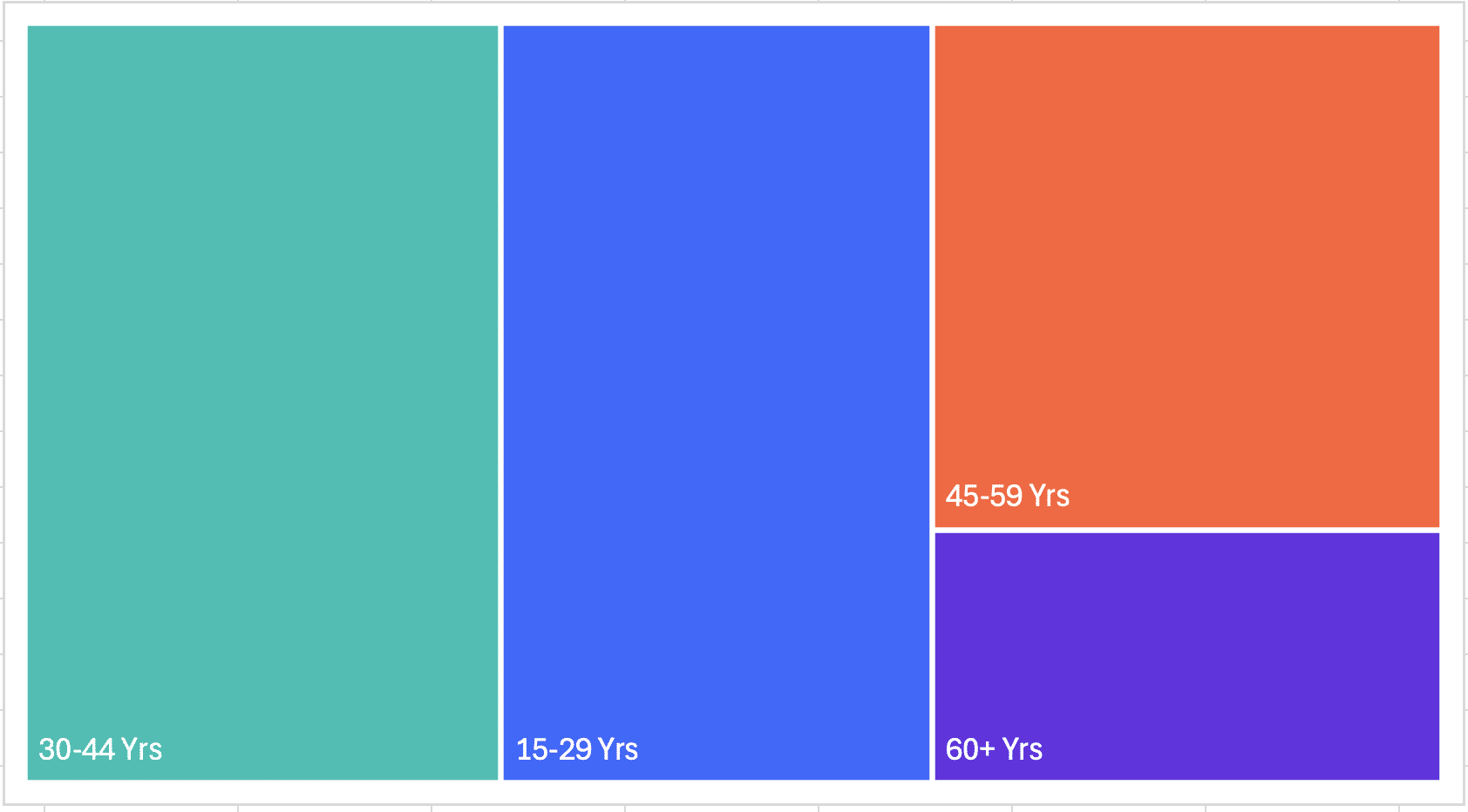
Source: India perodic labour force survey, 2024. Total India labour force 625 million.
Another key challenge for India is climate change. In recent years India has experienced extreme weather events coupled with water crises. Farming, which is dependent on monsoons, still employs 45% of the Indian workforce[1] and is a material part of the overall economy. Tackling the rural and urban challenges caused by climate change needs to be addressed to secure longer-term growth.
India represents an attractive long-term growth opportunity with a sizable domestic market and lower dependence on exports compared to peers. The latter characteristics are attractive for investors given the uncertainties created by the global trade war.
[1] Source: Census of India.