






















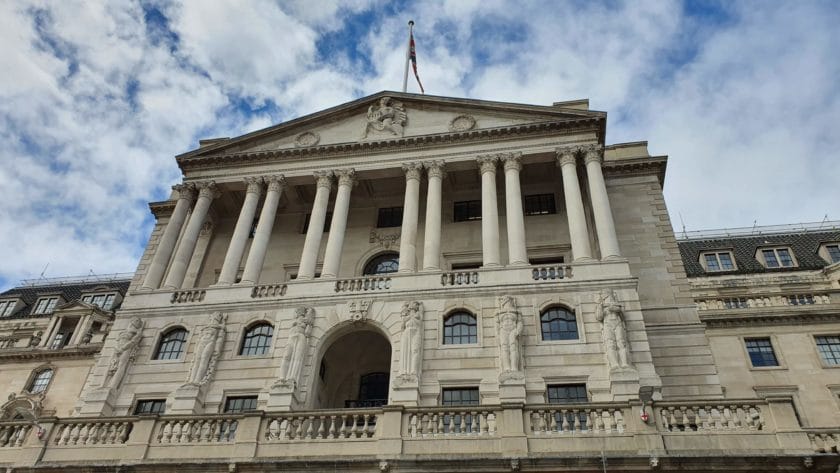
Emergency steps taken by the Bank of England to calm investors are causing further market volatility.
The Bank of England announced on Tuesday that it would buy more government bonds as part of its emergency quantitative easing programme in a bid to stabilise their price and prevent a sell-off.
However, James Athey, investment director at abrdn, said the central bank has put itself, the UK economy and UK financial markets in a “perilous and uncertain” position.
Athey said: “The Bank has been far too intransigent in its response to the inflationary backdrop this year. In being so, it laid some of the foundations for the illiquidity and volatility which characterise the UK government bond market today. Their decisions now are even more fraught as a lack of aggression will be perceived as weakness while an over-enthusiastic response could be seen as panic.”
Athey said the Bank’s recent attempts to deal with weakness and volatility in the asset markets are only acting as sticking plasters.
Athey added: “As ever though the maxim will hold true – there is nothing so permanent as a temporary government programme and the risk for the Bank is that they have already trapped themselves into a programme of asset purchase at a time where their mandate dictates they should be withdrawing liquidity to tighten policy. The announced deadline for these temporary gilt purchases is drawing near and neither weakness nor volatility have meaningfully subsided in the gilt market.”
This marks the third time the Bank of England has had to step in since Chancellor Kwasi Kwarteng’s ‘mini Budget’ sparked concern among investors and saw the pound plunge to its lowest level since 1971.
At the end of September, the Bank pledged £65 billion of emergency support to buy long-dated government bonds and support prices until October 14th. However, with markets growing increasingly nervous ahead of the deadline, the Bank doubled its daily buying support to £10 billion, including up to £5 billion of inflation-linked bonds.
Richard Carter, head of fixed interest research at Quilter Cheviot, said: “We are in somewhat unprecedented territory here and as a result yields continue to climb higher as investor fears are yet to be eased. The move by the Bank to include index-linked gilts in their emergency quantitative easing programme is probably sensible given the massive rise yields that occurred, however, it is going to be an incredibly difficult balancing act at a time when the Bank wants to be raising interest rates in order to bring inflation down.”
Carter said the bank was “stuck between a rock and the hard place” in combating inflation at the same time as fiscal policy causes shockwaves in markets and expects gilt markets to remain volatile ahead of the Chancellor’s fiscal plan speech at the end of October.
Meanwhile, Nigel Green, founder of deVere Group, warned that the UK faces the threat of significant long-term financial instability unless the Bank of England works alongside the government to devise a long-term plan to calm markets.
“Since the reckless mini budget at the end of last month, UK financial markets have been in a tailspin, reeling from the government’s controversial plans to slash taxes and increase spending in a desperate dash for growth.
“We’ve had weeks of markets being rattled, as we have seen with the turmoil in the mortgage market and the pension market, because there seems to be no credible long-term plan. Instead, it’s all just last-minute, reactionary moves.
“Enough is enough. We urgently need the Bank and the government to work together on a serious plan to calm markets. The current last-minute, panic mode approach that’s being taken is highly damaging to the UK’s economic prospects.”