
























Fidelity International’s equity outlook for 2026, part of the firms broader “The Age of Alpha” investment Outlook 2026, highlights an investment landscape dominated by the ongoing surge in artificial intelligence (AI).
While the AI boom continues to underpin strong corporate earnings forecasts, Fidelity cautions that not all companies will be able to convert ambitious investment into sustainable profits, reinforcing the need for careful stock selection and global diversification.
“What’s the answer to the $21 trillion question?” says Niamh Brodie-Machura, CIO, Equities, Fidelity International. “That’s the current dollar value of the US tech sector, although in reality the stakes may be higher. It is years since so much in the US stock market has rested on one central idea and AI is without doubt that: an all-pervasive trend that will shake the future and which cannot be ignored. With the US tech sector now worth $21 trillion, AI is reshaping not only technology companies but entire industries, from infrastructure and energy to consumer services.
Brodie-Machura continues: “Fidelity International analysts are working hard on the central tenets. The changes the new tech brings will be as dramatic as those of the internet in the 1990s, and in the US tech leaders we have companies with the ammunition necessary to deliver the scale of investment required.
“However, the high levels of uncertainty about how the future will actually pan out put a premium on pinpointing the real winners. Many ideas, projects, and companies get funded and valuations have been bid up broadly, and not every company will end up generating the earnings and cashflow to justify it.
Market optimism is running hot
“The overall mood of the analyst teams who I work with is positive, and market valuations reflect that. As I write, the S&P 500 is trading at 23 times forward price-to-earnings. Historically, we have found ourselves at these levels less than five per cent of the time.
“Tech and consumer discretionary stocks are more extreme; both trade at a multiple of around 30 times earnings. Will that be justified by the reality of earnings in the quarters ahead? For tech, there are strong indications on the ground that the growth outlook remains strong. When we asked our analysts this time last year whether they expected AI to positively impact the profitability of companies in their sector, around a quarter said yes. That figure has since doubled to around half, highlighting that demand for AI and technology remains strong.
“In stark contrast, many of our analysts point to weakness in the US consumer as a top concern over the next year and my feeling is this risk highlights the need to take countervailing forces into account.
“For now, we see real substance and optimism in the fundamentals underpinning the market. We expect the mid-to-high single digit earnings growth of 2025 to strengthen into double digits across all of the major regions we look at in 2026.
Risks Demand Broader Positioning
“There is, however, a need to diversify risk. Many of the investors I talk to are examining their geographical allocations in light of the big picture events of the past year. Any hiccups in the current generous growth expectations or from politics and policy, would support actual moves in capital.
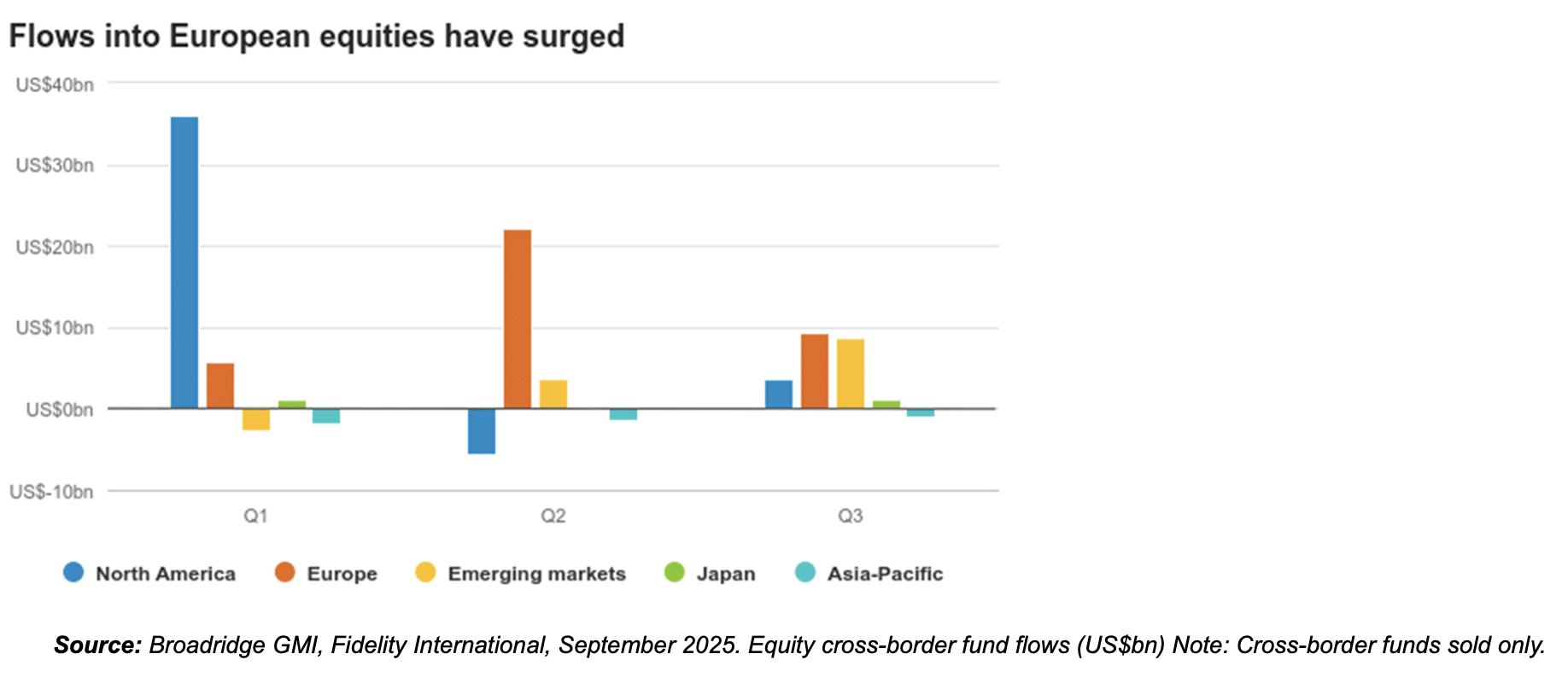
Regional Opportunities: Europe, Japan and China Break Away
Europe
Brodie-Machura says: “The case for Europe has strengthened considerably. Falling inflation, lower interest rates, and fiscal support all provide a supportive backdrop for corporate investment and consumer confidence. Industrials and financials are benefiting from more supportive domestic conditions. Europe is also home to many businesses that are global leaders with resilient balance sheets and proven growth profiles, with notably attractive valuations.
“Japan stands out in our Analyst Survey as a source of optimism. The country is emerging from the staid years of low inflation and low interest rates. Wages are improving and consumer spending power is growing. Corporate governance reforms have fed the market too and we are seeing this effect spread regionally, including in Korea. As discussed in our Asia outlook, this is upending years of discount valuations and low dividend payments.
“China increasingly looks reminiscent of the US market in terms of the progress being made by its companies on technology and innovation – but here positioning is not crowded and valuations are lower. Worries about the trade conflict with the US have cooled and it’s clear that the government understands the importance of investment and innovation to underpin economic and market growth. Furthermore, the increased focus on ending blistering price wars can help corporate earnings inflect back to meaningful growth. The hints of a broader bull market are clear to see.”
Main image: dustin-humes-SaWLpkDK_AI-unsplash