























Professional investors are increasingly favouring active ETFs over other investment vehicles, according to new findings from Fidelity International’s Professional Investor DNA Survey.
The European ETF market surpassed $2trn in assets under management for the first time[1]. Despite this, active ETFs remain relatively under-represented, with Morningstar reporting that active ETFs account for 8% of the overall US ETF market, while in Europe it stands at 3%[2].
However, significant change is underway, Fidelity suggests: as the European active ETF market expanded from $38bn to $64bn over the past year[3].
Fidelity surveyed over 120 institutional investors and intermediary distributors across Europe and Asia, in partnership with Crisil Coalition Greenwich, confirmed that nearly a quarter of professional investors (24%) are already utilising active ETFs.

Demand for active ETFs is expected to increase more rapidly than any other type of investment vehicle over the next 18 months, with 37% of investors surveyed anticipating an increase in their allocations. Intermediary investors show most interest, with 61% anticipating an increase in usage in their portfolios over the next 18 months.

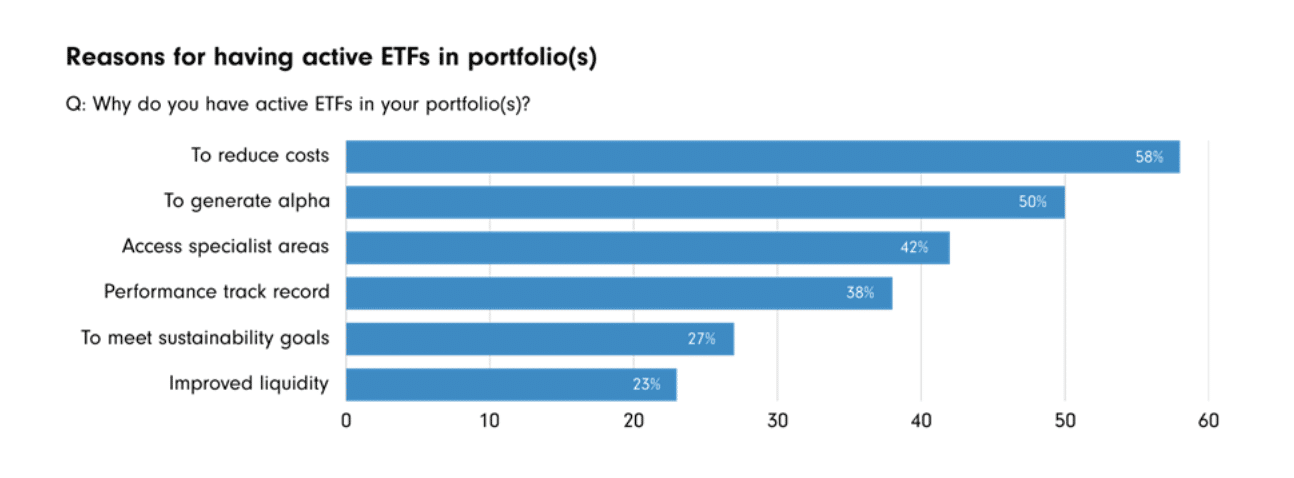
Top reasons for using active ETFs include to reduce costs, to generate alpha, and access to specialist areas.
Commenting on the findings, Alastair Baillie Strong, Global Head of ETFs at Fidelity International said: “The anticipated growth in investor allocation to active ETFs identified in our survey reflects the evolving preferences of investors. There is growing investor awareness of the benefits of active ETFs; combining the advantages of traditional active funds: flexibility, potential for outperformance; and those of ETFs: lower costs, transparency and ease of access.
“PWC expects the global ETF market to grow to $20tn in assets under management by 2030, a 17% compound average growth rate4, and we anticipate that active ETFs will grow even faster, increasing their share as more investors discover their benefits.
Baillie Strong said Fidelity’s active ETF business was “a key growth driver” for the asset manager. “At the end of 2024, we were pleased to solidify our position as the second largest active ETF provider in Europe by assets under management ($6.0bn) and net new flows ($2.2bn)[5].
He added: “Looking ahead, we face a backdrop of ongoing complexities in the market which can be characterised by high valuations and various uncertainty factors. Given this backdrop, ETF selection is more important than ever. At Fidelity, our active ETF strategy is to support our clients as they seek to tackle the many idiosyncratic risks posed by today’s volatile global macroeconomic and geopolitical backdrops, leveraging our long-standing active research capabilities to deliver enhanced diversification and return benefits versus passive ETFs.”
Notes
[1]Morningstar, 31/12/24
2 Morningstar, 31/12/24
3 Morningstar, 31/12/24
4 ETFs 2026: The next big leap: PwC
5 Source: Fidelity International, ETFBook, data as of 31/12/2024
Important information:
This material is for Investment Professionals only, and should not be relied upon by private investors. The value of investments and the income from them can go down as well as up so you/the client may get back less than you/they invest. Investors should note that the views expressed may no longer be current and may have already been acted upon.
Main image: shapelined-_JBKdviweXI-unsplash