





















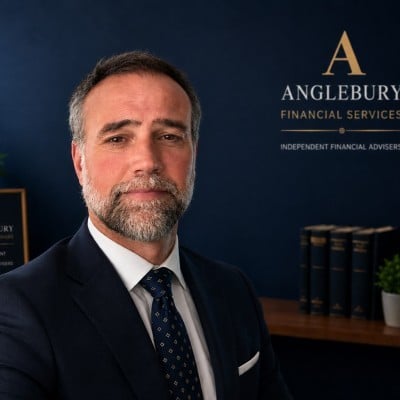
After more than two decades in banking and financial services, Grant Moors of Anglebury Financial Associates LLP, discovered that some of the profession’s most important lessons can only be learned by working directly with clients and seeing first-hand how good advice is delivered.
“To improve is to change; to be perfect is to change often.” – Winston Churchill
After more than two decades working in banking and financial services, I thought I had a pretty good understanding of the advice profession.
I was wrong.
Working in large financial institutions teaches you many things. You learn discipline, governance, regulation and the importance of robust controls.
You become accustomed to solving complex problems at scale, balancing competing priorities and making decisions that affect thousands, sometimes millions, of customers.
What it doesn’t teach you is what happens when one person walks into your office carrying their entire financial future in a folder.
That changes everything.
One of the first things I realised after retraining as an adviser was that no two client conversations are ever the same. Technical knowledge matters enormously, but listening matters even more.
I’ve sat with clients approaching retirement who simply wanted reassurance that they would be okay.
I’ve met people trying to navigate significant life changes and business owners looking to protect everything they had spent decades building.
I’ve spoken to families thinking about the next generation and clients facing decisions they never expected to have to make.
Those conversations don’t follow a script.
For aspiring advisers, that can be both reassuring and slightly daunting. Many people spend years building technical knowledge before moving into advice.
The technical side remains incredibly important, but sitting across the table from a client often requires something more.
It requires the ability to listen carefully, understand what really matters to the individual in front of you and adapt your approach accordingly.
I’ve also developed a much deeper appreciation for the role paraplanners play.
Coming from a corporate environment where specialist teams often worked in isolation, I’ve been struck by how collaborative independent advice really is.
Behind every recommendation sits careful research, technical expertise and considerable effort to ensure that advice is both suitable and understandable.
Clients understandably focus on the conversations they have with their adviser. They rarely see the work that has gone on behind the scenes to support those conversations.
Yet that work is often fundamental to achieving good outcomes.
It is one of the reasons I believe aspiring advisers should make the most of the experience they gain in supporting roles.
Technical expertise, understanding how recommendations are constructed and seeing the advice process from the inside provides a foundation that becomes invaluable later.
Another lesson has been around ownership.
In a large organisation, someone else is usually responsible for the office, the technology, cyber security, regulatory permissions, professional indemnity insurance and cash flow.
Within a smaller advice business, those responsibilities feel much closer and the connection between decisions and their impact becomes far more visible.
You quickly realise that running an advice firm isn’t simply about giving advice. It’s about creating an environment where good advice can consistently be delivered.
That has given me enormous respect for those who have quietly built successful independent firms over many years and provides another perspective for aspiring advisers considering where a career in advice might eventually lead.
Consumer Duty has also taken on a completely different meaning.
In corporate life, it can sometimes feel like a governance programme supported by policies, committees and management information. As an adviser, it becomes far more personal.
It means making sure clients genuinely understand their options. It means recognising vulnerability that may not be immediately obvious.
It means taking the time to explain something again because the objective isn’t simply to provide information; it’s to ensure the client leaves feeling informed and able to make decisions with confidence.
The irony isn’t lost on me that after years helping organisations improve customer outcomes through governance, I’ve learned more about what good customer outcomes actually look like by sitting in a small office, sharing a cup of tea and listening to people’s stories.
Perhaps that’s the biggest lesson of all.
For those considering a move into advice, it is easy to focus on qualifications, client meetings and technical development.
All of those things matter. Yet what has surprised me most is how often the profession comes back to something much simpler.
Financial advice isn’t ultimately about products, platforms or paperwork.
It’s about people.
Everything else exists to support that purpose.
Main image: surprise, heather-wilde-emAGLJGC5xo-unsplash